

Rodents, ants, cockroaches and spiders don’t stay in one corner of a building. They follow food, water and warmth, and once they’re established in an office, they’re harder to get rid of than they would have been to prevent. Ehlers provides office building pest control for businesses across Milwaukee and Southeastern Wisconsin, starting with an inspection that finds the actual source of the problem.
No phone quotes and no packages that don’t fit. A certified technician comes out, looks at your building and tells you exactly what you’re dealing with.
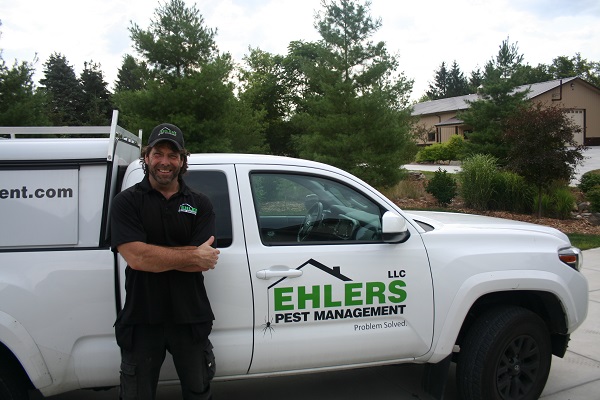
The person who inspects your building is a certified technician, not a salesperson. You won’t wait for a separate sales visit or get a phone quote based on guesswork. A certified technician looks at your building and arrives prepared to start.
You’ll talk to someone local who knows pest control. Calls go to our Southeastern Wisconsin office, and the person who answers is certified and actually lives in the area.
We’ll recommend what your building actually needs. Pricing is based on what the technician finds. If a simpler option will solve the problem, that’s what we’ll recommend.
Locally owned and veteran-owned. Ehlers has served Southeastern Wisconsin businesses since 2010, with owners and staff who live here.
Office environments create conditions pests find attractive, especially shared kitchens, break rooms, delivery areas, and utility access points. The most common problems we see in office settings:

When the weather turns cold, mice look for warmth and food, and an office building has both. Break rooms, stored snacks and trash give them food, and gaps around pipes, utility lines and loading or delivery doors give them a way in. Older buildings usually have more of those gaps.
Most office rodent work is ongoing. A technician sets and checks bait stations inside and outside the building, usually on a monthly visit, and watches for new activity so a few mice don’t turn into a bigger problem.
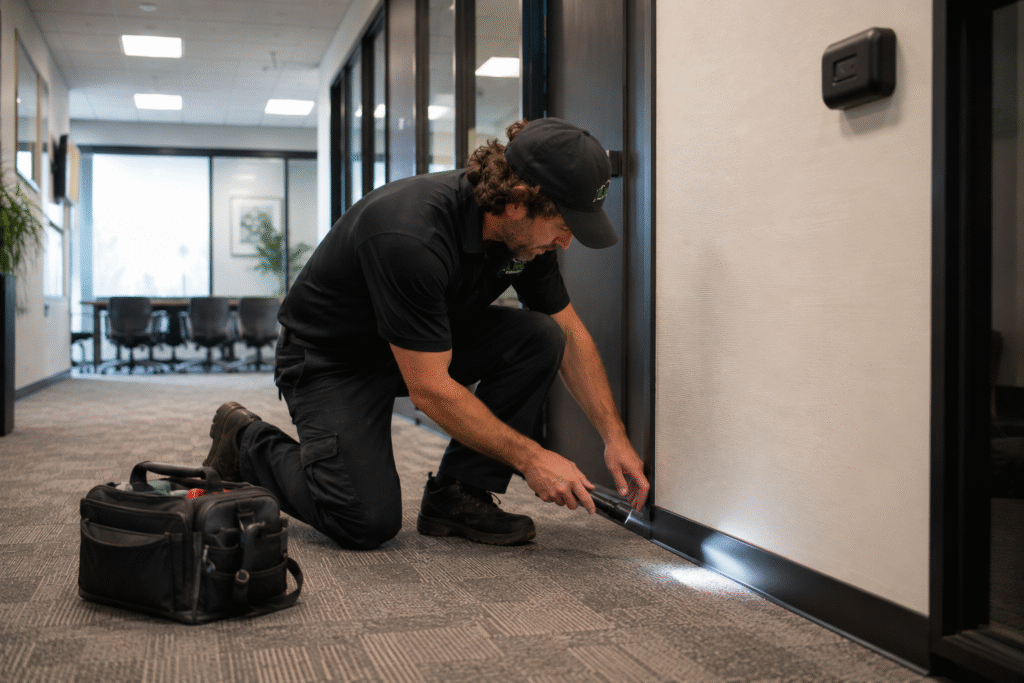
Every office account starts with an inspection. A certified technician walks the building inside and out, including break rooms, kitchens, storage areas and the exterior, and looks for where pests are getting in and what’s drawing them.
From there, we recommend a plan that fits your building and your operations. That might mean a one-time treatment, ongoing monthly service, pest proofing to seal entry points, or a combination. We won’t recommend something you don’t need.
Treatment handles what’s already inside. Pest proofing addresses how pests are getting in.
During the inspection, the technician will point out the gaps, cracks and openings pests are using. In office buildings, that’s usually utility penetrations, door and window gaps and entry points around loading or delivery areas. Sealing them is available as a separate service when it makes sense for your building.
For general pest control, no. Treatments are applied so your office can keep running. Some specialty treatments need the space empty, both for safety and so they work. If yours does, we’ll tell you before anything is scheduled so you can plan around it.
It depends on the size of your building, but most commercial inspections are completed within an hour. We’ll do a thorough walkthrough indoors and out and give you a clear picture of what we’re dealing with before recommending anything.
That depends on what your building needs. Some offices do well with quarterly service visits. Others with more persistent pest pressure, older buildings, or food service areas nearby benefit from monthly service. We’ll recommend what makes sense based on what we find at your specific property.
Pest proofing is available as a separate service. Whether it makes sense depends on your building, and the technician will talk it through with you after the inspection.
Pest control treats what’s already inside your building. Pest proofing addresses how pests are getting in by sealing gaps, cracks, and structural entry points around the exterior. For long-term results, both matter.