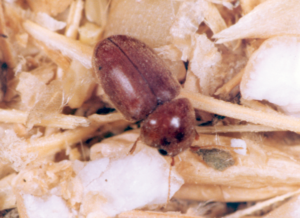
If you’ve ever poured out a cup of flour while baking, only to find it full of little creepy crawlies, you might have a pantry pest infestation. Many of these little insects are so small, you won’t know they’ve infiltrated your cabinets until discovered in a bag or box of food in your kitchen.
The professionals at Ehlers Pest Management are well-trained in treating pantry pests in homes and office buildings throughout southeast Wisconsin. We use a variety of approaches, including non-toxic products, to remove pantry pests in a safe and effective manner without harming pets and children. When you hire us, there are no gimmicks, just pest control.
Damaged pantry foods, usually grain – Adult weevils often eat their way through grains, leaving holes and gnaw marks.
Insect tracks through flour – Pantry pests hanging out in flour will leave small trails of floury dust in their wake when moving to a different food source.
Discoloration in flour and grain – Pantry pests will leave waste materials inside the food they inhabit, leaving it discolored and prone to molding.
Milwaukee Pantry Pest Identification
Weevil Infestations
Bean Weevil
The bean weevil is an olive-colored, teardrop shaped weevil with ruddy legs and red antennae. These pests measure about ⅙ of an inch in length. Because bean weevils are so small, most homeowners aren’t even aware they are in their kitchen. The first sign of an infestation is usually several bean weevils flying around your kitchen or congregating near windows or other well-lit areas.
Rice and Granary Weevil
Rice and granary weevils are ⅛ inch long and dark brown with light patches speckling their wings. Our pest exterminators have found granary weevils in homes and businesses from downtown to Shorewood and beyond. These pests feed on whole grains, cereal, beans, nuts, and pasta noodles in commercial, industrial and residential environments.
Beetle Species
Confused Flour Beetle
The confused flour beetle resides in the north long and has a flattened body that makes it easy for them to get into food packages. They feed on the flour, cereal, and stored food products found in homes, supermarkets and food processing facilities. If you notice a grayish tint on your grain and flour products, there’s a good chance you may have an infestation.
Cigarette Beetle
The cigarette beetle is shiny, light brown, about 1/10 of an inch long with a distinctive “humped” appearance. Found in Shorewood and throughout Milwaukee, these beetles infest food products like dried peppers, nuts, cereals, spices, raisins, seeds, etc. They also munch on floral displays and furniture stuffing. Adult cigarette beetles fly in dimly lit environments year-round, especially in autumn and winter.
Drugstore Beetle
The drugstore beetle is a reddish-brown to dark brown, sphere-shaped beetle measuring 1/10 to 1/8 inches. Although usually found chomping away at packaged goods inside pantries, our pest control experts note that their presence is often detected by damaged book bindings. They usually only make an appearance in our area during the warmer months.
Foreign Grain Beetle
Foreign grain beetles feed on moldy, out-of-date grain products and the surface fungi accumulating on wood beams and studs exposed to moisture and may emerge from ceiling light fixtures, electrical outlets, and baseboards. They can be found in older buildings with bad drainage, water leaks, or poor ventilation conducive to fungus and mold growth.
Larder Beetle
The larder beetle is a ¼ to ½ inches long, black beetle with yellow bands crossing its wings. They infest commercial and industrial sites where there is cured meat, animal protein and other stored foods. In homes, they infest dark areas where they can feast on dead insects and stored meat and cheeses.
Sawtoothed & Merchant Grain Beetles
Sawtoothed & merchant grain beetles are brown to dark brown, measuring about 1/10 inches long. Both beetles enjoy foods high in oils and fats, as well as pasta, tobacco, grains, dried fruits, rice, cereal, and much more. The diverse appetite of these beetles makes them two of the most commonly found pests in supermarkets, homes and warehouses.
Warehouse & Cabinet Beetles
Warehouse & cabinet beetles are oval-shaped and dark brown with varying shades of tan and yellow wing markings. These beetles frequent warehouses, consuming everything from candy and cookies to fish meal, pasta, and insect carcasses. They are one of the most common beetles found in basements, attics, and crawlspaces.
Moth Species to Watch
Clothes Moths
Clothes moths are notorious for ruining wool clothing, as well as other materials such as silk and felt. They are known to feast on carpets, comforters, pillows, coats, blankets and sweaters. These moths also have an appetite for bran, semolina, flour, biscuits and casein—so they are often found in kitchens as well as closets throughout Milwaukee.
Indian Meal Moth
The Indian meal moth is gray, with copper stripes on the front wing tips. Homeowners and grocery store managers usually find them in dried fruit, pet foods, cereal and flour. Our exterminators often find their cocoons behind appliances and picture frames, as well as on the walls and ceilings of kitchens and pantries.
Mediterranean Flour Moth
The Mediterranean flour moth is dark gray with black markings on its front wings, renowned for infiltrating flour mills and warehouses. It has a taste for flour, cereal, dried pet food, flowers, fruit, and other stored foods found in supermarkets, drug stores, restaurants, and homes.
When you hire Ehlers Pest Management, you’re hiring a pest control company keen on going the extra mile. While other companies might do the bare minimum, we take the time needed to fully eradicate your pests. We’re not interested in volume and churning new clients. Only providing flexible solutions that help our clients get back to what’s more important in life. Ehlers makes the pest control process accessible and straightforward with automated billing, digitized and detailed reports, world-class software and real-time reporting.