
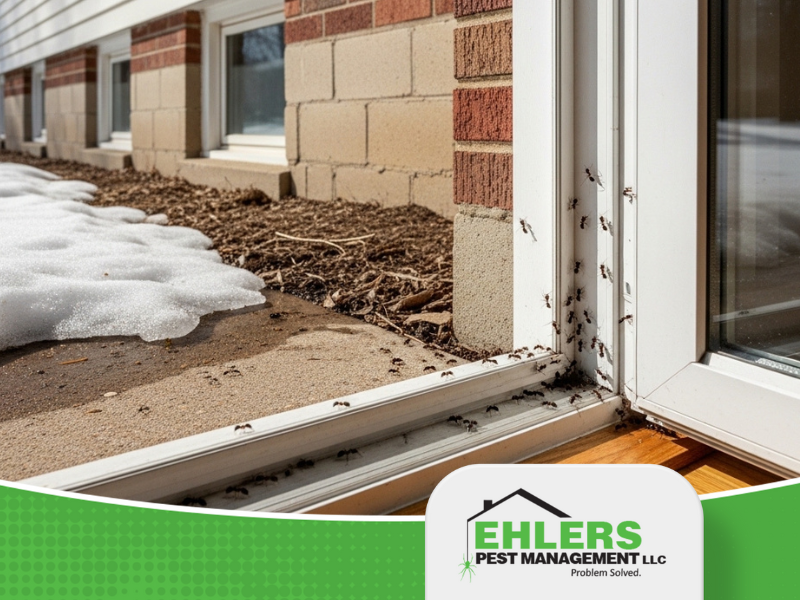

Each spring, many Wisconsin homeowners notice the same pattern: ants seem to be the first pests to show up indoors. Even before summer temperatures arrive, small trails may appear along baseboards, countertops, or basement walls. This early activity isn’t random—ants are simply responding to seasonal changes faster than most other pests.
Ants are highly sensitive to temperature and moisture. As soon as the ground begins to thaw and daytime temperatures rise, ant colonies shift out of winter survival mode. Colonies that spent winter underground, beneath concrete slabs, or inside wall voids begin foraging again to support the colony’s growth.
Many spring ant sightings actually start indoors. Ants that entered homes during fall or winter remain protected from cold weather and become active as conditions improve. Others are drawn inside by moisture created by melting snow and early spring rain. Kitchens, bathrooms, and basements are common starting points because they provide easy access to water and food.
Wisconsin’s freeze–thaw cycles also play a role. As homes expand and contract through winter, small cracks can form around foundations, window frames, and utility lines. These openings give ants direct access indoors just as they become active again in spring.
Another reason ants appear first is their organization and numbers. Ant colonies can contain thousands of individuals, and once a food source is located, worker ants quickly establish trails. What starts as a few ants can turn into a noticeable problem in a short amount of time.
Early spring ant activity is often a warning sign rather than a full infestation. Spotting ants in March or April usually means a colony is nearby and preparing to expand. Addressing the issue early—before populations grow—makes control far easier.
Reducing moisture, sealing entry points, and limiting food access all help discourage early ant activity. Preventative pest control during spring focuses on stopping ants before trails become established and before colonies grow larger.
Ants appear first each spring because they’re ready first. Recognizing those early signs allows homeowners to act early and avoid bigger pest problems as the season continues.