
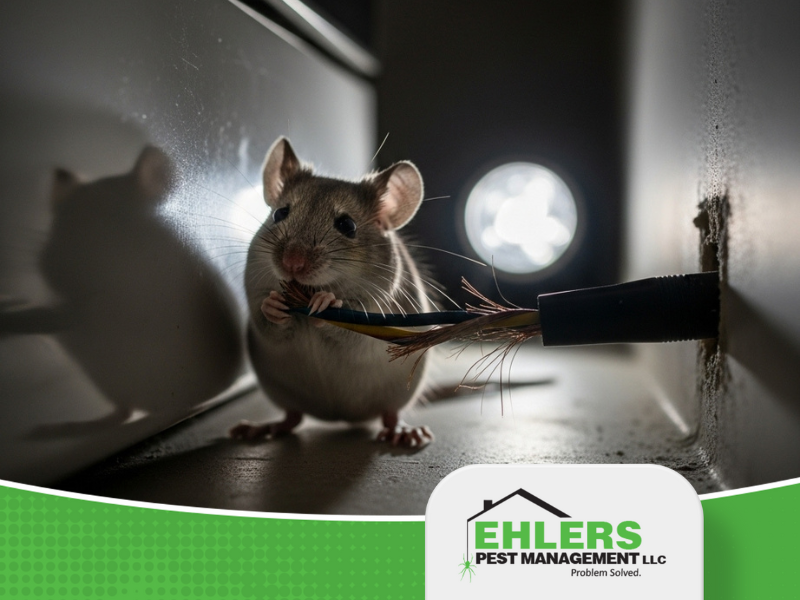

Seeing a mouse in your home during February can be easy to dismiss. Cold weather drives mice indoors, and many homeowners assume a single mouse is just a fluke. In reality, one mouse in winter often signals a much larger problem developing behind the scenes.
Mice do not hibernate during Wisconsin winters. Once they find warmth, shelter, and a food source inside a home, they settle in and remain active. February is especially important because mice that entered earlier in the winter may already be nesting in wall voids, attics, basements, or crawl spaces.
A single mouse is rarely alone. Mice are social and reproduce quickly when conditions are right. Indoor environments provide stable temperatures that allow breeding to continue year-round. By the time spring arrives, a small winter presence can turn into a noticeable population, even if activity seemed quiet at first.
Winter conditions also make detection harder. Mice tend to travel inside walls and along hidden pathways, leaving little visible evidence early on. Homeowners may not notice signs until warmer weather increases activity, odors become noticeable, or damage is discovered.
Wisconsin’s freeze–thaw cycles add to the risk. Small gaps can open around foundations, siding, vents, and utility lines during winter, creating multiple entry points. Once mice gain access, they often return to the same location year after year if openings remain unsealed.
Ignoring a mouse sighting in February can lead to increased damage by spring. Chewed insulation, contaminated areas, and wiring damage often go unnoticed until the problem has grown.
Early intervention is key. Addressing mouse activity during winter helps prevent breeding, limits damage, and reduces the likelihood of ongoing issues once warmer weather arrives. Sealing entry points, improving sanitation, and professional inspection can make a significant difference.
If you spot a mouse in February, it’s usually not just a winter inconvenience—it’s an early warning. Taking action now can help protect your home and keep spring pest problems from multiplying.