
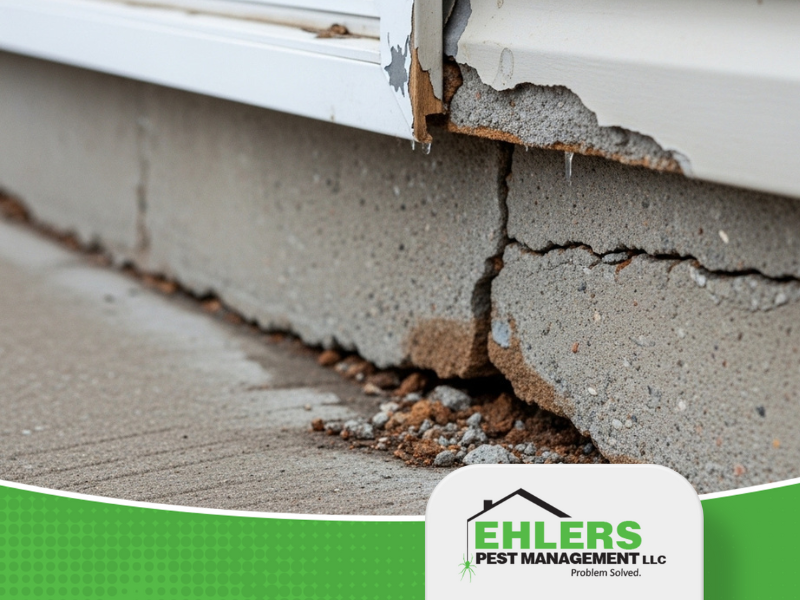

Wisconsin winters are known for dramatic temperature swings, and those changes affect more than just comfort. The repeated freeze–thaw cycles common from late winter into early spring can quietly create new entry points that allow pests to access homes.
When temperatures drop, building materials contract. As temperatures rise, those same materials expand. Over time, this constant movement puts stress on foundations, siding, masonry, and sealants. Small cracks can form in concrete, mortar joints can weaken, and caulking around windows, doors, and utility lines can pull away. While these openings may seem insignificant, many pests need only a very small gap to get inside.
Rodents are especially good at exploiting freeze–thaw damage. Mice can squeeze through openings as small as a dime, making newly formed cracks around foundations, sill plates, and utility penetrations ideal access points. Once inside, they often nest in wall voids, basements, or attics where activity stays hidden.
Insects also take advantage of these changes. Ants, spiders, and overwintering insects follow air and moisture movement through gaps created by shifting materials. Moisture from melting snow can seep into these spaces, further attracting pests looking for water and shelter.
Freeze–thaw cycles can also impact exterior features such as window wells, garage slabs, and porches. Separation between structures and the main foundation creates sheltered pathways that pests can use to move indoors. These areas are often overlooked during routine home maintenance.
The challenge for homeowners is that freeze–thaw damage isn’t always visible. Cracks may be hidden behind siding or occur in hard-to-reach areas. Pests often discover these openings long before people do, leading to increased indoor activity once temperatures rise.
Preventative pest control focuses on identifying and sealing these vulnerable areas early. Inspections during late winter and early spring can uncover newly formed entry points and reduce the chance of pests establishing themselves for the season.
Freeze–thaw cycles are unavoidable in Wisconsin, but pest problems don’t have to be. Addressing structural vulnerabilities early helps keep unwanted guests out as the weather warms.