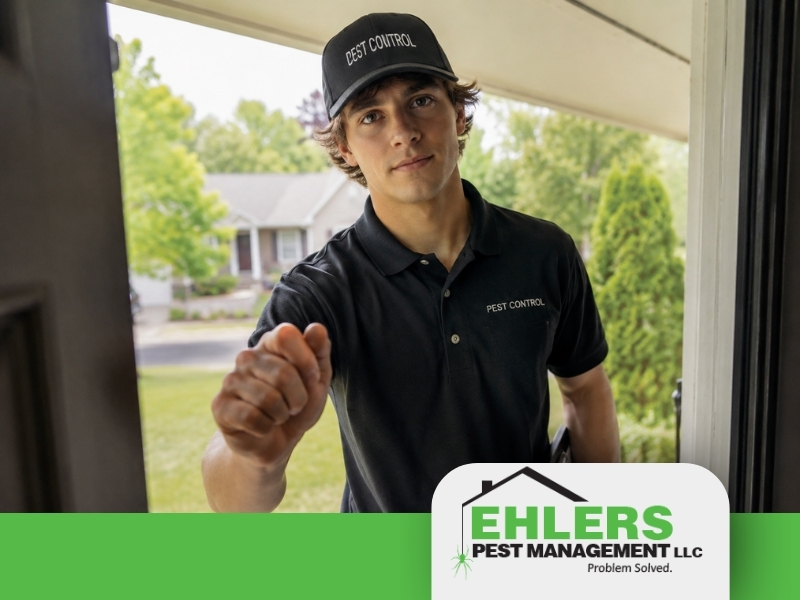
Figuring out how to choose a pest control company in Milwaukee is harder than it used to be, and there’s a reason for that. Most of the familiar local names in southeastern Wisconsin were bought up by one international company, and a wave of door-to-door operations moved into the gap. Both look local in their advertising. Neither works the way the local companies people remember used to work. Here are the questions that tell you which kind you’re talking to, before you put a signature on anything.
What happened to the local pest control names in Milwaukee?
They got acquired. Bater, Will Kill, and Terminix all ended up under Rentokil, an international company, and the consolidation changed how the service works even where the name on the truck stayed the same.
Two things tend to follow an acquisition like that. Quality control gets harder across a large organization, and practices designed elsewhere get applied here whether or not they fit. A good example is the year-round exterior program. It’s a sensible product in a warm climate. In Wisconsin it means someone treating the outside of your house in February with snow on the ground, and it doesn’t accomplish much.
The other change is where your call goes. Calls route to national call centers instead of the local branch, so the person taking down your problem is often several states away and isn’t a pest control professional. That matters most when your situation is unusual, because a script can’t ask the follow-up question.
Who’s actually knocking on your door?
If someone came up your walk this summer offering a deal on the spot, they were almost certainly a salesperson, and they won’t be the person who treats your house.
Door-to-door is a real business model in this market. Aptive, Hawx, Greenix, and EcoShield all operate in southeastern Wisconsin and all use seasonal sales teams to sign customers at the door, typically on a recurring contract. The pitch happens at your doorstep and a different technician shows up later to do the work.
Most homeowners don’t know that’s how it’s structured, and it’s worth knowing, because the person making promises about your property has no responsibility for keeping them. If you want to know which kind of company you’re dealing with, ask the person in front of you a direct question: are you the one who’ll be doing the treatment?
What should you ask before you sign a contract?
Six questions do most of the work.
- How long is the contract, and what does it cost to get out of it?
- Which pests are actually covered, and which ones cost extra?
- How many visits a year does this include, and what’s the schedule?
- Is the person who inspected my property the same person who’ll treat it?
- When I call, do I reach a local office or a call center?
- What happens if the problem isn’t resolved, and what specifically is guaranteed?
You’re not being difficult by asking these. A company that answers them cleanly is telling you something, and a company that gets vague on the second or third one is telling you something too.
What does a low advertised monthly rate usually mean?
Usually a two-year commitment, three visits a year, a limited list of covered pests, and additional charges for anything outside that list.
The advertised number is usually real. What’s missing from the advertisement is the term, the visit count, and the exclusions. Someone signs up for ant control, discovers eighteen months later that they’re still paying for a service they no longer need, and finds out that mice were never included.
There’s a version of this that’s worse. A company sells a large volume of accounts on a low entry price, and accepts that a share of customers will call to complain. If enough of the rest don’t, the model still works. That’s a numbers business rather than a service business, and you can usually spot it by how fast the price came and how little anyone looked at your house first.
Is the company actually local, or a franchise?
Worth checking, because local is the easiest claim in this industry to make and one of the harder ones to verify.
Plenty of operations present themselves as your local professionals while running a regional or national franchise structure underneath. The branding is local. The business model, the pricing, the call handling, and the staffing are not.
Two quick tests. Ask where the phone rings when you call the main number. And ask how long the company has operated in southeastern Wisconsin under its current ownership. Neither question is confrontational and both are hard to dodge.
Who shows up, and will it be the same person next time?
This is the question that predicts service quality better than any other, because pest control is skilled work and turnover is the industry’s chronic problem.
Large operations hire in volume at low wages, and technicians frequently move on within a year or two. What that produces on the ground is inexperienced people working too many stops a day, which is how you end up with someone puffing a little dust behind a shutter and calling it a treatment. It looks like service was performed. It wasn’t.
Ask whether you’ll have a consistent technician. Someone who’s been to your property before knows where the problem was last time, which matters enormously on recurring issues.
What should a real inspection actually include?
This is the part that separates a company solving your problem from a company selling you a plan, and it happens before any money changes hands.
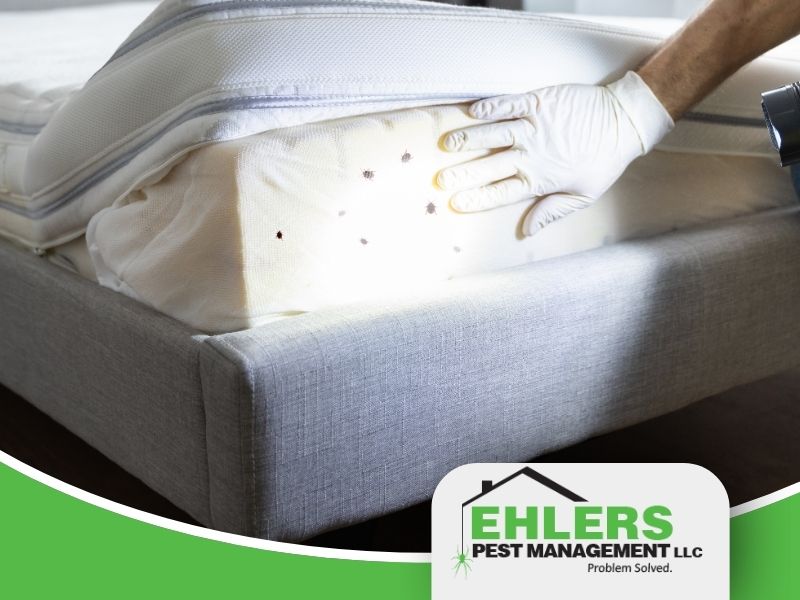
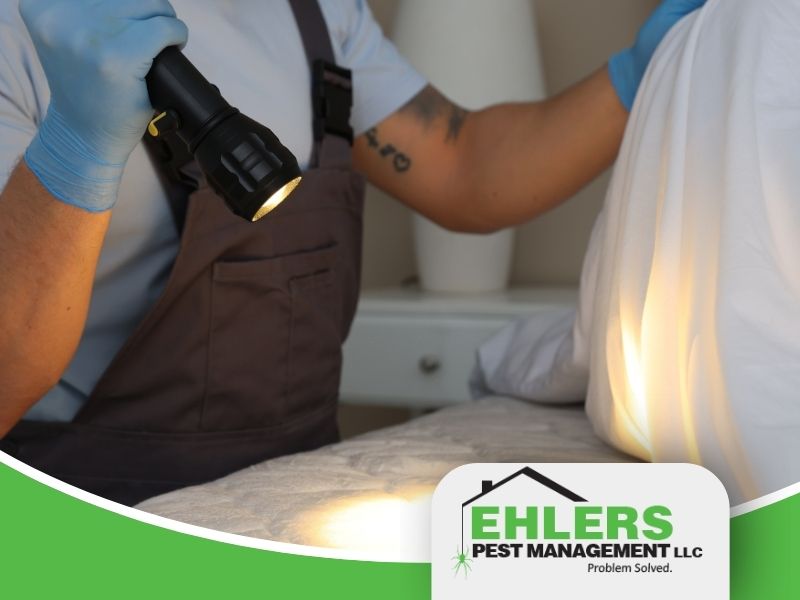
A technician should walk the interior and the exterior. They should look at the foundation line, the utility penetrations, the basement joist bays, and the attic if it’s accessible, and they should go into the rooms where you’ve actually seen activity. They should be able to tell you what species you have, not just what category, because the treatment for German cockroaches and Oriental cockroaches is different and so is the treatment for paper wasps and yellow jackets.
You should come away knowing three things: what you have, where it’s living or getting in, and what the plan is. If someone gives you a price without having gone into your basement, they priced a package rather than your problem.
A phone quote is the clearest signal of all. Nobody can tell you what a pest problem takes to solve without seeing the building.
How to choose a pest control company: the short version
If you only remember four things from this, make it these.
- Get the contract term, the covered pest list, the visit schedule, and the resolution terms in writing before you sign anything.
- Find out whether the person who inspected your property is the one who’ll treat it.
- Find out where your call goes when you dial the main number.
- Be skeptical of any price quoted before someone has looked at your house.
None of that requires knowing anything about pest control. It’s just knowing what the structure of the deal is before you agree to it, and it filters out most of what people end up unhappy with.
What we do differently, and who we’re not right for
We should be straightforward that this is our own blog, so weigh it accordingly. Here’s how we’re set up.
We don’t send salespeople. When someone comes to bid your job, it’s a certified, licensed, and insured technician who performs the work, and they’re equipped to start that day. They look at your property in person rather than quoting a flat rate over the phone.
When you call, you reach our local office. Our office manager is certified, works in the field, does the scheduling, and answers the phone, which is unusual in this industry and it’s the reason the person who picks up can actually answer your question.
We’re also not the right company for everyone, and we’d rather say so up front. We don’t chase high-volume, low-price work. We don’t service 24-hour operations or national chains that need centralized billing across multiple states. We don’t take general maintenance contracts at large apartment complexes. If you want the cheapest number available, we won’t be it.
What to do next
Whoever you end up hiring, get the contract term, the covered pest list, the visit schedule, and the resolution terms in writing before you sign. That single habit prevents most of the complaints in this industry.
If you’d like a look at your property from someone who’ll actually treats pests, call Ehlers Pest Management at (414) 303-6926. We’ll tell you what’s actually going on, what it’ll take to fix it, and whether it’s something you need to hire anyone for at all.