Categories Safe & Family-Friendly Pest Control

Pet-Safe Pest Control in Milwaukee: What We Use and Why It Matters

pet-safe pest control Milwaukee protecting family and dog in residential home environment

If you have pets, calling a pest control company comes with an extra layer of concern. What products are being used in your home? Are they safe around your dog or cat? How long before your pet can be back in treated areas?

These are completely reasonable questions — and any pest control company worth hiring should be able to answer them clearly. Here’s what pet-safe pest control in Milwaukee actually looks like, what products responsible companies use, and what you should expect from the process.

What “Pet-Safe” Actually Means in Pest Control

The term “pet-safe” gets used loosely in this industry, so it’s worth defining. No pesticide is completely without risk if misapplied or if exposure occurs before products have dried or settled. What pet-safe pest control actually means in practice is:

  • Using products with low mammalian toxicity — formulated to target insects while posing minimal risk to mammals like dogs, cats, and humans
  • Applying products correctly — concentration, placement, and method of application all affect safety
  • Allowing appropriate drying or settling time before pets re-enter treated areas
  • Targeting application to areas where pests are active, not blanketing entire living spaces unnecessarily

A responsible pest control company will always ask whether you have pets before treatment begins — and will tailor their approach accordingly.

Products Commonly Used in Pet-Friendly Pest Control

Professional pest control has evolved significantly. The products used today by responsible companies are a far cry from the broad-spectrum chemicals of previous decades. Here’s what family safe pest control in Milwaukee typically involves:

Pyrethrins and synthetic pyrethroids are among the most commonly used insecticides in residential pest control. Derived from chrysanthemum flowers, pyrethrins break down quickly in the environment and have low toxicity to mammals when applied correctly. Pyrethroids are synthetic versions with similar properties. Both are effective against a wide range of common pests.

Insect growth regulators (IGRs) disrupt the reproductive cycle of insects without acting as a traditional poison. They’re highly targeted, have very low mammalian toxicity, and are particularly effective as part of a long-term prevention strategy.

Baits and gels are applied in targeted locations — inside cracks, along baseboards, in bait stations — rather than sprayed broadly. Because the product is contained and concentrated in specific areas, exposure risk to pets is significantly reduced.

Botanical and essential oil-based products are available for homeowners who prefer a more natural approach. These are generally the lowest-risk option for pets and people, though they may require more frequent application and are best suited for minor or preventative treatment situations.

How to Prepare Your Home for Pet-Safe Treatment

A little preparation on your end makes a meaningful difference in both safety and effectiveness:

  • Remove pet food and water bowls from areas being treated and keep them out until surfaces are fully dry
  • Cover or move fish tanks — fish are particularly sensitive to airborne pesticide particles
  • Keep pets out of treatment areas during application and until your technician confirms it’s safe to return — typically 1–2 hours for most treatments
  • Store pet toys and bedding away from treated surfaces before the technician arrives
  • Let your technician know what pets you have, where they spend most of their time, and any areas of particular concern

Your technician should walk you through specific guidance before any work begins. If they don’t ask about your pets, bring it up yourself.

What to Expect After Treatment

Once treated areas have dried or settled — your technician will confirm the appropriate window — pets can safely return to normal activity in most cases. Here’s what’s normal after treatment:

  • A slight chemical smell that dissipates within a few hours
  • Insects becoming more active briefly as product contacts them before taking effect
  • No visible residue in most cases with modern application methods

If your pet experiences any unusual symptoms after re-entering a treated area — excessive drooling, lethargy, vomiting, or skin irritation — contact your veterinarian and let your pest control company know immediately.

The Right Company Will Always Put Your Family First

Pet-safe pest control in Milwaukee isn’t about avoiding effective treatment — it’s about applying the right products, in the right places, in the right way. A company that takes this seriously will be transparent about what they use, answer your questions without hesitation, and adjust their approach based on your household’s specific needs.

At Ehlers Pest Management, we treat every home as if our own pets lived there. We’ll walk you through exactly what we’re using, why we’re using it, and what you need to do to keep your pets comfortable and safe throughout the process.

Schedule your inspection today.


Frequently Asked Questions

How long do I need to keep my pets out of the house after pest control treatment?

For most standard treatments, 1–2 hours is sufficient — once treated surfaces are fully dry. Heat treatments and some specialized applications may require a longer window. Your technician will give you a specific timeframe before any work begins.

Is pest control safe for dogs and cats?

When applied correctly by a licensed professional using appropriate products, pest control poses minimal risk to dogs and cats. The key factors are product selection, correct application, and allowing adequate drying time before pets re-enter treated areas.

Are there pest control options that are completely chemical-free?

Some botanical and essential oil-based products contain no synthetic chemicals. These are the lowest-risk option but are best suited to minor infestations or preventative treatment. For established pest problems, they may not provide sufficient control on their own.

What should I do if my pet reacts to pest control treatment?

Contact your veterinarian immediately and provide them with the name of the product used — your pest control company should be able to supply this information quickly. Most reactions are mild and resolve without intervention, but it’s always better to have your vet assess the situation.

Can I stay home during pest control treatment if I have pets?

In most cases, both people and pets should vacate the treated areas during application. Your technician will let you know whether you need to leave the home entirely or simply keep pets away from specific areas.

Categories Safe & Family-Friendly Pest Control, Uncategorized

Eco-Friendly Pest Control Options for Milwaukee Families

Keeping your Milwaukee home pest-free shouldn’t come at the expense of your family’s health or the environment. That’s why more homeowners are turning to eco-friendly pest control—and why Ehlers Pest Management has made sustainable, family-safe treatments the cornerstone of our approach.

Why Choose Eco-Friendly Pest Control?

Traditional pest control methods often rely on harsh chemicals that can linger in the air, affect indoor air quality, and impact beneficial insects and pets. Eco-friendly pest management focuses on safety, prevention, and environmental balance—protecting your home without exposing your loved ones to unnecessary toxins.

The Ehlers Difference

At Ehlers Pest Management, we use Integrated Pest Management (IPM) principles—an environmentally responsible approach that targets pests at their source. Instead of relying solely on chemical treatments, we combine inspection, exclusion, sanitation, and minimal product use to achieve long-term results.

Our technicians use products derived from botanical and biological sources, applying them precisely where pests live and breed. This reduces pesticide exposure while maintaining powerful control over ants, spiders, rodents, bed bugs, and other common Milwaukee pests.

Safe for Families, Pets, and the Planet

Ehlers’ eco-friendly treatments are safe for children and pets, yet tough on pests. We focus on sustainable techniques such as:

  • Sealing entry points to prevent infestations
  • Using targeted treatments instead of broad spraying
  • Regular monitoring to prevent pest populations from rebounding

A Smarter Way to Stay Pest-Free

Eco-friendly pest control doesn’t just solve the problem—it helps prevent it from returning. Our goal is to create a healthy home environment where your family feels secure year-round.

Ehlers Pest Management is proud to serve Milwaukee-area families with environmentally responsible pest control that works. Safe, sustainable, and science-driven—because protecting your home shouldn’t harm the world around it.

Categories Safe & Family-Friendly Pest Control, Uncategorized

Top 10 Pests Milwaukee Homeowners Deal With (and How to Stop Them)

Living in the Greater Milwaukee Area has many perks — beautiful neighborhoods, lake views, and four distinct seasons. Unfortunately, those same seasons also bring a wide variety of unwanted guests. Here are the top 10 pests Milwaukee homeowners face and how you can keep them out for good.

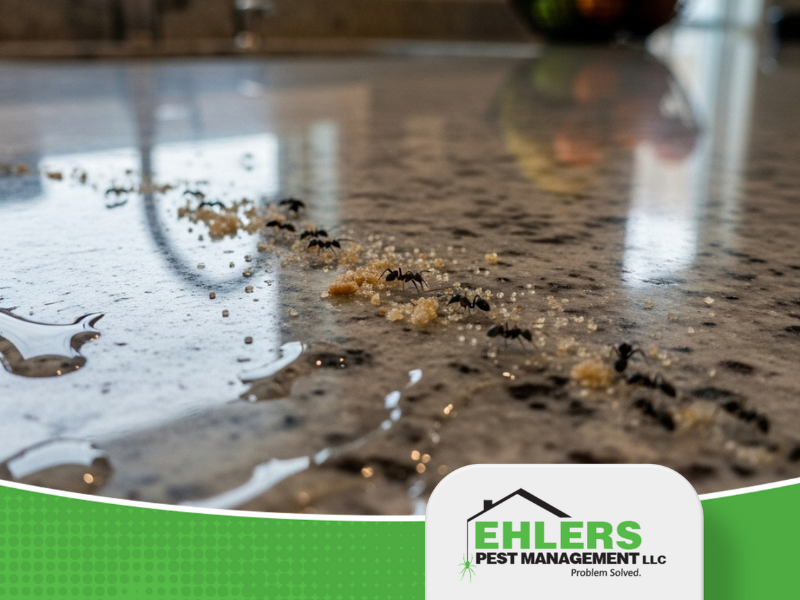
  1. Ants – These tiny invaders love kitchens and bathrooms. Seal cracks, wipe up spills, and store food in airtight containers.
  2. Rodents (Mice & Rats) – Cold Wisconsin winters drive rodents indoors. Seal gaps around pipes and doors, and remove clutter where they can hide.
  3. Spiders – Most are harmless, but they thrive where insects are plentiful. Reduce clutter, vacuum corners, and use yellow exterior bulbs that attract fewer bugs.
  4. Bed Bugs – Found in homes, hotels, and even offices. Wash bedding in hot water and inspect furniture regularly. Professional heat treatment is the most effective solution.
  5. Cockroaches – Attracted to warmth and moisture, they carry allergens and bacteria. Keep kitchens dry and clean, and repair leaks immediately.
  6. Wasps & Hornets – Nests often appear in eaves or shrubs. Stay cautious — never spray large nests yourself; call a pest control expert.
  7. Termites – Quiet destroyers of wood structures. Schedule annual inspections and reduce moisture near your home’s foundation.
  8. Mosquitoes – Common near standing water. Remove stagnant water sources and consider professional yard treatments.
  9. Silverfish – Thrive in damp basements and bathrooms. Use dehumidifiers and store paper goods in sealed bins.
  10. Carpenter Ants – Similar to termites, they tunnel through wood. Trim branches touching your house and keep firewood away from the foundation.

Whether you’re battling a small nuisance or a serious infestation, professional pest control ensures your home stays protected year-round.

Ehlers Pest Management are here to help — with safe, effective, and eco-friendly treatments tailored to Wisconsin homes.