
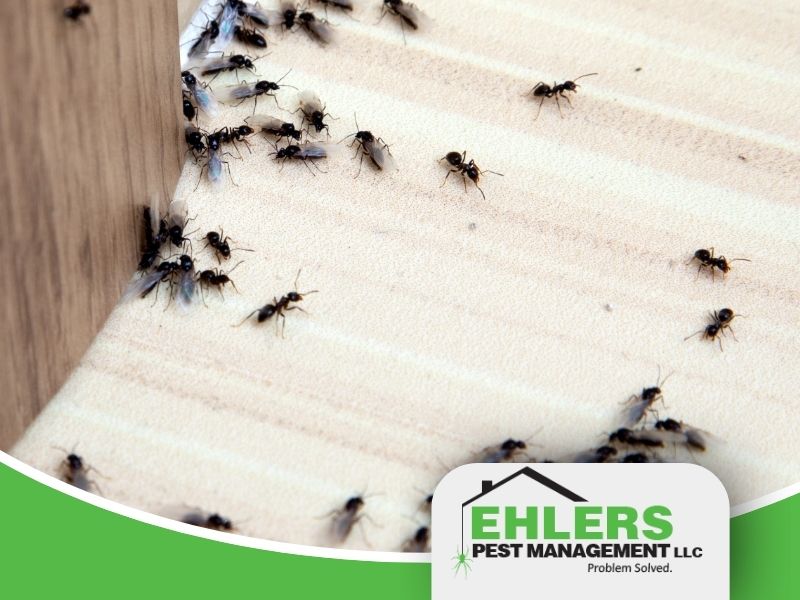

If you’re trying to figure out how to get rid of ants in your kitchen, you’ve probably already tried a few things — and you’re still seeing them. Here’s what actually works, what commonly backfires, and when it’s time to stop troubleshooting and call a professional.
Why Ants Keep Coming Back
Before jumping to solutions, it helps to understand why over-the-counter treatments so often fail. Ants in your kitchen are foragers — workers sent out by a colony that could be thousands strong, living in your walls, under your foundation, or in the soil just outside your home.
When you spray the ants you can see, you’re eliminating foragers. The colony is untouched. Within days, new foragers follow the same chemical trail right back to your kitchen. Until you address the colony itself, the cycle continues.
What Actually Works (And What Doesn’t)
Contact Sprays — Limited Effectiveness
Store-bought sprays kill ants on contact, which is satisfying in the moment. The problem is they don’t reach the queen or the nest. Worse, some species respond to contact sprays by “budding” — splitting into multiple satellite colonies and spreading the infestation further into your home.
Use contact spray only to interrupt activity temporarily, never as a primary solution.
Bait Traps — More Effective, But Tricky
Ant bait is a better approach because foragers carry the active ingredient back to the colony, eventually killing the queen and collapsing the nest. But effectiveness depends on:
- Using the right bait type. Different ant species are attracted to different food sources — some prefer sugar-based bait, others protein-based. Using the wrong one means ants ignore it entirely.
- Placement. Bait needs to go along active trails, not in random locations. And it needs to be left alone — cleaning around it or moving it breaks the process.
- Patience. Bait takes time. If you’re expecting overnight results, you’ll pull it too soon.
Cleaning and Exclusion — Essential, But Not Enough Alone
Removing food sources and moisture is critical — but it doesn’t eliminate a colony that’s already established. Think of it as making your kitchen less attractive going forward, not as a treatment for the current problem.
Seal gaps around pipes, fix any dripping faucets, store food in airtight containers, and clean behind appliances where grease and crumbs accumulate. These steps support treatment — they don’t replace it.
Step-by-Step: How to Get Rid of Ants in Your Kitchen
If you want to take a DIY approach before calling a professional, here’s the most effective sequence:
- Identify the species if possible. Small dark ants near baseboards are likely pavement ants. Ants that smell like blue cheese when crushed are odorous house ants. Both are common in Milwaukee homes and respond differently to treatment.
- Don’t spray. Resist the urge to reach for the can. It disrupts bait placement and can cause colony splitting.
- Place bait along active trails. Use a gel bait near where you’re seeing activity and leave it alone for several days.
- Eliminate attractants. Clean thoroughly behind and under appliances, fix any moisture issues, and seal food.
- Seal entry points. Caulk gaps around pipes and baseboards where ants are entering.
- Wait and monitor. Bait takes 1–2 weeks to work through a colony. Increased activity near the bait initially is actually a good sign — more foragers are carrying it back.
When to Call a Professional for Ant Control in Milwaukee
DIY methods work for minor, early-stage ant problems. But there are situations where professional ant control in Milwaukee is the right call:
- You’ve tried bait and the problem persists after two weeks
- You’re seeing ants in multiple rooms or areas of the home
- You’ve identified or suspect carpenter ants (larger, often near wood or moisture damage)
- The infestation returns every season despite treatment
A professional can accurately identify the species, locate the colony, and apply targeted treatment that addresses the problem at the source — not just the foragers you can see.
Stop the Cycle for Good
Ant problems in Milwaukee kitchens are extremely common — and very manageable when handled correctly. The key is addressing the colony, not just the symptoms.
If DIY hasn’t worked or you’d rather not troubleshoot it yourself, Ehlers Pest Management is here to help. We provide straightforward ant control in Milwaukee and across Southeastern Wisconsin.
Schedule your inspection today.
Frequently Asked Questions
Why are there more ants in my kitchen after I sprayed?
Spraying can cause certain ant species to bud — splitting the colony into multiple groups that scatter to new locations. This is one of the most common reasons ant problems get worse after contact spray treatment.
How long does ant bait take to work? Most ant baits take 1–2 weeks to work through a colony fully. You may see increased ant activity near the bait at first, which means foragers are actively taking it back to the nest.
What is the fastest way to get rid of ants in the kitchen?
The fastest permanent solution is professional treatment, which combines accurate species identification, targeted colony treatment, and entry point sealing. DIY bait is the most effective home approach but requires patience.
Do ants in the kitchen mean my house is dirty?
Not necessarily. Ants are opportunists — even a clean kitchen can attract them if there’s a moisture source, a gap in the foundation, or a colony nearby that’s actively foraging. Cleanliness helps reduce attractants but doesn’t prevent foraging activity on its own.