
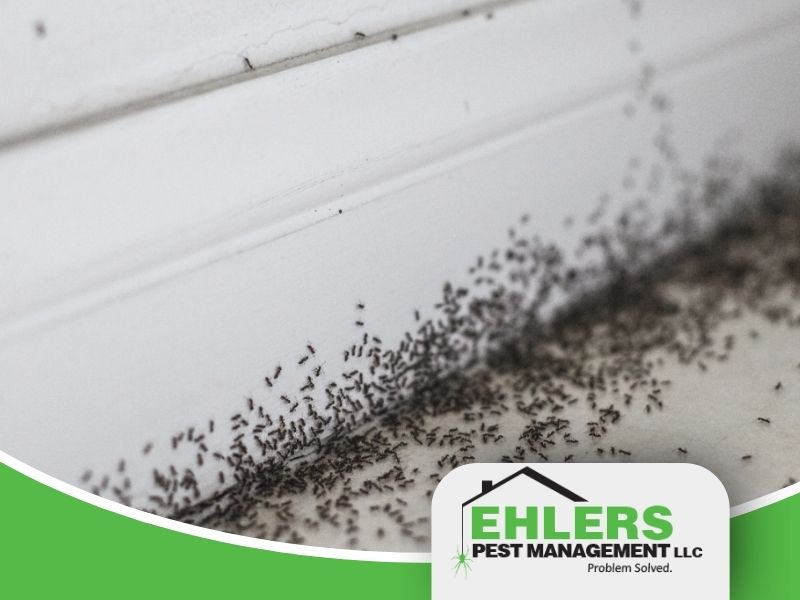

If you’re seeing ants in your house this spring in Milwaukee, you’re not imagining a surge — it’s real, it’s predictable, and it’s happening in homes across Southeastern Wisconsin right now. Spring is the most active season for ant activity indoors, and understanding why helps you respond more effectively than reaching for a can of spray and hoping for the best.
Here’s what’s driving spring ant activity in Milwaukee homes, why it tends to get worse before it gets better, and what to do about it.
Why Spring Triggers Ant Activity in Milwaukee Homes
Winter doesn’t kill ant colonies in Wisconsin — it slows them down. Colonies overwinter in a dormant state deep in the soil, under foundations, or inside wall voids where temperatures stay stable. When spring arrives and ground temperatures begin rising, colonies wake up hungry, crowded, and ready to expand.
Several things happen at once during a Wisconsin spring that drive ants indoors:
- Colony expansion. Queens begin laying eggs again as temperatures rise, and colonies grow rapidly. More mouths to feed means more foragers searching for food sources, including inside your home.
- Heavy spring rainfall. Rain saturates soil and drives ants to higher, drier ground. Your foundation and the warm, dry interior of your home are exactly what a flooded colony is looking for.
- Increased foraging range. Warmer temperatures increase ant metabolic activity, meaning foragers travel further and more frequently than they did in cooler months.
The result is that ant activity can appear to come from nowhere in spring — one week your kitchen is clear, the next you have a trail moving across your counter. That’s not a new problem appearing. That’s a colony that was already nearby waking up and expanding its range.
Spring Ant Control Milwaukee: What You’re Most Likely Dealing With
Two species account for the majority of spring ant problems in Milwaukee homes:
Pavement ants are small, dark brown ants commonly found near foundations, under slabs, and along baseboards. They’re most active in spring and early summer and are among the first species to show up indoors after winter. Pavement ant colonies can number in the tens of thousands and establish foraging trails quickly once temperatures warm.
Odorous house ants are slightly smaller, darker, and emit a distinctive blue-cheese odor when crushed. They’re highly adaptable, nest in a wide range of locations including wall voids and under flooring, and are particularly persistent once established indoors. Spring ant control in Milwaukee frequently involves odorous house ants because of how readily they exploit new food sources.
Both species respond differently to treatment, which is one of the most important reasons accurate identification matters before any product is applied.
What Makes Spring Ant Problems Worse
A few common homeowner responses to spring ant activity tend to make the problem harder to resolve:
Spraying contact insecticide. It kills foragers on contact but doesn’t reach the colony. Worse, some ant species respond to contact spray by budding — splitting into multiple satellite colonies that spread the infestation further into your home. If you’ve sprayed and the problem came back within days, this is likely what happened.
Treating too late. By the time you’re seeing a consistent trail of ants indoors, the colony is already well established and has been foraging your home long enough to reinforce its chemical trail repeatedly. Earlier intervention is always more effective and less costly.
Focusing on the interior only. Ants entering your home are coming from somewhere outside. Treating only inside your home addresses symptoms without touching the source.
What to Do About Spring Ants in Your Milwaukee Home
If you’re seeing consistent ant activity indoors this spring, here’s the most effective approach:
- Don’t spray. Bait is more effective because foragers carry it back to the colony.
- Eliminate moisture sources and food attractants that are drawing foragers inside.
- Seal visible entry points around pipes, windows, and foundation gaps.
- Contact a professional for species identification and targeted treatment if activity persists beyond a week or two, if you’ve tried DIY treatment without success, or if you’re seeing ants in multiple areas of your home.
Spring ant problems are very manageable when addressed early and correctly. Waiting to see if they go away on their own is rarely a strategy that works.
Ehlers Pest Management handles spring ant control in Milwaukee and across Southeastern Wisconsin. To schedule service or talk to our experienced team about what’s showing up in your home this spring, contact us today.
Frequently Asked Questions
Why do I get ants every spring in my Milwaukee home? If your home has had ant activity in previous springs, it’s likely that a colony is established nearby and has already identified your home as a reliable food source. Colonies return to successful foraging sites year after year. A preventative treatment applied in early spring before foraging activity peaks is the most effective way to break this cycle.
Are spring ants different from ants I see in summer? The same species are typically active through spring and summer, but spring activity tends to be more intense because colonies are expanding rapidly after winter dormancy and foraging aggressively to support that growth. Summer activity usually stabilizes once colonies reach their seasonal population peak.
How do I know if I have a serious ant infestation this spring? Signs of a significant infestation include consistent trails in the same areas, ant activity in multiple rooms, finding ants in food storage areas, or DIY treatments that fail to hold. If any of these apply, professional treatment is the right call.
Is spring the best time to treat for ants in Milwaukee? Early spring, before foraging activity peaks, is actually the ideal window for preventative ant treatment. Treating an active infestation in spring is also very effective because colonies are near the surface and foraging actively, which means bait is picked up and carried back to the colony quickly.