

If you’re closing a VA loan here, a WDI inspection in Milwaukee County is required, and so is one in nineteen other Wisconsin counties. Most agents find that out somewhere in the middle of a transaction rather than at the start, which is when a routine item turns into a timeline problem. This is written for the people who actually order these: agents, loan officers, and closing coordinators.
Here’s which counties require it, what the report covers, what happens if it comes back with a finding, and how fast you can reasonably expect paperwork.
When does a VA loan require a WDI inspection in Wisconsin?
The VA sets wood destroying insect inspection requirements county by county rather than statewide, and Wisconsin has twenty counties on the list: Columbia, Crawford, Dane, Dodge, Grant, Green, Iowa, Jefferson, Kenosha, Lafayette, Milwaukee, Ozaukee, Racine, Richland, Rock, Sauk, Vernon, Walworth, Washington, and Waukesha.
Nine of those sit inside our service area, and they cover most of where VA purchases happen in southeastern Wisconsin. If your transaction is in Milwaukee, Waukesha, Racine, Kenosha, Ozaukee, Washington, Walworth, Jefferson, or Dodge County, plan on it.
One caution. The VA updates local requirements periodically, so confirm the current requirement with your lender on any given file rather than relying on a list you read somewhere, including this one. Treat this as a planning tool and the lender’s word as the requirement.
What is a WDI inspection, and what’s on the form?
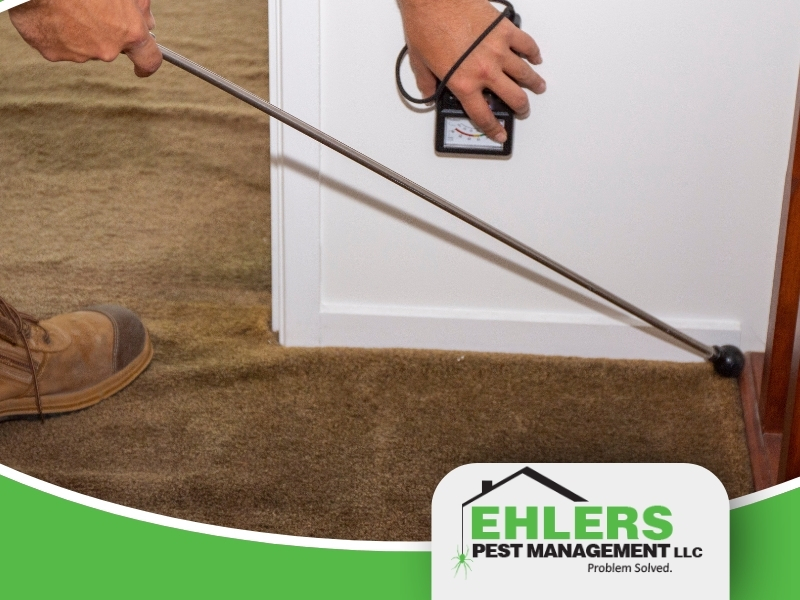
It’s a visual inspection of the accessible areas of a structure for evidence of wood destroying insects, documented on the NPMA-33 form or a state-approved equivalent. That form is what underwriting wants to see.
The report records three things: whether there’s visible evidence of active infestation, whether there’s evidence of previous infestation or damage, and what treatment, if any, is being recommended. It’s a point-in-time visual report on what’s accessible, which means finished basements, insulated crawl spaces, and stored belongings limit what anyone can see, and the report says so.
It isn’t a structural engineering report and it isn’t a home inspection. Agents occasionally expect it to cover more than it does, and setting that expectation with a buyer early prevents an awkward conversation later.
Who can perform it, and who can pay for it?
It has to be a state-licensed pest control professional acting as an independent third party. The appraiser can’t do it, and neither can the buyer’s uncle who used to work in the trade.
On payment, the rule changed and a lot of people in the industry are still working from the old version. Historically, VA borrowers were barred from paying the termite inspection fee in most states, which pushed the cost onto the seller or the agent. VA Circular 26-22-11, issued in June 2022, allows the veteran borrower to pay that fee in any state.
In practice, who pays is now a negotiation like any other line item. In markets where the requirement is routine, sellers often still cover it out of habit. The useful thing to know is that the old prohibition is gone, so a deal doesn’t need to stall over who’s allowed to write the check.
Does southeastern Wisconsin actually have termites?
Very few, and this surprises people who moved here from the South.
Subterranean termites exist in parts of Wisconsin but are uncommon in this corner of the state, and an inspection here rarely finds them. What it does find, when it finds anything, is usually carpenter ants, and occasionally powderpost beetles in older structures.
That’s worth understanding rather than glossing over, because it changes what a finding means for your transaction. Carpenter ants are a real problem that damages wood over time and needs treatment, and they’re also a more contained and more predictable situation than a termite finding would be. A report with carpenter ant evidence isn’t the deal-ending event people brace for when they hear the word termite.
What happens if the report finds activity or damage?
Active infestation has to be treated before the loan funds, and any structural damage has to be corrected to meet VA minimum property requirements. Underwriting will want documentation of the treatment.
In practice, this adds roughly a week to a closing, between scheduling the treatment and getting the paperwork back into the file. It’s manageable when it’s caught early and it’s painful when the inspection was ordered late, which is the entire argument for scheduling it alongside the appraisal instead of after.
Evidence of previous infestation with no current activity is a different situation and usually doesn’t require treatment. It does need to be documented accurately, and that’s where an inspector who writes clear reports saves everyone a round of questions from underwriting.
How fast can you get a WDI inspection in Milwaukee?
Same business day for the paperwork in most cases, and next business day at the outside.
We have the VA documentation, and the difference we hear about from agents is turnaround. You get the completed form, the service report, and the invoice together, usually the same day the inspection happens. An afternoon inspection means the paperwork is in your hands by that afternoon or by the same time the following day.
That matters because this is almost never the constraint on a closing until it is. A report that takes four days to arrive turns a routine requirement into the thing everyone is waiting on, and it’s the one part of this that’s entirely within the inspector’s control.
What actually slows these down?
Almost never the inspection itself. It’s access, and it’s the same short list every time.
- A crawl space that’s locked, blocked, or has no hatch anyone can find. If it can’t be entered, it gets noted as inaccessible, and an underwriter may come back asking about it.
- Storage stacked against basement foundation walls. Those walls are exactly what needs to be examined, and a technician isn’t going to move a homeowner’s belongings.
- Detached garages, sheds, and outbuildings nobody thought to unlock. Whether they’re in scope depends on the lender, so ask before the appointment rather than after.
- Vacant properties with no confirmed access, which is how a scheduled inspection turns into a second trip.
- Snow and frozen ground against the foundation on a winter close, which limits what’s visible outside.
Sorting access out when the appointment is booked prevents nearly all of it. If you’re the listing agent, a note to the seller about clearing the basement perimeter and unlocking the outbuildings takes two minutes and saves a re-inspection.
How long is the report good for?
Roughly ninety days as a general rule, though your lender sets the standard on the file.
On a normal thirty to forty-five day close it never comes up. On a long escrow, new construction, or a transaction that fell apart and got resurrected, it does. If a file has been sitting, check the date on the report before you assume it still works.
What agents and lenders should do next
Order it early, at the same time as the appraisal, and stop treating it as a late-stage item. Confirm the county requirement with your lender at the start of the file. And if a finding does come back, deal with it immediately rather than negotiating around it, because the treatment and the documentation are what the loan is actually waiting on.
If you write VA business in southeastern Wisconsin and you want an inspector who turns paperwork around the same day, call Ehlers Pest Management at (414) 303-6926. We’re a locally owned, veteran-owned company, we have the VA forms ready for you. If you order these regularly, ask for us by name when you call and we’ll get you on the schedule.