Categories Pest Treatment & Services

Stinging Insect Control in Milwaukee: Wasps, Yellow Jackets, and Hornets

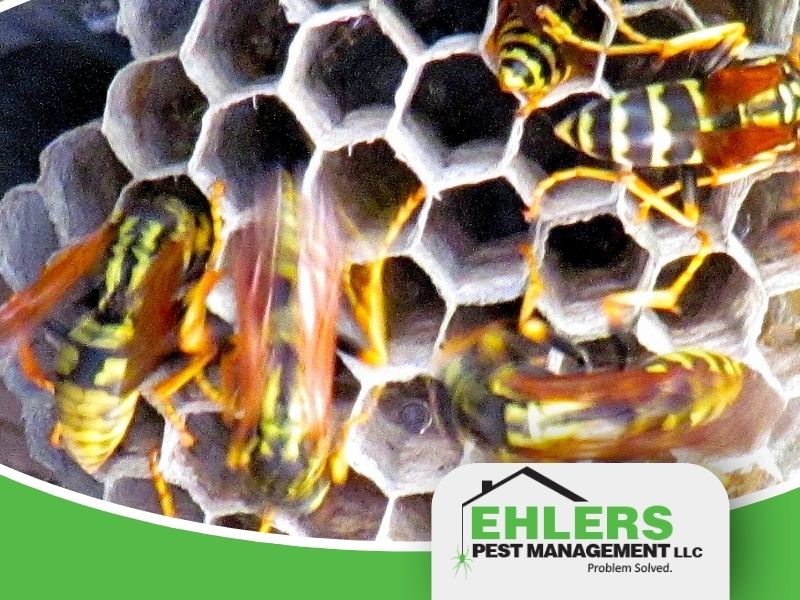
A honeycomb of wasps

If you’re finding stinging insects around your Milwaukee home this summer, stinging insect control in Milwaukee is one of those problems that gets more complicated the longer you wait. Wasp and yellow jacket colonies grow throughout the summer, reaching peak population by late August and early September. A nest that’s manageable in June becomes a much larger problem by fall.

Here’s what you’re most likely dealing with in Southeastern Wisconsin, why stinging insects are more dangerous than most homeowners realize, and when to stop troubleshooting and call a professional.

Common Stinging Insects in Milwaukee Homes and Yards

Not every stinging insect requires the same response. Knowing what you’re dealing with helps you make a smarter decision about how to handle it.

Paper wasps are slender, brownish insects that build open, umbrella-shaped nests under eaves, deck railings, window frames, and door frames. They’re relatively docile unless the nest is disturbed directly, but their preferred nesting locations put them in close proximity to daily human activity. Colonies are smaller than yellow jackets, typically 20 to 30 adults, but grow through summer.

Yellow jackets are the stinging insect most commonly responsible for painful encounters in Southeastern Wisconsin. They’re aggressive; they defend their territory vigorously, and unlike bees, they can sting repeatedly. Yellow jackets nest in the ground, inside wall voids, and in hollow trees or stumps. Ground nests are particularly dangerous because they’re easy to disturb accidentally while mowing or walking through the yard.

Bald-faced hornets build the large, gray, papery nests you’ve probably seen hanging from trees or attached to the exterior of a home. Colonies can reach several hundred workers by late summer and are highly aggressive when disturbed. These nests should never be approached or treated without professional equipment.

Mud daubers are solitary wasps that build small mud tubes on exterior walls, under overhangs, and inside garages. They’re generally non-aggressive and pose minimal risk, but their mud nests are unsightly and can attract other insects.

Why Stinging Insect Problems Get Worse Through Summer

This is the most important thing Milwaukee homeowners need to understand about stinging insects: colonies grow all summer long. A nest founded by a single queen in May will have dozens of workers by June, hundreds by July, and can reach peak population of several thousand in August and September.

As colonies grow, so does their defensive behavior. A small paper wasp nest in June that you’ve been coexisting with peacefully can become a genuinely hazardous situation by August when colony population and aggression levels are at their peak.

Summer is also when yellow jacket foraging behavior increases significantly. Colonies send out more workers searching for food, which brings them into more frequent contact with people eating outdoors, handling trash, or working in the yard.

The practical implication is straightforward: earlier treatment means smaller colonies, less aggressive behavior, and a simpler, safer removal process.

When Stinging Insects Become a Serious Problem

Most stinging insect encounters are unpleasant but not dangerous for people without allergies. However, there are situations that warrant immediate professional attention:

  • Nests near frequently used entry points. A nest above a front door, near a garage entry, or close to a children’s play area creates daily exposure risk that shouldn’t be ignored.
  • Ground nests discovered through accidental disturbance. Yellow jacket ground nests that have been disturbed by a lawnmower, foot traffic, or landscaping activity can trigger a mass defensive response. If this has happened, keep people and pets away from the area and call a professional.
  • Anyone in the household with a known venom allergy. For individuals with a diagnosed allergy to stinging insect venom, any nest on the property is a medical risk that should be professionally removed promptly.
  • Nests inside wall voids or structural cavities. Stinging insects nesting inside your home’s walls, attic, or crawl space require professional treatment. Attempting DIY removal of an interior nest can drive insects further into the structure or into living spaces.

What a Wasp Exterminator in Milwaukee Actually Does

Professional stinging insect control in Milwaukee involves more than spraying a can of wasp killer at a nest from a distance. Here’s what a proper treatment looks like:

Species identification. Treatment approach varies significantly by species. Yellow jacket ground nests, aerial hornet nests, and wall void infestations each require different methods and products.

Protective equipment. Professional technicians treat stinging insect nests with appropriate protective gear, which matters significantly when dealing with large yellow jacket or bald-faced hornet colonies.

Targeted product application. Professional-grade products applied directly into or onto the nest eliminate the colony at the source rather than just killing foragers that make contact with a surface spray.

Nest removal where appropriate. After treatment, removal of accessible nests prevents future use by other colonies and eliminates harborage for secondary pests.

Don’t Wait Until the Colony Is at Full Strength

Stinging insect colonies in Milwaukee reach peak size and peak aggression in late summer. Addressing a nest in June or July is faster, safer, and less disruptive than dealing with the same nest in August or September when it’s had all summer to grow.

Ehlers Pest Management provides stinging insect control across Milwaukee and Southeastern Wisconsin. To schedule service or talk to our experienced team about what you’re seeing on your property, contact us today.


Frequently Asked Questions

What is the most dangerous stinging insect in Milwaukee? Yellow jackets are responsible for the most painful and dangerous encounters in Southeastern Wisconsin because of their aggressive defensive behavior, their tendency to sting repeatedly, and their ground-nesting habit that makes accidental disturbance common. Bald-faced hornets are also highly aggressive when their nest is disturbed.

How do I know if I have yellow jackets or wasps? Yellow jackets are stockier, more brightly banded in yellow and black, and highly aggressive. They nest in the ground or in wall voids. Paper wasps are slender, brownish, and build open umbrella-shaped nests in sheltered above-ground locations. Bald-faced hornets are larger, black and white, and build large gray papery aerial nests.

Can I treat a wasp nest myself? For small, accessible paper wasp nests in a low-risk location, DIY treatment with an appropriately labeled aerosol product is feasible. For yellow jacket ground nests, bald-faced hornet nests, large aerial nests, or any nest inside a wall void or structural cavity, professional treatment is strongly recommended. The risk of a mass defensive response during DIY treatment of a large colony is significant.

When do stinging insects become less active in Wisconsin? Colony activity decreases as temperatures drop in fall. Most worker wasps and yellow jackets die off by the first hard frost, leaving only newly mated queens to overwinter. However, colonies reach their largest size and highest aggression levels in August and September before this decline begins.Will a wasp nest go away on its own in winter? The colony itself dies off, but the nest structure remains. Empty nests don’t typically attract new colonies the following year, but they can provide harborage for other insects. Removing accessible nests after the colony has died in late fall is worthwhile preventative maintenance.

Categories Pest Control Costs & Planning

Seasonal Pest Control Plans in Milwaukee: What’s Covered, What It Costs, and When You Need It

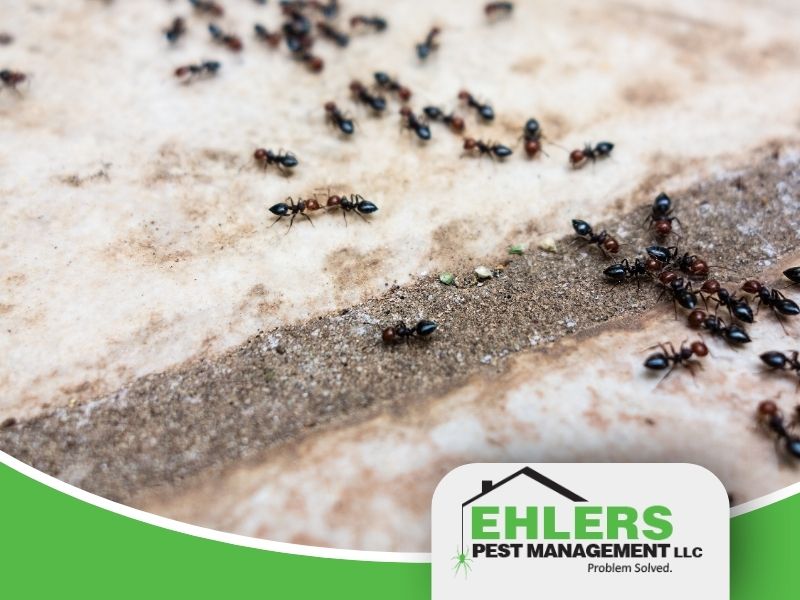
A line of black ants gather on some concrete.

If you’ve dealt with more than one pest problem in your Milwaukee home or business over the past year, a seasonal pest control plan in Milwaukee is probably worth a serious look. Recurring pest issues aren’t bad luck — they’re a signal that your property has conditions that attract pests, and that a one-time treatment isn’t addressing the underlying problem.

Here’s what seasonal pest control plans in Milwaukee actually include, what they cost, and how to figure out which level of coverage makes sense for your situation.

What a Seasonal Pest Control Plan Actually Is

A seasonal pest control plan is a scheduled, recurring service program that provides protection across multiple pest seasons rather than reacting to individual infestations as they appear. Instead of calling a pest control company every time you see ants in spring, wasps in summer, and mice in fall, a service plan covers all of it under a single program with scheduled visits timed to seasonal pest activity.

The core difference between a one-time treatment and a service plan is prevention versus reaction. One-time treatments address the pest problem you can see right now. A service plan addresses the conditions that produce pest problems repeatedly, and treats your property at the points in the season when intervention is most effective.

For most Milwaukee homeowners who’ve dealt with recurring pest issues, the math on a service plan is straightforward — consistent prevention costs significantly less over a full year than multiple reactive one-time treatments.

What Ehlers Pest Control Service Plans Cover

Ehlers Pest Management offers three service plan tiers designed to match different levels of pest pressure and protection needs.

Pro-Spray Plan The Pro-Spray plan is built around exterior perimeter protection using Ehlers’ truck-mounted high-powered spray system, which covers the full exterior of your home including second and third story peaks that standard equipment can’t reach. It targets seasonal exterior pests including wasps, box elder bugs, stink bugs, lady beetles, millipedes, and spiders.

Treatment frequencies are available at three levels to match your property’s pest pressure:

  • Three times per season, covering spring, summer, and fall
  • Two times per season, covering spring and fall
  • One time, on-demand

The Pro-Spray plan is the right starting point for homeowners dealing primarily with exterior seasonal pests and looking for reliable perimeter protection without a full interior program.

Seasonal Protection Plan The Seasonal Protection Plan provides comprehensive coverage across both interior and exterior pest problems through scheduled seasonal visits. It covers the full range of common residential pests including ants, spiders, wasps, box elder bugs, and other seasonal invaders, with treatments timed to pest activity cycles in Southeastern Wisconsin.

This plan is well suited for homeowners who want consistent year-round protection and have dealt with recurring pest problems both inside and outside the home.

Premium Protection Plan The Premium Protection Plan is Ehlers’ most comprehensive service tier, designed for homes with higher pest pressure, recurring problems across multiple pest types, or homeowners who want the most thorough level of ongoing protection available. It includes everything in the Seasonal Protection Plan with additional coverage and more frequent service intervals.

This plan is the right fit for properties with conditions that consistently attract pests, older homes with more entry points, or homeowners who’ve had recurring issues despite previous treatments.

How to Choose the Right Pest Control Service Plan in Milwaukee

The right plan depends on four things: what pests you’re dealing with, how frequently they’ve been a problem, the characteristics of your property, and your budget for ongoing protection.

A few questions that help clarify the right choice:

  • Have you dealt with the same pest problem in more than one season? If yes, a service plan addresses the recurring conditions rather than just the visible symptoms.
  • Are your pest issues primarily exterior, such as wasps, box elder bugs, and spiders, or do you also deal with interior problems like ants, mice, and cockroaches? Exterior-focused problems may be well served by the Pro-Spray plan. Interior problems need a more comprehensive program.
  • Does your home have characteristics that increase pest pressure, including older construction, a crawl space, mature landscaping close to the foundation, or proximity to wooded areas? Higher-risk properties generally benefit from more frequent service intervals.
  • Have one-time treatments resolved your pest problems in the past, or do problems return within the same season? Returning problems after treatment indicate underlying conditions that a service plan addresses more effectively.

What Seasonal Pest Control Plans Cost in Milwaukee

Service plan pricing varies based on the plan tier, your home’s size, and the treatment frequency you choose. As a general range, most Milwaukee homeowners investing in a recurring pest control service plan in Milwaukee spend between $300 and $600 per year for standard seasonal coverage, with premium plans for higher pest pressure properties priced accordingly.

That range compares favorably to the cumulative cost of multiple reactive one-time treatments across a full year, particularly for homeowners who’ve dealt with ants in spring, wasps in summer, and rodents in fall as separate problems requiring separate treatments.

Stop Reacting and Start Preventing

Pest problems in Milwaukee follow predictable seasonal patterns. A seasonal pest control plan puts treatment on the right side of that pattern, addressing vulnerabilities before pests take advantage of them rather than after they already have.

Ehlers Pest Management offers service plans for Milwaukee homeowners and businesses across Southeastern Wisconsin. To schedule service or talk to our experienced team about which plan fits your property, contact us today.


Frequently Asked Questions

Are seasonal pest control plans worth it for Milwaukee homeowners? For homeowners who’ve dealt with recurring pest problems across more than one season, a service plan almost always delivers better value than repeated one-time treatments. The cumulative cost of reactive treatments for ants, wasps, and rodents as separate problems typically exceeds the annual cost of a service plan that covers all of them.

What pests are covered under Ehlers service plans? Coverage varies by plan tier but generally includes common Southeastern Wisconsin pests including ants, spiders, wasps, yellow jackets, box elder bugs, stink bugs, lady beetles, and millipedes. Interior pest coverage including rodents and cockroaches is included in higher-tier plans. Your technician can walk you through exactly what’s covered under each option.

Can I get a pest control service plan for a commercial property in Milwaukee? Yes. Ehlers works with commercial properties across Southeastern Wisconsin including restaurants, warehouses, rental properties, and office buildings. Commercial service programs are structured around your facility’s specific pest pressure and compliance requirements.

What happens if I have a pest problem between scheduled visits? A reputable pest control company should return to address pest activity that occurs between scheduled service visits at no additional charge. Confirm this is part of any service agreement before you commit.

How do I know which Ehlers plan is right for my home? The best way to determine the right plan is a conversation with our team about your property, your pest history, and your priorities. We’ll recommend what makes sense for your situation, not what’s most profitable for us.

Categories Commercial Pest Control

Restaurant Pest Control in Milwaukee: What Every Food Service Business Needs to Know

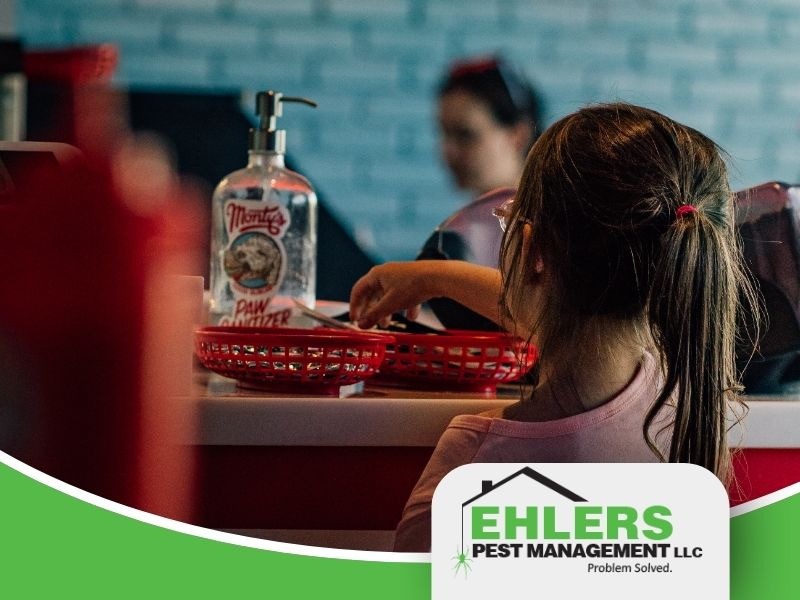
A little girl sits at the counter of a restaurant eating out of a red basket.

If you operate a food service business, restaurant pest control in Milwaukee isn’t optional — it’s a compliance requirement, a liability concern, and a direct threat to your reputation if it goes wrong. One failed health inspection, one online review mentioning a cockroach, or one rodent spotted by a customer can do damage that takes months to undo.

Here’s what Milwaukee restaurant owners and food service operators need to know about pest control, what the requirements actually look like, and how to make sure you’re protected.

Why Restaurants Are High-Risk Pest Environments

Food service businesses create ideal conditions for pests. Warmth, moisture, food debris, and constant deliveries coming in and out of your building combine to make restaurants one of the most pest-prone commercial environments there is.

The pests most commonly affecting Milwaukee restaurants include:

  • Cockroaches — drawn to warm, humid kitchen environments with food residue. German cockroaches in particular thrive in commercial kitchens and reproduce fast enough to become a serious problem within weeks.
  • Rodents — mice and rats follow food sources and can enter through gaps as small as a dime. Delivery entrances, floor drains, and utility penetrations are common access points.
  • Flies — drain flies, fruit flies, and house flies are persistent in food service environments and are a direct food contamination risk.
  • Stored product pests — pantry pests like Indian meal moths and grain beetles move in through deliveries and infest dry storage quickly if not caught early.

None of these problems resolve on their own, and in a restaurant environment, any delay in treatment carries real consequences.

Restaurant Pest Control Milwaukee: What Compliance Actually Requires

Wisconsin food service establishments are subject to inspection by the Wisconsin Department of Agriculture, Trade and Consumer Protection (DATCP) as well as local health departments. Pest activity is one of the most heavily weighted categories in a food service inspection.

What inspectors look for includes:

  • Evidence of rodent or insect activity, including droppings, gnaw marks, and live or dead pests
  • Gaps or openings in the structure that allow pest entry
  • Improper food storage that creates harborage conditions
  • Documentation of pest control service and treatment records

Working with a licensed, professional food service exterminator in Milwaukee means you have documented treatment records on file, which inspectors expect to see. A reputable pest control company will provide service documentation after every visit.

What Professional Restaurant Pest Control Looks Like

Commercial pest control for food service businesses is more involved than a standard residential treatment. Here’s what a professional program should include:

Scheduled preventative service. Reactive treatment after a pest problem appears is the wrong approach for a restaurant. A proactive service schedule, typically monthly or bi-monthly, catches problems before they escalate and keeps your facility in a defensible compliance position.

Thorough inspection of high-risk areas. Kitchen equipment, floor drains, dry storage, delivery areas, dumpster enclosures, and utility rooms all require regular attention. These are the areas where pest activity originates and where inspectors look first.

Targeted, food-safe treatment methods. Treatment in a food service environment requires products and methods that are safe for use around food preparation areas. Gel baits, tamper-resistant rodent stations, and insect light traps are standard tools in a commercial food service pest program.

Service documentation. Every visit should produce a written report documenting what was found, what was treated, and any recommendations for structural or sanitation improvements. This documentation protects you during inspections.

If your facility receives a pest-related violation, act immediately. Contact a licensed pest control company the same day, document every step of your response, and be prepared to demonstrate corrective action to your inspector. Speed and documentation are your two most important assets in this situation.

The better approach, of course, is making sure you never get there. A consistent, professional pest control program is significantly less expensive than the cost of a failed inspection, a temporary closure, or the reputational damage that follows.

Ehlers Pest Management provides restaurant pest control in Milwaukee and across Southeastern Wisconsin. We understand food service compliance requirements, work around your operating hours, and provide full service documentation after every visit. 

Schedule your service today!


Frequently Asked Questions

Do Milwaukee restaurants have to have a pest control contract? There’s no specific law requiring a contract, but documented pest control service is expected by inspectors and is effectively required to maintain compliance. A regular service program with written records is the standard.

Can pest control be done while the restaurant is open? It depends on the treatment type and the area being treated. Many exterior and non-food-contact treatments can be done during operating hours. Kitchen and food preparation area treatments are typically scheduled before opening or after closing. Your technician will work around your schedule.

How often should a Milwaukee restaurant be treated for pests? Most food service establishments benefit from monthly service, with some high-volume or higher-risk operations requiring bi-monthly visits. Your pest control provider should assess your facility and recommend a frequency based on your specific risk factors.

What pests are most common in Milwaukee restaurants? German cockroaches, mice, drain flies, fruit flies, and stored product pests are the most frequent issues in Milwaukee food service environments. All are manageable with a consistent professional pest control program.

Categories Commercial Pest Control

Property Management Pest Control in Wisconsin: What Landlords and PMs Need to Know

A pest control technician uses a sprayer to spray pesticide along a fence for a property management company

If you manage rental properties in Wisconsin, property management pest control isn’t a line item you can afford to treat as optional. Pest problems in rental units create tenant complaints, lease disputes, potential legal liability, and in some cases habitability violations that put your rental license at risk. Getting ahead of pest issues rather than reacting to them is one of the most cost-effective decisions a property manager or landlord can make.

Here’s what Wisconsin landlords and property managers need to know about their pest control obligations, how to structure a program that protects your properties and your tenants, and when to call a professional.

Managing rental properties in Milwaukee or Southeastern Wisconsin? Talk to our experienced commercial team about a property management pest control program.

Wisconsin Landlord Pest Control Obligations: What the Law Actually Says

Wisconsin law requires landlords to maintain rental properties in a condition that is fit for human habitation. Pest infestations that affect habitability, including rodents, cockroaches, and bed bugs, fall squarely within this obligation.

Under Wisconsin Administrative Code ATCP 134, landlords are required to:

  • Maintain rental units free from conditions that are dangerous to tenant health or safety
  • Respond promptly to tenant-reported pest problems
  • Disclose known pest issues to prospective tenants before lease signing

Failure to address a reported pest problem within a reasonable timeframe can give tenants grounds to withhold rent, terminate their lease, or pursue legal action. In multi-unit properties, an unaddressed infestation in one unit that spreads to others significantly compounds your liability exposure.

Understanding your obligations before a tenant complaint arrives is significantly better than learning them during a dispute.

The Pest Problems Most Common in Wisconsin Rental Properties

Mice and rodents are the most frequently reported pest issue in Milwaukee rental properties, particularly in older buildings with aging foundations and utility penetrations that haven’t been sealed. Fall and winter drive rodents indoors, and in multi-unit buildings they move freely between units through shared wall voids and plumbing chases.

Bed bugs are a persistent challenge in multi-unit residential properties. They spread between units, tenants dispute responsibility for the source, and treatment in one unit without addressing adjacent units frequently results in reinfestation. Landlord pest control in Milwaukee for bed bugs requires a clear protocol and consistent follow-through.

Cockroaches are most common in older urban rental stock, particularly in properties with shared plumbing and aging kitchen infrastructure. German cockroaches move between units rapidly and are extremely difficult to eliminate without treating an entire building section simultaneously.

Ants and seasonal pests generate consistent tenant complaints in spring and summer, particularly in ground-floor units and properties with mature landscaping close to the building foundation.

Why Reactive Pest Control Costs More Than Preventative Service

This is the calculation most property managers eventually make after dealing with a significant infestation: the cost of reactive treatment for an established pest problem, combined with tenant relations damage, potential legal exposure, and unit downtime, almost always exceeds the cost of a consistent preventative program.

A proactive property management pest control program in Wisconsin typically includes:

  • Scheduled perimeter treatments at exterior entry points, foundation lines, and common areas on a seasonal or monthly basis
  • Unit inspections at tenant turnover to identify and address pest activity before a new tenant moves in
  • Rapid response protocols for tenant-reported pest issues that keep response times short and documentation thorough
  • Service records for every treatment, which protect you in the event of a tenant dispute or habitability complaint

How to Structure Pest Control Across a Multi-Unit Property

Single-family rental properties are relatively straightforward. Multi-unit properties require a more structured approach.

For apartment buildings and multi-unit residential properties, a building-wide treatment program is more effective and more cost-efficient than treating individual units reactively. Treating one cockroach-infested unit while leaving adjacent units untreated almost guarantees reinfestation within weeks. A professional commercial exterminator in Milwaukee can assess your building and recommend a program that addresses the property as a whole rather than as a collection of isolated units.

For larger portfolios across multiple properties, a consolidated service agreement with a single provider gives you consistent documentation, predictable costs, and a technician who knows your properties and their specific pest pressure points.

Protect Your Properties Before a Tenant Complaint Forces Your Hand

Pest problems in rental properties don’t stay contained. They spread between units, generate complaints, and create liability that a consistent professional program would have prevented entirely.

Ehlers Pest Management works with property managers and landlords across Milwaukee and Southeastern Wisconsin to build pest control programs that protect tenants, satisfy Wisconsin habitability requirements, and keep your properties running without the disruption of reactive emergency treatments. Contact us today to talk to our experienced commercial team about a program that fits your portfolio.


Frequently Asked Questions

Who is responsible for pest control in a Wisconsin rental — the landlord or the tenant? In Wisconsin, the landlord is generally responsible for maintaining the property free from pest infestations that affect habitability. Tenant-caused infestations, such as those resulting from unsanitary conditions the tenant created, may shift some responsibility, but the landlord is still typically obligated to address the infestation itself. Consulting with a Wisconsin attorney familiar with landlord-tenant law is advisable for specific situations.

Can a tenant withhold rent for a pest problem in Wisconsin? Wisconsin law provides tenants with remedies for landlord failure to maintain habitable conditions, which can include pest infestations. Tenants may have grounds to withhold rent or pursue other legal remedies if a landlord fails to respond to a reported pest problem within a reasonable timeframe. Prompt response and documentation are your best protection.

How quickly should a landlord respond to a tenant pest complaint in Wisconsin? While Wisconsin law doesn’t specify an exact timeframe, responding within 24 to 48 hours and scheduling professional treatment within a week of a reported infestation is considered reasonable practice. Delays beyond that window increase your liability exposure and give tenants stronger grounds for legal remedies.

How do I handle bed bugs in a multi-unit rental property? Bed bug treatment in a multi-unit property should include the affected unit and all directly adjacent units, including units above, below, and to either side. Treating a single unit in isolation almost always results in reinfestation from neighboring units. A professional assessment of the full affected area is essential before treatment begins.

What pest control documentation should I keep as a Wisconsin landlord? Retain service reports from every pest control treatment, tenant communications related to pest complaints, and any inspection reports that document pest findings or conditions. This documentation protects you in the event of a habitability dispute and demonstrates good-faith compliance with your obligations.

Categories Pest Identification & Prevention

Mice in the House This Winter? Wisconsin Rodent Season Explained

Two mice press their faces up close to a camera

If you haven’t dealt with mice in your Wisconsin home yet, summer is actually the best time to think about it — because by the time fall arrives and rodents start pushing indoors, the window to get ahead of the problem has already closed. Understanding how and why mice in Wisconsin homes become a seasonal problem gives you a meaningful advantage before rodent season starts.

Here’s what drives rodent activity in Southeastern Wisconsin, which homes are most vulnerable, and what to do now while the timing is still on your side.

Why Wisconsin Homes See More Mice in Fall and Winter

Mice don’t hibernate. When outdoor temperatures drop in Wisconsin, they look for somewhere warm, dry, and close to food. Your home checks every one of those boxes.

Rodent pressure on Wisconsin homes typically increases starting in September and peaks through November as temperatures fall consistently. Mice that are going to overwinter indoors don’t wait for the first frost — they begin scouting for entry points in late summer, which means the decisions you make now in June and July directly affect what you find in your walls come October.

A few factors specific to Southeastern Wisconsin make rodent pressure more pronounced here than in warmer climates:

  • Temperature extremes. Wisconsin winters are cold enough to make outdoor survival genuinely difficult for small mammals, which increases the drive to find indoor shelter earlier in the season.
  • Older housing stock. Milwaukee and its surrounding communities have a significant proportion of older homes with aging foundations, deteriorating weatherstripping, and utility penetrations that were never properly sealed. These homes offer mice multiple entry points that newer construction typically doesn’t.
  • Mature landscaping and wooded lots. Overgrown vegetation, wood piles, and mature tree coverage close to the home provide harborage and travel corridors that bring mice right to your foundation.

What Mice Are Doing Right Now in Summer

Summer is actually an active period for the mouse populations that will eventually target your home. Mice reproduce rapidly during warmer months — a single female can produce multiple litters between spring and fall, each with several pups that reach reproductive maturity within weeks.

What this means practically is that the mouse population in your yard and neighborhood is at or near its seasonal peak right now. Those populations will begin moving indoors as temperatures drop. The larger the outdoor population heading into fall, the more pressure your home will face at the entry points you haven’t yet addressed.

Summer is also when exclusion work is most comfortable and most effective to complete. Sealing foundation gaps, replacing weatherstripping, and addressing utility penetrations is work that’s far easier to do in warm weather than during a Wisconsin winter.

Signs That Mice Have Already Found a Way In

Even in summer, some homes already have rodent activity. Signs worth looking for include:

  • Droppings near baseboards, in cabinets, behind appliances, or in utility areas
  • Gnaw marks on food packaging, wood near the floor, or electrical wiring
  • Nesting material in undisturbed storage areas, deep cabinets, or boxes that haven’t been moved recently
  • A musty odor in enclosed spaces like utility rooms, closets, or crawl spaces
  • Pet behavior changes — dogs and cats frequently detect rodent activity before their owners do

Finding any of these signs in summer means an entry point exists and is already being used. Addressing it now prevents a much larger fall infestation.

Why Getting Ahead of Rodent Season Matters

This is the calculation that makes summer rodent control in Milwaukee worthwhile. Mice that enter your home in fall have all winter to establish nesting sites, reproduce, and cause damage inside wall voids, insulation, and around electrical wiring before warmer weather drives them back out.

An established winter infestation is significantly harder and more expensive to resolve than entry points identified and sealed before rodents move in. Reactive rodent control in Milwaukee after mice are already inside involves locating nesting sites, eliminating the existing population, and then completing the exclusion work that should have happened in fall. Doing it in the right order — exclusion first, while populations are still outdoors — is faster, less disruptive, and less costly.

What to Do Now to Protect Your Home This Fall

A few targeted steps taken this summer meaningfully reduce your rodent risk heading into fall:

  • Inspect your foundation for gaps, cracks, and utility penetrations larger than a dime — the minimum opening a mouse needs to enter
  • Check weatherstripping around all exterior doors and replace anything that’s compressed, torn, or leaving a visible gap at the bottom
  • Move wood piles and dense vegetation away from the foundation to eliminate harborage close to your home
  • Schedule a professional inspection if you’ve had rodent problems in previous fall or winter seasons — a technician can identify entry points you’re likely to miss and assess your home’s specific vulnerability

Ehlers Pest Management provides rodent control across Milwaukee and Southeastern Wisconsin. To schedule service or talk to our experienced team about protecting your home before fall rodent season begins, contact us today.


Frequently Asked Questions

When does rodent season start in Wisconsin? Mice begin scouting for indoor entry points in late summer, with pressure on Wisconsin homes increasing noticeably in September and peaking through November. Summer is the ideal window to address entry points and vulnerabilities before this seasonal push begins.

How do mice get into Wisconsin homes? Mice can squeeze through gaps as small as a dime. Common entry points include gaps around utility pipes and conduits, deteriorating weatherstripping around doors and windows, cracks in the foundation, and openings around dryer vents and HVAC penetrations. Older homes with aging building envelopes are particularly vulnerable.

Can mice cause damage beyond the nuisance? Yes. Mice gnaw on electrical wiring, which is a documented cause of house fires. They also damage insulation, contaminate food storage areas with droppings and urine, and can carry pathogens including salmonella. The structural and health risks from an established rodent infestation are significant enough to warrant prevention rather than reaction.

Is summer a good time to treat for rodents if I haven’t seen any signs yet? Yes. A summer inspection and exclusion treatment addresses entry points while outdoor populations are still outside, which is significantly more effective than treating an established infestation after mice have already moved in for the winter.