
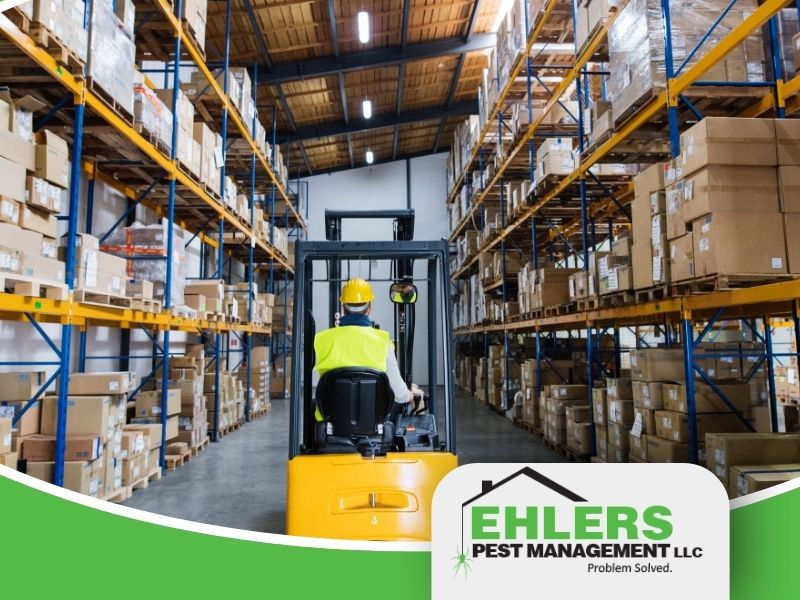

If you manage a warehouse or distribution facility, warehouse pest control in Milwaukee is one of those operational concerns that doesn’t get enough attention until something goes wrong. A rodent chewing through product packaging, an insect infestation in stored goods, or a pest-related finding during a compliance audit can shut down operations, trigger customer chargebacks, and create liability exposure that far exceeds the cost of prevention.
Here’s what Milwaukee warehouse and distribution operators need to know about pest control, what the risks actually look like, and what a professional program should include.
Why Warehouses Are Vulnerable to Pest Problems
Warehouses create conditions that attract and sustain pest populations in ways that aren’t always obvious until a problem is well established.
Large square footage, high product volume, and frequent deliveries create multiple entry points and harborage opportunities that a single inspection can easily miss. Palletized goods stored directly on the floor, damaged packaging, and inconsistent inventory rotation all provide food and shelter for pests. Loading docks with gaps around dock doors, floor drains, utility penetrations, and roof vents are among the most common entry points for rodents and insects.
The pests most frequently affecting Milwaukee warehouses include:
- Rodents — mice and rats follow food sources and warmth into warehouse environments, nesting inside palletized goods, insulation, and wall voids. Their gnawing damages product, packaging, and electrical wiring.
- Stored product pests — Indian meal moths, grain beetles, and weevils move in through infested incoming shipments and spread quickly through dry goods inventory.
- Cockroaches — particularly in warehouses storing food products or operating break rooms and kitchen areas.
Compliance and Liability: What’s Actually at Stake
For warehouses handling food products, pharmaceuticals, or consumer goods, pest activity isn’t just an operational nuisance — it’s a compliance and liability issue with real financial consequences.
FDA food safety regulations, third-party audits from customers and retail partners, and state-level food storage requirements all address pest control as a critical component of facility compliance. A pest finding during an audit can trigger product holds, customer deductions, or loss of contracts. In the food industry specifically, a single contamination incident can result in a product recall.
Working with a licensed commercial exterminator in Milwaukee means your facility has documented pest control records on file at all times — which auditors and inspectors expect to see and which protect you if a pest-related question arises.
What a Professional Warehouse Pest Control Program Includes
Effective warehouse pest control in Milwaukee goes well beyond a quarterly spray treatment. A professional commercial program should include:
Comprehensive facility inspection. Before any treatment begins, a thorough inspection identifies current pest activity, entry points, harborage conditions, and high-risk areas specific to your facility layout and product mix.
Perimeter and interior rodent management. Tamper-resistant rodent stations placed along the interior perimeter and at exterior entry points provide ongoing monitoring and control. Station counts and placements are adjusted based on activity levels.
Stored product pest monitoring. Pheromone traps placed in storage areas detect stored product pest activity before infestations become established. Early detection dramatically reduces the scope and cost of treatment.
Loading dock and entry point management. Door sweeps, dock seals, and structural recommendations address the most common entry points. These exclusion measures work alongside treatment to prevent reinfestation.
Service documentation. Every visit produces a written report documenting findings, treatments, and recommendations. This documentation is your compliance record and your first line of defense during an audit.
Scheduled service frequency. Most warehouse facilities benefit from monthly service, with higher-risk or food-grade facilities often requiring bi-monthly visits during warmer months when pest pressure is highest.
The Cost of Doing Nothing
Pest problems in warehouse environments follow a predictable pattern: they start small and invisible, grow steadily, and become visible only after they’re well established and significantly more expensive to resolve.
A minor rodent presence discovered during a routine inspection is a manageable problem. A rodent infestation discovered during a customer audit, or worse, a product contamination event, is a business crisis. The math on proactive pest control is straightforward — consistent prevention costs a fraction of what reactive remediation and compliance recovery costs.
Ehlers Pest Management provides warehouse pest control in Milwaukee and across Southeastern Wisconsin. We work with distribution and storage facilities to build pest management programs that protect inventory, support compliance, and fit your operational schedule.
Get your service scheduled so you can get back to business.
Frequently Asked Questions
How often should a Milwaukee warehouse be treated for pests? Most warehouse facilities benefit from monthly service. Higher-risk facilities handling food products or operating in older structures may require bi-monthly visits, particularly during spring and summer when pest pressure increases. Your technician will recommend a frequency based on your facility’s specific risk profile.
What documentation does a pest control company provide for compliance audits? A reputable commercial pest control provider supplies written service reports after every visit, documenting what was inspected, what was found, what was treated, and any structural or sanitation recommendations. These records should be retained and made available during audits on request.
How do pests get into warehouses? The most common entry points are loading dock doors and gaps around dock seals, floor drains, utility penetrations, roof vents, and damaged building envelope. Infested incoming shipments are also a frequent source of stored product pest introductions.
Can warehouse pest control be scheduled around operating hours? Yes. A professional commercial pest control provider will work around your receiving schedule, shift changes, and operational requirements. Many treatments can be performed during off-hours or in non-operational areas without disrupting facility operations.
What’s the difference between residential and commercial pest control? Commercial pest control, particularly for warehouses and food facilities, involves more rigorous inspection protocols, compliance-oriented documentation, higher-volume treatment methods, and service programs designed around regulatory requirements rather than seasonal convenience.