
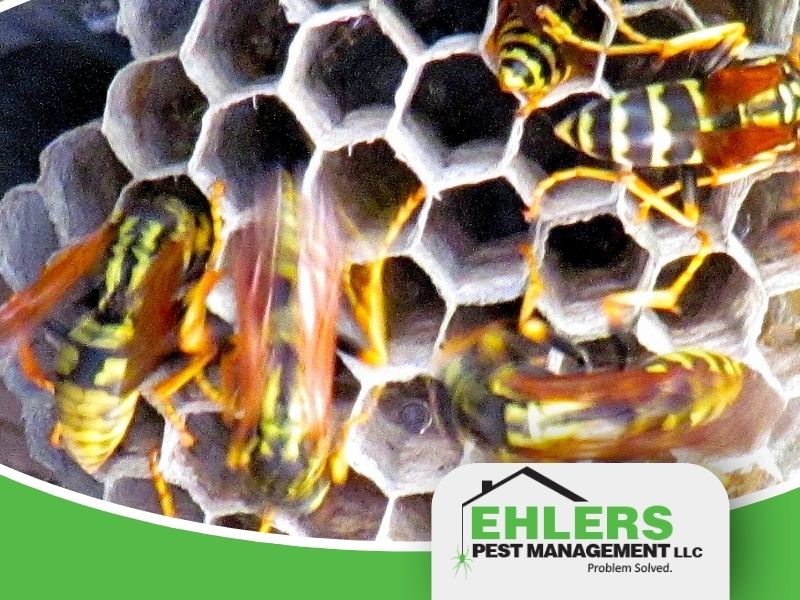

If you’re finding stinging insects around your Milwaukee home this summer, stinging insect control in Milwaukee is one of those problems that gets more complicated the longer you wait. Wasp and yellow jacket colonies grow throughout the summer, reaching peak population by late August and early September. A nest that’s manageable in June becomes a much larger problem by fall.
Here’s what you’re most likely dealing with in Southeastern Wisconsin, why stinging insects are more dangerous than most homeowners realize, and when to stop troubleshooting and call a professional.
Common Stinging Insects in Milwaukee Homes and Yards
Not every stinging insect requires the same response. Knowing what you’re dealing with helps you make a smarter decision about how to handle it.
Paper wasps are slender, brownish insects that build open, umbrella-shaped nests under eaves, deck railings, window frames, and door frames. They’re relatively docile unless the nest is disturbed directly, but their preferred nesting locations put them in close proximity to daily human activity. Colonies are smaller than yellow jackets, typically 20 to 30 adults, but grow through summer.
Yellow jackets are the stinging insect most commonly responsible for painful encounters in Southeastern Wisconsin. They’re aggressive; they defend their territory vigorously, and unlike bees, they can sting repeatedly. Yellow jackets nest in the ground, inside wall voids, and in hollow trees or stumps. Ground nests are particularly dangerous because they’re easy to disturb accidentally while mowing or walking through the yard.
Bald-faced hornets build the large, gray, papery nests you’ve probably seen hanging from trees or attached to the exterior of a home. Colonies can reach several hundred workers by late summer and are highly aggressive when disturbed. These nests should never be approached or treated without professional equipment.
Mud daubers are solitary wasps that build small mud tubes on exterior walls, under overhangs, and inside garages. They’re generally non-aggressive and pose minimal risk, but their mud nests are unsightly and can attract other insects.
Why Stinging Insect Problems Get Worse Through Summer
This is the most important thing Milwaukee homeowners need to understand about stinging insects: colonies grow all summer long. A nest founded by a single queen in May will have dozens of workers by June, hundreds by July, and can reach peak population of several thousand in August and September.
As colonies grow, so does their defensive behavior. A small paper wasp nest in June that you’ve been coexisting with peacefully can become a genuinely hazardous situation by August when colony population and aggression levels are at their peak.
Summer is also when yellow jacket foraging behavior increases significantly. Colonies send out more workers searching for food, which brings them into more frequent contact with people eating outdoors, handling trash, or working in the yard.
The practical implication is straightforward: earlier treatment means smaller colonies, less aggressive behavior, and a simpler, safer removal process.
When Stinging Insects Become a Serious Problem
Most stinging insect encounters are unpleasant but not dangerous for people without allergies. However, there are situations that warrant immediate professional attention:
- Nests near frequently used entry points. A nest above a front door, near a garage entry, or close to a children’s play area creates daily exposure risk that shouldn’t be ignored.
- Ground nests discovered through accidental disturbance. Yellow jacket ground nests that have been disturbed by a lawnmower, foot traffic, or landscaping activity can trigger a mass defensive response. If this has happened, keep people and pets away from the area and call a professional.
- Anyone in the household with a known venom allergy. For individuals with a diagnosed allergy to stinging insect venom, any nest on the property is a medical risk that should be professionally removed promptly.
- Nests inside wall voids or structural cavities. Stinging insects nesting inside your home’s walls, attic, or crawl space require professional treatment. Attempting DIY removal of an interior nest can drive insects further into the structure or into living spaces.
What a Wasp Exterminator in Milwaukee Actually Does
Professional stinging insect control in Milwaukee involves more than spraying a can of wasp killer at a nest from a distance. Here’s what a proper treatment looks like:
Species identification. Treatment approach varies significantly by species. Yellow jacket ground nests, aerial hornet nests, and wall void infestations each require different methods and products.
Protective equipment. Professional technicians treat stinging insect nests with appropriate protective gear, which matters significantly when dealing with large yellow jacket or bald-faced hornet colonies.
Targeted product application. Professional-grade products applied directly into or onto the nest eliminate the colony at the source rather than just killing foragers that make contact with a surface spray.
Nest removal where appropriate. After treatment, removal of accessible nests prevents future use by other colonies and eliminates harborage for secondary pests.
Don’t Wait Until the Colony Is at Full Strength
Stinging insect colonies in Milwaukee reach peak size and peak aggression in late summer. Addressing a nest in June or July is faster, safer, and less disruptive than dealing with the same nest in August or September when it’s had all summer to grow.
Ehlers Pest Management provides stinging insect control across Milwaukee and Southeastern Wisconsin. To schedule service or talk to our experienced team about what you’re seeing on your property, contact us today.
Frequently Asked Questions
What is the most dangerous stinging insect in Milwaukee? Yellow jackets are responsible for the most painful and dangerous encounters in Southeastern Wisconsin because of their aggressive defensive behavior, their tendency to sting repeatedly, and their ground-nesting habit that makes accidental disturbance common. Bald-faced hornets are also highly aggressive when their nest is disturbed.
How do I know if I have yellow jackets or wasps? Yellow jackets are stockier, more brightly banded in yellow and black, and highly aggressive. They nest in the ground or in wall voids. Paper wasps are slender, brownish, and build open umbrella-shaped nests in sheltered above-ground locations. Bald-faced hornets are larger, black and white, and build large gray papery aerial nests.
Can I treat a wasp nest myself? For small, accessible paper wasp nests in a low-risk location, DIY treatment with an appropriately labeled aerosol product is feasible. For yellow jacket ground nests, bald-faced hornet nests, large aerial nests, or any nest inside a wall void or structural cavity, professional treatment is strongly recommended. The risk of a mass defensive response during DIY treatment of a large colony is significant.
When do stinging insects become less active in Wisconsin? Colony activity decreases as temperatures drop in fall. Most worker wasps and yellow jackets die off by the first hard frost, leaving only newly mated queens to overwinter. However, colonies reach their largest size and highest aggression levels in August and September before this decline begins.Will a wasp nest go away on its own in winter? The colony itself dies off, but the nest structure remains. Empty nests don’t typically attract new colonies the following year, but they can provide harborage for other insects. Removing accessible nests after the colony has died in late fall is worthwhile preventative maintenance.