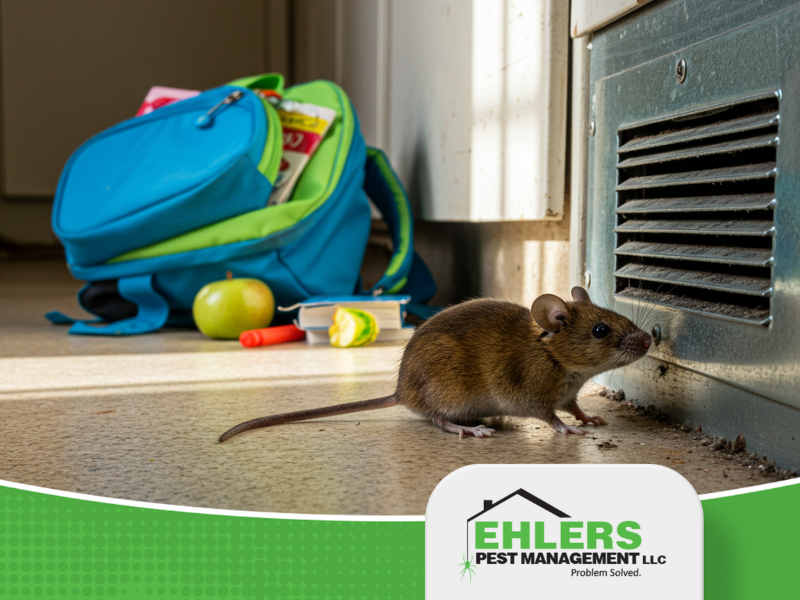
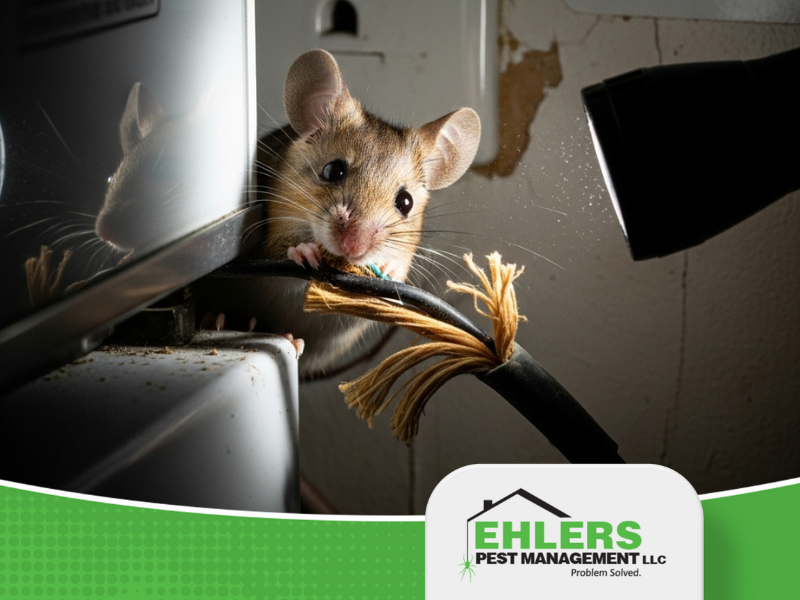
Most advice on how to get rid of mice stops at the trap, which is why so many people end up catching mice every October for years. The trap handles the animal in your kitchen. It does nothing about the gap it came through.
Here’s the sequence that actually ends it, and the honest line between what you can do yourself and what you can’t.
Getting rid of mice takes three things in order: trapping to remove the animals already inside, finding how they’re getting in, and closing those openings where the building allows it. Traps alone work for a single mouse. For a recurring problem, the entry points are the part that matters.
How to get rid of mice: what’s the right order?
Remove what’s inside, find the openings, then close them. Reversing those last two is the common mistake.
Trapping comes first because sealing a building with mice inside traps them in the walls, and a mouse that dies in a wall cavity can’t be retrieved. The odor lasts weeks and there’s no practical remedy. So the animals come out before the openings go shut.
Finding the openings is the step most people skip, and it’s the one that determines whether you’re doing this again next year. Mice fit through a gap about the width of a pencil, which is smaller than almost anyone estimates. Common ones in Milwaukee housing: the gap where utility lines enter, the space under a poorly fitted garage door, deteriorated mortar in an older foundation, an unscreened dryer vent or crawlspace vent, the void around a sill plate, and the gap behind a kitchen cabinet toe-kick where plumbing comes up. The detail is in where mice are getting into your house.
Then sealing, with a condition attached that’s covered further down.
What actually works for trapping mice?
Snap traps, placed correctly, in numbers that match the problem.
Placement is most of it. Mice travel along walls and structural edges rather than crossing open floor, so a trap set perpendicular to the wall with the trigger end against the baseboard intercepts the path they’re already using. A trap in the middle of a floor is in a place no mouse will walk. Set them where the droppings are, because that’s the evidence of the actual route.
Four things that make a measurable difference:
- Use more traps than feels necessary. A dozen in an active area isn’t excessive, and two is usually not enough to matter.
- Bait with something sticky rather than something a mouse can carry off. A small smear of peanut butter works better than cheese, which gets taken cleanly.
- Leave them alone for a few days. Mice are less wary of new objects than rats, but handling and moving traps every night resets any progress.
- Check and clear daily once they start producing. An occupied trap is a trap that isn’t working.
Glue boards and live traps both have problems. Glue boards are inhumane and often produce an animal that’s still alive hours later. Live traps require releasing a mouse somewhere, and a mouse released within a few hundred feet comes back.
Poison indoors has the same drawback as sealing too early: the animal dies where you can’t reach it. It has a role in some situations, handled in tamper-resistant stations, and that’s a judgment call based on what’s around the building.
Why do mice keep coming back?
Because the openings are still open, and because a heated Wisconsin house is a better place to live than the yard.
House mice breed year round indoors. A heated building with food access doesn’t have a season, so the population inside isn’t waiting for spring. That’s the difference between mice and the insects people think of as seasonal: a January delay isn’t neutral.
The recurring pattern usually has one of three causes. The entry points were never found, so each autumn brings a new group through the same gap. Or they were found and sealed with a material mice chew through, which includes foam, caulk, and plastic. Or there’s a population established in a space nobody has inspected, typically an attic, a crawlspace, or a wall void, and the kitchen sightings are the overflow rather than the problem. The full version is in why mice keep coming back.
When is sealing the building worth doing?
It depends on the condition of the building, and that’s a real distinction rather than a hedge.
On a house in sound shape, with intact siding, solid mortar, and a limited number of identifiable openings, sealing the entry points is usually the thing that finally ends the cycle. It’s separate work from a treatment, it gets quoted after an inspection rather than bundled into a standard visit, and on the right house it’s the best money in rodent control.
On a building with widespread deterioration, failing mortar across a whole foundation, rotted sills, or siding that’s coming apart, closing six openings while two dozen remain accomplishes very little. The honest advice there is to address the structure first, and a technician should tell you that rather than selling the sealing anyway.
Materials matter as much as the decision. Things mice chew through: expanding foam, caulk, wood, plastic, steel wool left loose. Things that hold: hardware cloth, sheet metal, mortar, and copper mesh packed tight and sealed over. A repair that failed usually had a soft edge to start on.
When should you just handle it yourself?
One mouse in autumn, in a house with no history. Go set some traps.
A single mouse in October or November is an ordinary Wisconsin event and doesn’t need a professional. A few snap traps along the wall where you’ve seen droppings will almost always end it within a week. Nobody needs to be paid for that, and a company telling you otherwise is selling.
The situations where it’s worth calling instead: droppings appearing in multiple rooms, or in a kitchen or pantry. Scratching in walls or ceilings, which means they’re in a space you can’t reach. Traps staying empty while fresh droppings keep appearing, which means your assumption about the route is wrong. A problem that’s returned more than once, which means the entry points are the issue rather than the animals. And anything that turns out to be rats rather than mice, which is a different job with a different approach.
What should you do next?
If this is your first mouse of the season, set traps along the wall where the droppings are and give it a week. If you’ve done that before and you’re doing it again, the trapping isn’t the problem and more traps won’t fix it. The openings are, and finding them is what changes the outcome.
Ehlers Pest Management handles rodent control across Milwaukee, Waukesha, and Racine counties. You can talk to our experienced team at (414) 303-6926 or schedule an inspection online, and a certified technician will find how they’re getting in and tell you honestly whether sealing your particular building is worth doing.
Frequently asked questions
How long does it take to get rid of mice?
A single mouse usually goes within a few days to a week of setting traps properly. An established population takes longer, typically a few weeks of trapping before activity stops, and the problem isn’t finished until the entry points are dealt with. A house where trapping works but nothing is sealed tends to be back in the same position the following autumn.
Do mice leave on their own in spring?
Not from inside a house. Mice that have established indoors have food, warmth, and shelter year round and no reason to leave. What happens in spring is that outdoor pressure drops, so new arrivals slow down and the problem seems to improve while the resident population carries on breeding.
Does one mouse mean there are more?
In autumn, often not. A single mouse coming in ahead of cold weather is normal and frequently is just one. What does indicate more is droppings in multiple locations, droppings of noticeably different sizes, scratching inside walls, or a mouse seen during daylight, which usually means the population is large enough to push some individuals into competing for food.
Will a cat take care of a mouse problem?
Sometimes for one or two, not for a population. Cats catch mice in open spaces and can’t reach the ones nesting in wall voids, attics, or under cabinets, which is where a breeding population actually lives. A cat also doesn’t close the gap they’re coming in through, so the arrivals continue regardless.
Are ultrasonic repellers worth buying?
No. They’ve been tested repeatedly and don’t produce meaningful results, and where any effect shows up at all it fades as the animals get used to the sound. The money is better spent on traps and a door sweep, both of which do something measurable.