
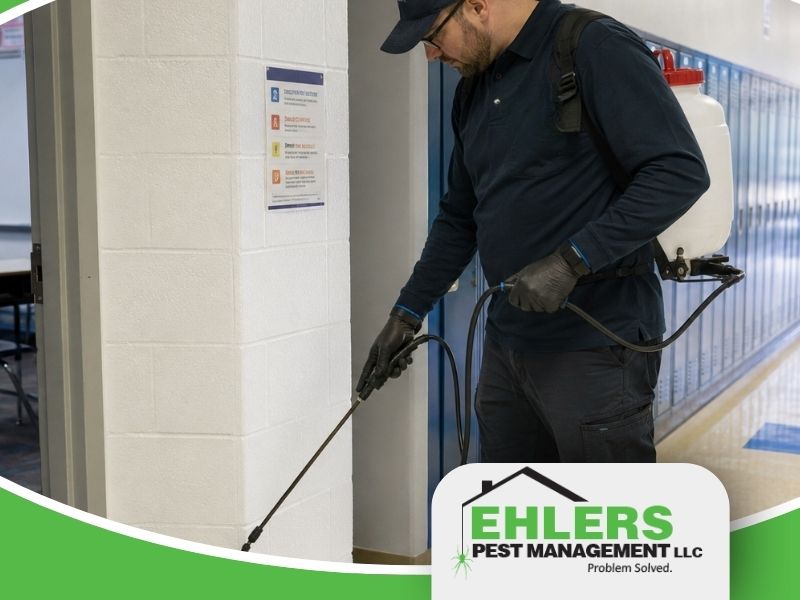
School pest control in Milwaukee is a health, safety, and operational concern that carries specific regulatory weight. It requires a pest control provider who understands how educational environments work. With the fall semester approaching, August is the right time for facilities managers to assess their current pest control program and make sure the right protocols are in place before students and staff return.
Wisconsin schools and educational facilities are subject to pest control requirements under state pesticide regulations, including notification requirements before any pesticide application. School pest control programs must balance effective treatment with student and staff safety, scheduling around occupied building hours, and documented service records that demonstrate ongoing compliance.
Why School Buildings Are High-Risk Pest Environments
Educational facilities create conditions that attract and sustain pest activity in ways that differ from most commercial properties. Cafeterias and food service areas generate food debris and moisture daily. Locker rooms and storage areas provide harborage for a range of pests. High foot traffic brings pests in on clothing, backpacks, and equipment. And the sheer size and complexity of most school buildings means pest activity in one area can go unnoticed until it’s well established.
The pests most commonly affecting Milwaukee schools and universities include:
- Rodents — mice and rats follow food sources into cafeterias, kitchens, and maintenance areas. Fall is the highest-pressure season as outdoor populations begin moving indoors.
- Cockroaches — kitchen and food service areas in older school buildings are particularly vulnerable to German cockroach infestations, which spread rapidly through shared plumbing and utility spaces.
- Ants — cafeteria and food prep areas attract ant activity throughout the warmer months, with pavement ants and odorous house ants being the most frequent species in Milwaukee school environments.
- Stinging insects — wasps and yellow jackets building nests near building entrances, in landscaping, or under exterior overhangs create safety concerns for students and staff throughout late summer and early fall.
What Are Wisconsin’s Pest Control Requirements for Schools?
Wisconsin’s pesticide regulations include specific requirements for pesticide applications in schools and day care facilities. Facilities managers need to be aware of several key obligations:
- Prior notification requirements. Wisconsin Administrative Code requires that parents, guardians, and staff be notified before pesticide applications in school buildings, with specific timing requirements depending on the type of application and the pesticide used.
- Record-keeping obligations. Schools must maintain records of all pesticide applications including the product used, application date, location, and the name of the licensed applicator. These records must be available for inspection.
- Licensed applicator requirement. All pesticide applications in Wisconsin schools must be performed by a licensed commercial pesticide applicator. Self-application by facilities staff using retail products in a school setting creates compliance risk.
A professional commercial pest control provider in Milwaukee with experience in educational facilities will be familiar with these requirements and will handle notification, documentation, and record-keeping as part of the service program.
How Should School Pest Control Be Scheduled?
Scheduling is one of the most operationally important aspects of school pest control in Milwaukee. Treatment during occupied building hours creates exposure concerns and operational disruption. Most effective school pest control programs are built around the academic calendar:
- Summer treatment windows are the most operationally ideal for comprehensive interior treatments, particularly in cafeterias, kitchens, and high-activity areas. August, before the semester begins, is the highest-value treatment window of the year.
- After-hours scheduling during the school year allows ongoing monitoring and targeted treatments in specific areas without disrupting classes or creating notification challenges during the school day.
- Scheduled perimeter treatments during non-occupancy periods address exterior pest pressure, particularly for stinging insects in late summer and rodents heading into fall.
What Should Facilities Managers Look for in a School Pest Control Provider?
Not every commercial pest control company in Milwaukee has the operational experience or regulatory familiarity to serve educational facilities well. A few criteria matter specifically for this environment:
- Familiarity with Wisconsin school pesticide notification requirements. Your provider should handle this proactively, not leave it to your facilities staff to manage.
- Scheduling flexibility around the academic calendar. A provider unwilling to schedule after-hours or during school breaks isn’t a practical fit for an educational facility.
- Written service documentation after every visit. This is your compliance record. It needs to be thorough, accurate, and delivered consistently.
- An IPM-based approach. Integrated Pest Management minimizes product use by targeting treatment precisely where it’s needed. This is both the most effective and the most appropriate approach for environments with children present.
Ehlers Pest Management provides school pest control in Milwaukee and across Southeastern Wisconsin. To schedule service or talk to our experienced commercial team about your facility’s specific needs before the fall semester begins, contact us today.
Frequently Asked Questions
When is the best time to schedule school pest control in Milwaukee?
August is the highest-value treatment window for most Milwaukee schools and universities. The building is unoccupied or minimally occupied, comprehensive interior treatments can be completed without scheduling constraints, and the timing addresses both the late-summer stinging insect peak and the beginning of fall rodent pressure before students return.
Do Milwaukee schools have to notify parents before pest control treatments?
Yes. Wisconsin pesticide regulations require prior notification to parents, guardians, and staff before pesticide applications in school buildings. The specific notification requirements depend on the type of application and the products being used. A licensed commercial pest control provider experienced with educational facilities will manage this notification process as part of the service program.
Can school facilities staff apply pest control products themselves?
Using retail pesticide products in a Wisconsin school building without a commercial pesticide applicator license creates compliance risk under state regulations. All pesticide applications in educational facilities should be performed by a licensed commercial applicator who can document the application correctly and meet the state’s record-keeping requirements.
What pests are most common in Milwaukee schools heading into fall?
Rodents are the highest-priority concern heading into fall as outdoor mouse populations begin moving toward warm structures in August and September. Stinging insects near building entrances and exterior spaces are the most immediate safety concern through late August. Cockroaches in food service areas and ants in cafeterias are ongoing concerns that benefit from proactive treatment during the summer window before the semester begins.

John Ehlers is the owner of Ehlers Pest Management. Ehlers Pest Management is a veteran-owned family pest control company with the mission to provide responsible pest management solutions that protect people and the environment throughout every community with exceptional quality service. We service Milwaukee, Oak Creek, Shorewood, River Hills, Fox Point, Whitefish Bay, Racine and beyond.