
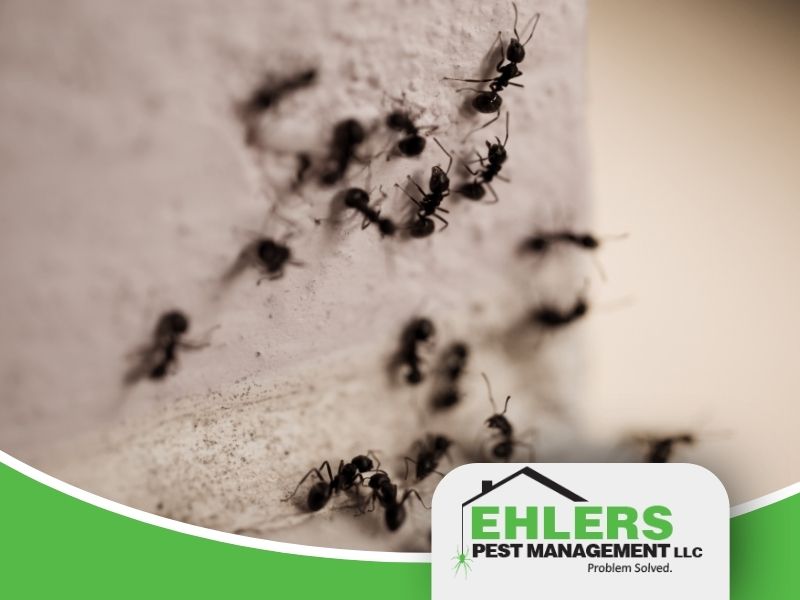

Seeing large black ants in your Milwaukee home isn’t the same as seeing small ants trailing across your kitchen counter — and calling a carpenter ant exterminator in Milwaukee is a meaningfully different service than general ant control. Carpenter ants are a structural pest. They excavate wood to build their nests, and a colony that’s been established inside a home’s framing, window frames, or roof structure for more than one season can cause damage that goes well beyond what most homeowners expect from an ant problem.
Carpenter ants are significantly larger than common household ants, typically a quarter to half an inch long, and they excavate wood to nest rather than feeding on it. Unlike pavement ants or odorous house ants, carpenter ants cause structural damage and require specialized treatment targeting the satellite and parent colonies rather than just the foragers you can see.
What Makes Carpenter Ants a Structural Pest?
Carpenter ants don’t eat wood the way termites do. They excavate it, chewing through soft or moisture-damaged wood to create smooth-walled galleries where the colony nests. The sawdust-like material they push out of their galleries, called frass, is often the first visible evidence that an infestation is present inside a wall or structural member.
The damage accumulates over time. A small satellite colony established in a window frame or wall void grows gradually, expanding its galleries through adjacent wood as the population increases. A colony that’s been present for two or three seasons in a Milwaukee home can hollow out a surprising amount of structural material before the signs become obvious from the outside.
This is what separates carpenter ant control in Milwaukee from general ant treatment. The goal isn’t just eliminating the foragers visible indoors — it’s locating and treating both the satellite colony inside the structure and the parent colony, which is often in a tree, stump, or wood pile outside the home.
Why Are Carpenter Ants So Common in Milwaukee Homes?
Southeastern Wisconsin’s combination of older housing stock, mature tree canopy, and seasonal moisture makes it particularly hospitable to carpenter ant activity. A few conditions consistently correlate with carpenter ant infestations in Milwaukee homes:
- Moisture-damaged wood. Carpenter ants strongly prefer wood that’s been softened by moisture — leaking roofs, poorly flashed windows, water intrusion around foundations, and condensation inside wall voids all create ideal nesting conditions.
- Mature trees and stumps near the home. Parent colonies are frequently established in dead or dying trees, stumps, or wood piles close to the home’s exterior. Foragers from these outdoor colonies enter the home and establish satellite colonies inside the structure.
- Older construction. Homes with aging wood elements, original sill plates, and decades of minor water intrusion events have more moisture-compromised wood available for carpenter ant excavation than newer construction.
How Do You Know If You Have Carpenter Ants?
Several signs distinguish a carpenter ant problem from a general ant infestation:
- Size. Carpenter ants are noticeably large — a quarter to half an inch — compared to the small dark ants of most common household species. Worker ants are typically black, though some species have reddish coloring on the thorax.
- Frass near baseboards or window frames. The sawdust-like material carpenter ants push from their galleries often accumulates in small piles near the nest site.
- Hollow or soft-sounding wood. Tapping on wood framing near areas of suspected activity sometimes reveals a hollow sound where galleries have been excavated.
- Indoor activity at night. Carpenter ants are most active after dark. Seeing large ants inside the home in the evening, particularly near moisture sources or wooden structural elements, is a strong indicator.
Why Can’t Carpenter Ant Treatment Wait?
Carpenter ant colonies grow slowly compared to some household pests, but the damage they cause accumulates continuously as long as the colony is present. A satellite colony established this summer will be larger next summer, occupying more gallery space in your home’s structure.
Summer is also the most active foraging period for carpenter ants in Wisconsin, which means it’s the easiest time to track forager activity back to the nest location. A carpenter ant exterminator in Milwaukee working during the active season has a significantly better chance of locating and treating both the satellite and parent colony than attempting treatment in late fall when activity has slowed.
Ehlers Pest Management provides carpenter ant control across Milwaukee and Southeastern Wisconsin. To schedule service or talk to our experienced team about what you’re seeing in your home, contact us today.
Frequently Asked Questions
How do I know if I have carpenter ants or termites in my Milwaukee home?
Carpenter ants and termites are frequently confused but look and behave differently. Carpenter ants are large, clearly segmented, and black or bicolored — they’re visible and recognizable. Termites are pale, soft-bodied, and rarely seen directly since they avoid light. Carpenter ant frass is coarse and sawdust-like. Termite frass and mud tubes are finer and more clay-like. If you’re unsure, a professional inspection will identify which pest you’re dealing with quickly and accurately.
Can I treat carpenter ants myself in Milwaukee?
Over-the-counter ant products kill carpenter ant foragers on contact but don’t reach the satellite colony inside the structure or the parent colony outside. Because carpenter ant treatment requires locating and treating both colonies with appropriate professional-grade products, DIY approaches rarely resolve an established infestation. They may temporarily reduce visible activity while the colony continues to expand inside the wood.
How long does carpenter ant treatment take to work?
Professional carpenter ant control in Milwaukee typically involves an initial treatment targeting identified nest locations and entry points, with follow-up to confirm the colony has been eliminated. Results are usually visible within one to two weeks as forager activity decreases. A follow-up inspection confirms that both the satellite and parent colonies have been addressed.
What attracts carpenter ants to Milwaukee homes?
Moisture-damaged wood is the primary attractant. Leaking roofs, improperly flashed windows, water intrusion near the foundation, and condensation inside wall voids all create the soft wood carpenter ants prefer for excavation. Mature trees, stumps, and wood piles near the home also provide parent colony habitat that puts foragers in proximity to your structure. Addressing moisture problems alongside pest treatment is the most effective long-term approach.