Categories Safe & Family-Friendly Pest Control

Pet-Safe Pest Control in Milwaukee: What We Use and Why It Matters

pet-safe pest control Milwaukee protecting family and dog in residential home environment

If you have pets, calling a pest control company comes with an extra layer of concern. What products are being used in your home? Are they safe around your dog or cat? How long before your pet can be back in treated areas?

These are completely reasonable questions — and any pest control company worth hiring should be able to answer them clearly. Here’s what pet-safe pest control in Milwaukee actually looks like, what products responsible companies use, and what you should expect from the process.

What “Pet-Safe” Actually Means in Pest Control

The term “pet-safe” gets used loosely in this industry, so it’s worth defining. No pesticide is completely without risk if misapplied or if exposure occurs before products have dried or settled. What pet-safe pest control actually means in practice is:

  • Using products with low mammalian toxicity — formulated to target insects while posing minimal risk to mammals like dogs, cats, and humans
  • Applying products correctly — concentration, placement, and method of application all affect safety
  • Allowing appropriate drying or settling time before pets re-enter treated areas
  • Targeting application to areas where pests are active, not blanketing entire living spaces unnecessarily

A responsible pest control company will always ask whether you have pets before treatment begins — and will tailor their approach accordingly.

Products Commonly Used in Pet-Friendly Pest Control

Professional pest control has evolved significantly. The products used today by responsible companies are a far cry from the broad-spectrum chemicals of previous decades. Here’s what family-safe pest control in Milwaukee typically involves:

Pyrethrins and synthetic pyrethroids are among the most commonly used insecticides in residential pest control. Derived from chrysanthemum flowers, pyrethrins break down quickly in the environment and have low toxicity to mammals when applied correctly. Pyrethroids are synthetic versions with similar properties. Both are effective against a wide range of common pests.

Insect growth regulators (IGRs) disrupt the reproductive cycle of insects without acting as a traditional poison. They’re highly targeted, have very low mammalian toxicity, and are particularly effective as part of a long-term prevention strategy.

Baits and gels are applied in targeted locations — inside cracks, along baseboards, in bait stations — rather than sprayed broadly. Because the product is contained and concentrated in specific areas, exposure risk to pets is significantly reduced.

Botanical and essential oil-based products are available for homeowners who prefer a more natural approach. These are generally the lowest-risk option for pets and people, though they may require more frequent application and are best suited for minor or preventative treatment situations.

How to Prepare Your Home for Pet-Safe Treatment

A little preparation on your end makes a meaningful difference in both safety and effectiveness:

  • Remove pet food and water bowls from areas being treated and keep them out until surfaces are fully dry
  • Cover or move fish tanks — fish are particularly sensitive to airborne pesticide particles
  • Keep pets out of treatment areas during application and until your technician confirms it’s safe to return — typically 1–2 hours for most treatments
  • Store pet toys and bedding away from treated surfaces before the technician arrives
  • Let your technician know what pets you have, where they spend most of their time, and any areas of particular concern

Your technician should walk you through specific guidance before any work begins. If they don’t ask about your pets, bring it up yourself.

What to Expect After Treatment

Once treated areas have dried or settled — your technician will confirm the appropriate window — pets can safely return to normal activity in most cases. Here’s what’s normal after treatment:

  • A slight chemical smell that dissipates within a few hours
  • Insects becoming more active briefly as product contacts them before taking effect
  • No visible residue in most cases with modern application methods

If your pet experiences any unusual symptoms after re-entering a treated area — excessive drooling, lethargy, vomiting, or skin irritation — contact your veterinarian and let your pest control company know immediately.

The Right Company Will Always Put Your Family First

Pet-safe pest control in Milwaukee isn’t about avoiding effective treatment — it’s about applying the right products, in the right places, in the right way. A company that takes this seriously will be transparent about what they use, answer your questions without hesitation, and adjust their approach based on your household’s specific needs.

At Ehlers Pest Management, we treat every home as if our own pets lived there. We’ll walk you through exactly what we’re using, why we’re using it, and what you need to do to keep your pets comfortable and safe throughout the process.

Schedule your inspection today.


Frequently Asked Questions

How long do I need to keep my pets out of the house after pest control treatment?

For most standard treatments, 1–2 hours is sufficient — once treated surfaces are fully dry. Heat treatments and some specialized applications may require a longer window. Your technician will give you a specific timeframe before any work begins.

Is pest control safe for dogs and cats?

When applied correctly by a licensed professional using appropriate products, pest control poses minimal risk to dogs and cats. The key factors are product selection, correct application, and allowing adequate drying time before pets re-enter treated areas.

Are there pest control options that are completely chemical-free?

Some botanical and essential oil-based products contain no synthetic chemicals. These are the lowest-risk option but are best suited to minor infestations or preventative treatment. For established pest problems, they may not provide sufficient control on their own.

What should I do if my pet reacts to pest control treatment?

Contact your veterinarian immediately and provide them with the name of the product used — your pest control company should be able to supply this information quickly. Most reactions are mild and resolve without intervention, but it’s always better to have your vet assess the situation.

Can I stay home during pest control treatment if I have pets?

In most cases, both people and pets should vacate the treated areas during application. Your technician will let you know whether you need to leave the home entirely or simply keep pets away from specific areas.

Categories Uncategorized

Spiders in Spring: Why You’re Seeing Them More in April

As April arrives in Wisconsin, many homeowners start noticing more spiders indoors. Finding spiders along ceilings, in basements, or near windows can be unsettling, but this increase in activity is a normal part of the seasonal shift from winter to spring.

Spiders don’t suddenly appear in April—they’ve often been present all winter. During colder months, many spiders seek shelter inside homes, hiding in wall voids, basements, attics, and storage areas. These protected spaces allow them to survive winter temperatures without being noticed.

As spring temperatures rise, spiders become more active. Warmer air triggers movement as they begin searching for food and new nesting areas. In April, this activity becomes more visible, which is why homeowners feel like spiders are suddenly “showing up.”

Another major factor is food availability. Spring brings increased insect activity, and spiders follow their food source. As insects emerge due to warmer weather and moisture from snowmelt and rain, spiders move closer to living spaces where prey is easier to find. This often puts them in plain sight along baseboards, corners, and ceilings.

Wisconsin’s freeze–thaw cycles also contribute to spring spider sightings. Small cracks and gaps can form around windows, doors, siding, and foundations during winter. These openings allow spiders to move more freely between outdoors and indoors once conditions improve.

Homes in areas like Milwaukee may see increased spring spider activity due to older construction, basements, and attached garages that provide ideal hiding spots. While most spiders are harmless and help control other insects, their presence indoors is still something many homeowners prefer to limit.

April spider sightings are often a sign of seasonal transition rather than a serious problem. However, frequent sightings may indicate other pest activity that’s attracting them inside.

Reducing spider activity starts with prevention. Sealing entry points, managing moisture, reducing clutter, and addressing other insects around the home can make a big difference. Preventative pest control in early spring helps reduce both spiders and the insects that attract them.

Seeing spiders in April doesn’t mean your home has a major issue—but it is a reminder that spring pest activity is underway. Taking early action helps keep spider sightings under control as the season continues.

Categories Cockroaches, Pest Treatment & Services

Cockroach Exterminator Milwaukee: How to Get Rid of Roaches for Good

cockroach exterminator Milwaukee inspecting couch for active roach infestation with flashlight

If you’ve seen a cockroach in your Milwaukee home, your first instinct is probably to deal with it immediately. That instinct is right. Finding a cockroach exterminator in Milwaukee and acting quickly is one of the most important things you can do, because roach problems move fast and don’t resolve on their own.

Cockroaches are among the most common pest calls we receive across Milwaukee and Southeastern Wisconsin. And in a city with a mix of older homes, dense neighborhoods, and active restaurant and food service businesses, the conditions that attract them are widespread.

Here’s what you need to know about cockroaches in Milwaukee homes, why they’re so difficult to eliminate without professional help, and what effective treatment actually looks like.

Cockroaches in Milwaukee: What You’re Likely Dealing With

Two species account for the vast majority of cockroach problems in Milwaukee homes and businesses:

German cockroaches are the most common indoor species in Wisconsin, and the most problematic. They’re small (about half an inch), light brown, and reproduce at an extraordinary rate. A single female German cockroach can produce hundreds of offspring in her lifetime. They prefer warm, humid environments near food and water, which makes kitchens and bathrooms their primary habitats. German cockroaches thrive in Milwaukee’s older residential and commercial building stock, particularly in kitchens with aging plumbing, tight cabinet runs, and appliances that haven’t been pulled out in years.

If you’re seeing roaches in your kitchen, German cockroaches are the most likely culprit.

American cockroaches are larger (up to 2 inches!) and reddish-brown. They’re more commonly found in basements, crawl spaces, and utility areas. They prefer damp environments and are often associated with sewage and drainage systems. In Milwaukee, American cockroaches are most commonly found in older homes with basement drains, crawl spaces, and utility connections that provide easy exterior access, particularly in neighborhoods with aging sewer infrastructure.

While less common in living areas than German cockroaches, American cockroaches are a serious indicator of moisture issues and entry points that need to be addressed. 

Knowing which species you’re dealing with matters because treatment approaches differ. A cockroach exterminator in Milwaukee will identify the species before recommending a treatment plan.

Why Cockroaches Are So Hard to Eliminate on Your Own

Roaches are resilient in ways that make DIY treatment consistently frustrating:

  • They hide extremely well. Cockroaches are nocturnal and spend the majority of their time in cracks, crevices, and voids that are completely inaccessible to over-the-counter sprays. Seeing roaches during the day is actually a sign of a significant infestation — it means the hidden population has grown large enough to push individuals into the open.
  • They reproduce faster than most treatments work. German cockroaches in particular reproduce so quickly that incomplete treatment allows populations to rebound within weeks.
  • They develop resistance. Cockroaches have demonstrated the ability to develop resistance to commonly used insecticides, including some over-the-counter products. Using the wrong product repeatedly can select for resistant populations.
  • They’re not just where you see them. A few roaches visible in your kitchen likely means hundreds more hiding in wall voids, behind appliances, under cabinets, and inside electrical outlets.

What Professional Roach Control in Milwaukee Looks Like

For Milwaukee homeowners and businesses, effective roach control means accounting for the specific conditions common to the area: older construction, shared walls in multi-unit buildings, and the humidity that builds up in basements and crawl spaces during Wisconsin summers.

Effective roach control in Milwaukee requires a combination of approaches applied strategically,  not just a single product sprayed around the kitchen.

Inspection and identification comes first. A trained technician will identify the species, locate harborage areas, and assess the extent of the infestation before any treatment begins. This step directly determines what products are used and where.

Gel bait application is the cornerstone of professional German cockroach treatment. Gel bait is applied in small amounts in precise locations (inside cabinet hinges, along the back of drawer slides, near appliances, inside outlet covers) where roaches travel and hide. Roaches consume the bait and carry it back to the harborage, where it spreads through the population. Applied correctly, gel bait is highly effective even in areas where sprays can’t reach.

Insect growth regulators (IGRs) are used alongside bait to disrupt the reproductive cycle, preventing eggs from developing into reproducing adults. This is a critical component of breaking the population cycle, especially for German cockroach infestations.

Residual treatment in appropriate areas provides ongoing control between visits and targets roaches moving through treated zones.

Follow-up inspection confirms that treatment has worked and addresses any remaining activity. For significant infestations, multiple visits are standard. A reputable company will include follow-up as part of the treatment plan, not as an additional charge.

What You Can Do to Support Treatment

Professional treatment works significantly better when paired with a few actions on your end:

  • Eliminate food and water sources. Fix leaking pipes, clean up spills promptly, store food in sealed containers, and empty trash regularly. Roaches can survive on minimal food, and reducing the availability of food forces them to seek out bait.
  • Reduce clutter. Cardboard boxes, paper bags, and stacked materials provide harborage. Decluttering, especially in kitchens, basements, and utility areas, removes hiding spots.
  • Don’t spray before treatment. Contact sprays applied before a professional visit can scatter roaches and contaminate bait placements, reducing effectiveness.
  • Give treatment time to work. Gel bait works gradually across the population. You may see some activity for 1–2 weeks after treatment as the product works through the colony. Increased activity near bait placements is normal. It means roaches are finding and consuming it.

Act Before the Problem Gets Worse

Cockroach infestations don’t plateau. They grow. A small number of roaches were seen today, but that represents a much larger hidden population, and that population will continue to expand until something stops it. Early treatment is faster, less disruptive, and less expensive than treating a fully established infestation.

If you’ve seen cockroaches in your Milwaukee home or business — or anywhere across Southeastern Wisconsin, from West Allis to Oak Creek, Wauwatosa to Racine — Ehlers Pest Management can help. We provide targeted, effective roach control with a straightforward process and no unnecessary upsells. 

Schedule your inspection today.


Frequently Asked Questions

Are cockroaches common in Milwaukee homes? More common than most homeowners expect. Milwaukee’s older housing stock, dense neighborhoods, and active restaurant scene create conditions where cockroaches — particularly German cockroaches — find plenty of opportunity. Roach problems are reported year-round in Milwaukee, though warm, humid summer months tend to accelerate activity indoors. If you’re seeing them, you’re not alone. Professional treatment is the most reliable way to eliminate them for good.

Does seeing one cockroach mean I have an infestation? Not necessarily — but it warrants immediate attention. A single roach seen during the day is a stronger indicator of an established infestation than one seen at night, since daytime activity often signals an overcrowded harborage. Either way, it’s worth having a professional assess the situation rather than waiting to see if more appear.

How long does cockroach treatment take to work? Gel bait treatment typically produces a noticeable reduction in activity within 1–2 weeks. Full elimination of a significant infestation may take 2–4 weeks and more than one visit. Your technician will give you a realistic timeline based on what they find during the inspection.

Can cockroaches come back after professional treatment? A properly executed treatment plan should eliminate the existing infestation. Reinfestation can occur if cockroaches are reintroduced through used appliances, grocery bags, or shared walls in multi-unit buildings. Ongoing monitoring and sealing entry points reduces this risk significantly.

Are cockroaches dangerous? Yes. Cockroaches contaminate food and surfaces with bacteria, shed skins, and droppings. Cockroach allergens are a documented trigger for asthma and allergic reactions, particularly in children. Beyond the health risks, a cockroach infestation can cause serious reputational damage for food service businesses.

Why do I have cockroaches if my home is clean? Cleanliness reduces attractants but doesn’t prevent cockroaches entirely. Roaches can enter through grocery bags, used appliances, cardboard boxes, plumbing, and gaps in the structure. German cockroaches in particular thrive in even minimally hospitable conditions.

Categories Uncategorized

Why Ants Appear First in Wisconsin Homes Every Spring

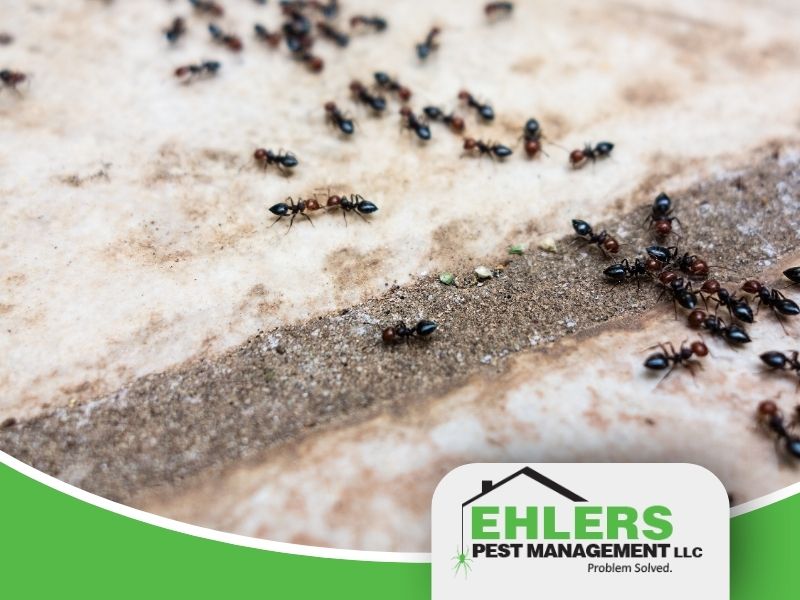
Each spring, many Wisconsin homeowners notice the same pattern: ants seem to be the first pests to show up indoors. Even before summer temperatures arrive, small trails may appear along baseboards, countertops, or basement walls. This early activity isn’t random—ants are simply responding to seasonal changes faster than most other pests.

Ants are highly sensitive to temperature and moisture. As soon as the ground begins to thaw and daytime temperatures rise, ant colonies shift out of winter survival mode. Colonies that spent winter underground, beneath concrete slabs, or inside wall voids begin foraging again to support the colony’s growth.

Many spring ant sightings actually start indoors. Ants that entered homes during fall or winter remain protected from cold weather and become active as conditions improve. Others are drawn inside by moisture created by melting snow and early spring rain. Kitchens, bathrooms, and basements are common starting points because they provide easy access to water and food.

Wisconsin’s freeze–thaw cycles also play a role. As homes expand and contract through winter, small cracks can form around foundations, window frames, and utility lines. These openings give ants direct access indoors just as they become active again in spring.

Another reason ants appear first is their organization and numbers. Ant colonies can contain thousands of individuals, and once a food source is located, worker ants quickly establish trails. What starts as a few ants can turn into a noticeable problem in a short amount of time.

Early spring ant activity is often a warning sign rather than a full infestation. Spotting ants in March or April usually means a colony is nearby and preparing to expand. Addressing the issue early—before populations grow—makes control far easier.

Reducing moisture, sealing entry points, and limiting food access all help discourage early ant activity. Preventative pest control during spring focuses on stopping ants before trails become established and before colonies grow larger.

Ants appear first each spring because they’re ready first. Recognizing those early signs allows homeowners to act early and avoid bigger pest problems as the season continues.

Categories Uncategorized

Spring Pest Pressure in Older Milwaukee Homes

Milwaukee is known for its historic neighborhoods and older homes, many built decades ago with solid craftsmanship and character. While these homes have lasting appeal, they can also experience increased pest pressure—especially in spring.

As winter fades and temperatures rise, pests become more active and begin searching for food, moisture, and shelter. Older homes often provide more opportunities because of their age, construction style, and the natural wear that occurs over time. Small gaps that developed during winter may go unnoticed but are easily found by pests once spring activity begins.

Foundations in older Milwaukee homes may have hairline cracks or aging mortar joints that expand during freeze–thaw cycles. These openings can allow ants, spiders, and other insects to move indoors. Utility penetrations, basement windows, and older siding materials are also common entry points, especially if original sealants have broken down.

Rodents are another concern. As spring approaches, mice that entered homes during winter often remain active indoors. Older homes may have more interior voids, unfinished basements, or cluttered storage areas that provide ideal nesting locations. Because activity is often hidden, homeowners may not realize there’s a problem until spring brings increased movement or visible signs.

Moisture also plays a major role. Spring snowmelt and rain can lead to damp basements or crawl spaces, particularly in homes with older drainage systems. Moist conditions attract pests and encourage insects to expand their activity indoors.

What makes spring pest pressure challenging is that early signs are often subtle. A few ants, occasional noises, or isolated sightings may seem minor but often indicate a larger issue developing. As temperatures stabilize, pest populations can grow quickly if entry points and conditions aren’t addressed.

Preventative pest control is especially valuable for older homes. Early spring inspections help identify structural vulnerabilities, moisture concerns, and early pest activity before problems escalate. Sealing entry points and addressing attractants can significantly reduce pressure throughout the warmer months.

Older Milwaukee homes have stood the test of time—but spring pest pressure is a reminder that proactive care helps protect them. Addressing issues early makes it easier to enjoy the season without unwanted guests.