Categories Commercial Pest Control

Do Landlords Pay for Pest Control in Wisconsin?

A pest control worker in protective gear sprays inside a home near a couch. As they work to eliminate unwanted pests, the question may arise: do landlords pay for pest control? The Ehlers Pest Management LLC logo appears at the bottom right.

Landlord or Tenant?

Green badge with a large check mark and the words SATISFACTION GUARANTEED in bold white letters, with EHLERS below on the badge—a trusted symbol of quality pest control solutions.

Do Landlords Have to Pay for Pest Control in Wisconsin?

In Wisconsin, do landlords have to pay for pest control? In most situations, yes. State law requires a landlord to keep a rental in reasonable repair and to follow local housing codes, and a pest infestation that affects whether the place is livable falls under that duty. The exception is when the tenant caused the problem. That’s the whole rule in two sentences, and the rest of this comes down to which side of it your situation lands on.

Below is what the law actually says, where responsibility shifts, how long a landlord has to act, and what each side can do when the other one won’t.

A note before we get into it. This is general information about how pest responsibility usually works in Wisconsin rentals, written by a pest control company, not by attorneys. For a specific dispute, talk to a lawyer or your local tenant resource center.

Who's responsible for roaches in an apartment?

Landlords have to disclose any condition that’s a substantial hazard to your health or safety before you sign. If your landlord knew about a serious pest problem in the unit and didn’t tell you, they’re liable for the cost of removal.

In a multi-unit building, this lands on the landlord almost every time, and it isn’t really a legal question so much as a practical one.

Cockroaches don’t stay in one unit. Treating a single apartment while the units on either side go untreated produces a temporary drop and then a full recovery, because the population simply moves and comes back. Any pest control company that agrees to treat one unit in a building with a known roach problem is selling a visit, not a solution.

Roach work in a rental setting is specialty work, and it looks different from general pest control. The protocol runs treatments every two weeks, requires the unit prepared with cabinets emptied and clutter cleared, includes monitoring of adjacent units, and isn’t considered resolved until eight weeks pass with zero activity. Tenants have to cooperate for any of that to work, which is why the responsibility question matters less than getting everyone in the building on the same schedule.

Who pays when it's bed bugs?

Same answer, same reasoning, higher stakes.

Bed bug treatment follows a three-treatment protocol. Occupants prepare the unit and vacate for four hours per visit, adjacent units get inspected and given a preventative treatment, and the job isn’t finished until there’s an eight-week window with no activity at all. That’s a real commitment from everyone involved.

This is also where responsibility genuinely can shift. A landlord who schedules treatment and gets refused entry, or whose tenant won’t do the preparation, has a documentable record of trying. A tenant who cooperates fully and still can’t get the landlord to act has the same thing pointed the other way. In either direction, the person with the paper trail is in a much better position than the person without one.

Which pests actually affect habitability?

This is the practical threshold, and it’s where most disagreements between landlords and tenants actually sit. Not every insect in a rental rises to the level of a habitability problem.

Cockroaches, bed bugs, and rodents are the three that consistently do. They carry health implications, they multiply fast, they spread between units, and local housing codes name vermin directly. If any of these are established in a unit, treat it as the landlord’s obligation and move quickly.

Ants, spiders, centipedes, box elder bugs, and the seasonal invaders that show up on siding every fall usually don’t rise to that level on their own. They’re still worth handling, and a landlord who takes care of them keeps tenants longer, but a few ants along a baseboard isn’t a habitability claim. Where it changes is scale and cause. Carpenter ants tunneling into structural wood is a repair issue. Thousands of box elder bugs getting in through gaps around windows points at a building envelope that needs attention, and that’s the landlord’s side of the line.

Wasps and hornets sit in their own category. A nest at a shared entry, on a stairwell, or anywhere tenants have to walk past it is a safety issue, and it’s reasonable to expect that handled quickly.

What has to be disclosed before the lease is signed?

This part gets overlooked, and it carries more risk for landlords than the repair obligation does.

Under ATCP 134.04, a landlord has to disclose known conditions affecting habitability before a tenant signs or pays a deposit, and a pest infestation is on that list. A unit with a known roach problem or an active bed bug history has to be disclosed. So does a building-wide issue that hasn’t been resolved yet.

Landlords also have to identify who manages and maintains the property and how to reach them, which matters here because a tenant who can’t reach anyone can’t give the notice that starts the clock.

The reason to take this seriously is the penalty structure. ATCP 134 violations can carry double damages plus attorney fees, so a failure to disclose can end up costing considerably more than the treatment would have.

How long does a landlord have to fix a pest problem?

Wisconsin doesn’t put a specific number of days in the statute. The standard is reasonableness, and what counts as reasonable scales with how bad the problem is.

A few ants along a baseboard in August is not the same as a roach infestation in a kitchen or bed bugs in a child’s bedroom. The more the problem affects whether someone can actually live in the unit, the shorter the reasonable window gets.

What starts the clock is written notice. A text or an email works and is better than a phone call, because it creates a record with a date on it. Tenants should describe what they’re seeing, where, and how long it’s been happening, and keep a copy. Landlords should respond in writing too, even if the response is just a scheduled date.

One practical note on timing that catches both sides off guard. Scheduling the first visit is not the same as resolving the problem. Roach and bed bug work runs on multi-week protocols by design, so a job that starts promptly can still take two months to finish. A landlord acting in good faith on a realistic timeline is meeting the obligation even while activity continues, and a tenant who understands that up front is far less likely to end up in a dispute over it.

What can a tenant do if the landlord won't act?

This is the part most articles on the internet get wrong, so it’s worth being precise. Wisconsin does not allow repair and deduct, and it does not allow a tenant to withhold full rent. Hiring an exterminator and subtracting the bill from next month’s rent is not a remedy available to you in this state, and doing it can put your tenancy at risk.

Under Wis. Stat. 704.07(4), a tenant dealing with a unit that’s become untenantable has two options. Move out and terminate the tenancy, which relieves you of rent going forward. Or stay and claim rent abatement, meaning a reduction proportional to the portion of the unit you’ve lost the use of. Abatement is partial by definition.

Two other paths are worth knowing about. If a landlord is unresponsive, tenants can contact their local building or health inspector, and in Milwaukee that inspection creates an official record that tends to move things along quickly. And violations of ATCP 134, including the failure to disclose a known infestation before the lease, can carry double damages plus attorney fees under Wis. Stat. 100.20(5).

Again, this is general information. Before you act on any of it, talk to an attorney or a tenant resource center about your specific situation.

What should a landlord do to stay ahead of this?

  • The landlords who never end up in these disputes tend to do four things.

    • They treat the building rather than the unit. One complaint in a four-family usually means an inspection of all four.
    • They keep everything in writing, including the report of the problem, the scheduled treatment, and what the technician found.
    • They have a pest control company they can actually reach, rather than starting a search the day a tenant calls.
    • They get seasonal work done before the season starts, which for southeastern Wisconsin means rodent exclusion in September and October rather than a December emergency.

    That last one matters more than people expect. Mice move indoors as the weather turns, and a duplex that gets sealed in the fall generates far fewer winter complaints than one that gets trapped in January.

What to do next

If you’re a landlord with a property in southeastern Wisconsin, a certified technician can walk the building, tell you what’s actually happening in it, and give you a plan that fits the property. We work with independent landlords on duplexes, four-families, and eight-families, and we handle roach and bed bug work in rental settings of any size. Our goal on a specialty job is to finish it, so the work eventually stops.

If you’re a tenant, put your report in writing, keep a copy, and give your landlord a specific description of what you’re seeing and where. If you’re being asked to prepare your unit for treatment, do the preparation exactly as it’s written, because incomplete prep is the most common reason these jobs have to start over.

Either way, you can reach us at (414) 303-6926. When you call, you’re talking to someone local who knows southeastern Wisconsin rentals.

Contact Ehlers Pest Management to take care of your pest problem immediately.

This page is general information about Wisconsin pest control law, not legal advice. Your lease terms and the specific circumstances of your situation matter, so consult an attorney before acting on a dispute.

Categories Commercial Pest Control

Commercial Pest Control in Milwaukee: The Business Owner’s Complete Guide

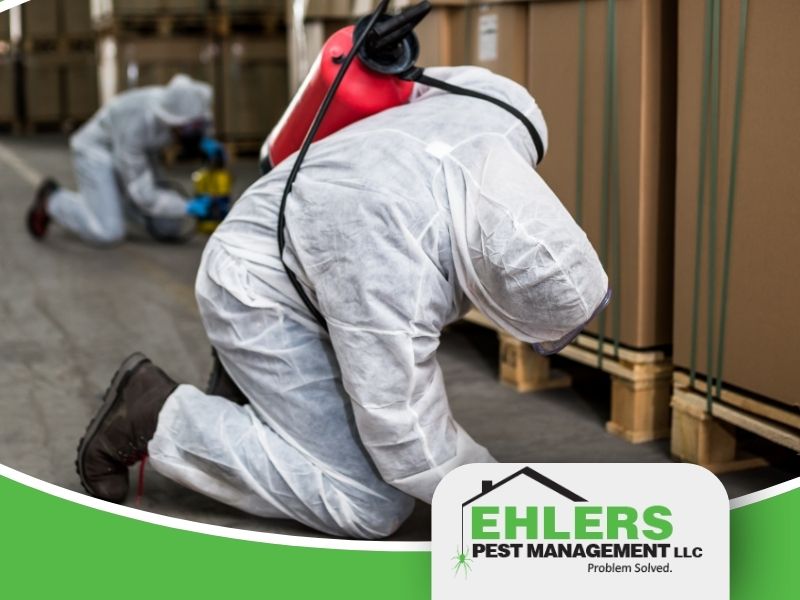
Workers in protective suits provide pest control on a warehouse floor. One kneels near stacked pallets as the Ehlers Pest Management LLC logo appears in the foreground.

If you own or manage a business in Milwaukee, commercial pest control in Milwaukee isn’t a side consideration; it’s a core part of protecting your operation, your compliance standing, and your reputation. Whether you run a restaurant, an office, a warehouse, or a retail space, pest activity poses risks that extend well beyond mere annoyance.

This guide covers what Milwaukee business owners need to know about commercial pest control: what’s required, what it actually costs, and how to choose the right provider for your specific business.

Why Commercial Pest Control Is Different From Residential Service

Commercial pest control involves a different set of stakes than residential service. A pest problem in your home is a personal inconvenience. A pest problem in your business can mean a failed health inspection, a damaged customer relationship, lost inventory, or liability exposure that affects your bottom line directly.

This means commercial pest control programs are typically built around documentation, compliance, and prevention in a way that residential service doesn’t always require. A reputable commercial provider understands the specific regulatory and operational pressures your type of business faces.

What Types of Businesses Need Commercial Pest Control in Milwaukee

Nearly every type of commercial property benefits from a structured pest control program, but the specific risks and requirements vary by industry:

  • Restaurants and food service face the highest regulatory scrutiny, with health department inspections that weigh pest activity heavily. A single cockroach sighting or rodent indicator can affect inspection scores.
  • Warehouses and distribution facilities need to protect inventory from rodent and stored product pest damage, and often face compliance requirements tied to food safety regulations or customer audits.
  • Office buildings deal with common pest issues including ants, spiders, and occasional rodent activity, particularly in older buildings.
  • Property management companies and landlords have specific habitability obligations under Wisconsin law that make proactive pest control a legal as well as operational consideration.
  • Schools, banks, and similar institutions need discreet, professional service that doesn’t disrupt daily operations or create concern among staff, students, or customers.

What a Professional Commercial Pest Control Program Includes

Effective business pest control in Milwaukee typically includes several core components:

  • Initial comprehensive inspection to identify current pest activity, entry points, and conditions specific to your facility and industry.
  • Scheduled recurring service, usually monthly or bi-monthly depending on your facility’s risk profile, rather than reactive treatment after a problem appears.
  • Targeted treatment methods appropriate for a commercial environment, including tamper-resistant rodent stations, gel baits, and insect monitoring traps that work around your specific operations.
  • Written service documentation after every visit, which supports compliance requirements and protects you in the event of an inspection or audit.
  • Scheduling flexibility that works around your business hours, whether that means treatment before opening, after closing, or during designated non-operational windows.

What Commercial Pest Control Costs in Milwaukee

Commercial pest control pricing varies significantly based on your facility size, industry, current pest pressure, and service frequency. A small office requiring basic monthly service costs considerably less than a large warehouse or a restaurant with more frequent visits and specialized treatment needs.

Rather than quoting a generic price range that may not reflect your actual situation, the most reliable way to understand commercial pest control costs for your business is a facility assessment from a provider who can evaluate your specific risk factors and recommend an appropriately scoped program.

How to Choose a Commercial Pest Control Provider in Milwaukee

A few questions help you evaluate whether a provider is the right fit for your business:

  • Does the company have experience with your specific industry and its compliance requirements?
  • Will they provide written documentation after every service visit?
  • Can they work around your operational hours without disrupting business?
  • Is pricing based on an actual facility assessment, or a generic flat rate that doesn’t account for your specific risk factors?
  • Do they offer a local point of contact, or does communication route through a national call center?

Protecting Your Business Starts With the Right Partner

Pest problems in a commercial setting rarely stay small, and the cost of reactive treatment after a problem has escalated, combined with potential compliance consequences and reputational damage, almost always exceeds the cost of consistent preventative service.

Ehlers Pest Management works with restaurants, warehouses, offices, property managers, and other Milwaukee businesses to build commercial pest control programs suited to each industry’s specific needs. To schedule service or talk to our experienced commercial team about your business, contact us today.

Frequently Asked Questions

How often does a Milwaukee business need commercial pest control?

Most commercial properties benefit from monthly service, with higher-risk facilities such as restaurants and food storage warehouses sometimes requiring bi-monthly visits, particularly during warmer months when pest pressure increases.

Is commercial pest control required by law in Wisconsin?

There’s no single law mandating pest control service for every business type, but food service establishments are subject to health department inspections that weigh pest activity heavily, and landlords have habitability obligations under Wisconsin law. Documented, consistent pest control service is effectively necessary to maintain compliance in these contexts.

Can commercial pest control be done without disrupting business hours?

Yes. A professional commercial provider will work around your operational schedule, often treating non-food-contact areas during business hours and scheduling more sensitive treatments before opening or after closing.

What documentation should I expect from a commercial pest control provider?

You should receive a written report after every service visit documenting what was inspected, what was found, what was treated, and any recommendations. This documentation is important for compliance audits and inspections.

Categories Commercial Pest Control

Warehouse Pest Control Milwaukee: How to Protect Your Inventory and Stay Compliant

A worker in a safety vest and helmet drives a forklift in a warehouse lined with shelves full of boxes. The Ehlers Pest Management LLC logo, representing professional pest control, is in the foreground.

If you manage a warehouse or distribution facility, warehouse pest control in Milwaukee is one of those operational concerns that doesn’t get enough attention until something goes wrong. A rodent chewing through product packaging, an insect infestation in stored goods, or a pest-related finding during a compliance audit can shut down operations, trigger customer chargebacks, and create liability exposure that far exceeds the cost of prevention.

Here’s what Milwaukee warehouse and distribution operators need to know about pest control, what the risks actually look like, and what a professional program should include.

Why Warehouses Are Vulnerable to Pest Problems

Warehouses create conditions that attract and sustain pest populations in ways that aren’t always obvious until a problem is well established.

Large square footage, high product volume, and frequent deliveries create multiple entry points and harborage opportunities that a single inspection can easily miss. Palletized goods stored directly on the floor, damaged packaging, and inconsistent inventory rotation all provide food and shelter for pests. Loading docks with gaps around dock doors, floor drains, utility penetrations, and roof vents are among the most common entry points for rodents and insects.

The pests most frequently affecting Milwaukee warehouses include:

  • Rodents — mice and rats follow food sources and warmth into warehouse environments, nesting inside palletized goods, insulation, and wall voids. Their gnawing damages product, packaging, and electrical wiring.
  • Stored product pests — Indian meal moths, grain beetles, and weevils move in through infested incoming shipments and spread quickly through dry goods inventory.
  • Cockroaches — particularly in warehouses storing food products or operating break rooms and kitchen areas.

Compliance and Liability: What’s Actually at Stake

For warehouses handling food products, pharmaceuticals, or consumer goods, pest activity isn’t just an operational nuisance — it’s a compliance and liability issue with real financial consequences.

FDA food safety regulations, third-party audits from customers and retail partners, and state-level food storage requirements all address pest control as a critical component of facility compliance. A pest finding during an audit can trigger product holds, customer deductions, or loss of contracts. In the food industry specifically, a single contamination incident can result in a product recall.

Working with a licensed commercial exterminator in Milwaukee means your facility has documented pest control records on file at all times — which auditors and inspectors expect to see and which protect you if a pest-related question arises.

What a Professional Warehouse Pest Control Program Includes

Effective warehouse pest control in Milwaukee goes well beyond a quarterly spray treatment. A professional commercial program should include:

Comprehensive facility inspection. Before any treatment begins, a thorough inspection identifies current pest activity, entry points, harborage conditions, and high-risk areas specific to your facility layout and product mix.

Perimeter and interior rodent management. Tamper-resistant rodent stations placed along the interior perimeter and at exterior entry points provide ongoing monitoring and control. Station counts and placements are adjusted based on activity levels.

Stored product pest monitoring. Pheromone traps placed in storage areas detect stored product pest activity before infestations become established. Early detection dramatically reduces the scope and cost of treatment.

Loading dock and entry point management. Door sweeps, dock seals, and structural recommendations address the most common entry points. These exclusion measures work alongside treatment to prevent reinfestation.

Service documentation. Every visit produces a written report documenting findings, treatments, and recommendations. This documentation is your compliance record and your first line of defense during an audit.

Scheduled service frequency. Most warehouse facilities benefit from monthly service, with higher-risk or food-grade facilities often requiring bi-monthly visits during warmer months when pest pressure is highest.

The Cost of Doing Nothing

Pest problems in warehouse environments follow a predictable pattern: they start small and invisible, grow steadily, and become visible only after they’re well established and significantly more expensive to resolve.

A minor rodent presence discovered during a routine inspection is a manageable problem. A rodent infestation discovered during a customer audit, or worse, a product contamination event, is a business crisis. The math on proactive pest control is straightforward — consistent prevention costs a fraction of what reactive remediation and compliance recovery costs.

Ehlers Pest Management provides warehouse pest control in Milwaukee and across Southeastern Wisconsin. We work with distribution and storage facilities to build pest management programs that protect inventory, support compliance, and fit your operational schedule. 

Get your service scheduled so you can get back to business.


Frequently Asked Questions

How often should a Milwaukee warehouse be treated for pests? Most warehouse facilities benefit from monthly service. Higher-risk facilities handling food products or operating in older structures may require bi-monthly visits, particularly during spring and summer when pest pressure increases. Your technician will recommend a frequency based on your facility’s specific risk profile.

What documentation does a pest control company provide for compliance audits? A reputable commercial pest control provider supplies written service reports after every visit, documenting what was inspected, what was found, what was treated, and any structural or sanitation recommendations. These records should be retained and made available during audits on request.

How do pests get into warehouses? The most common entry points are loading dock doors and gaps around dock seals, floor drains, utility penetrations, roof vents, and damaged building envelope. Infested incoming shipments are also a frequent source of stored product pest introductions.

Can warehouse pest control be scheduled around operating hours? Yes. A professional commercial pest control provider will work around your receiving schedule, shift changes, and operational requirements. Many treatments can be performed during off-hours or in non-operational areas without disrupting facility operations.

What’s the difference between residential and commercial pest control? Commercial pest control, particularly for warehouses and food facilities, involves more rigorous inspection protocols, compliance-oriented documentation, higher-volume treatment methods, and service programs designed around regulatory requirements rather than seasonal convenience.

Categories Commercial Pest Control

Restaurant Pest Control in Milwaukee: What Every Food Service Business Needs to Know

A young girl sits at a table in a restaurant, eating from a red basket. Hand sanitizer and a staff member are visible in the background. An Ehlers Pest Management LLC logo is in the foreground, highlighting trusted local pest solutions.

If you operate a food service business, restaurant pest control in Milwaukee isn’t optional — it’s a compliance requirement, a liability concern, and a direct threat to your reputation if it goes wrong. One failed health inspection, one online review mentioning a cockroach, or one rodent spotted by a customer can do damage that takes months to undo.

Here’s what Milwaukee restaurant owners and food service operators need to know about pest control, what the requirements actually look like, and how to make sure you’re protected.

Why Restaurants Are High-Risk Pest Environments

Food service businesses create ideal conditions for pests. Warmth, moisture, food debris, and constant deliveries coming in and out of your building combine to make restaurants one of the most pest-prone commercial environments there is.

The pests most commonly affecting Milwaukee restaurants include:

  • Cockroaches — drawn to warm, humid kitchen environments with food residue. German cockroaches in particular thrive in commercial kitchens and reproduce fast enough to become a serious problem within weeks.
  • Rodents — mice and rats follow food sources and can enter through gaps as small as a dime. Delivery entrances, floor drains, and utility penetrations are common access points.
  • Flies — drain flies, fruit flies, and house flies are persistent in food service environments and are a direct food contamination risk.
  • Stored product pests — pantry pests like Indian meal moths and grain beetles move in through deliveries and infest dry storage quickly if not caught early.

None of these problems resolve on their own, and in a restaurant environment, any delay in treatment carries real consequences.

Restaurant Pest Control Milwaukee: What Compliance Actually Requires

Wisconsin food service establishments are subject to inspection by the Wisconsin Department of Agriculture, Trade and Consumer Protection (DATCP) as well as local health departments. Pest activity is one of the most heavily weighted categories in a food service inspection.

What inspectors look for includes:

  • Evidence of rodent or insect activity, including droppings, gnaw marks, and live or dead pests
  • Gaps or openings in the structure that allow pest entry
  • Improper food storage that creates harborage conditions
  • Documentation of pest control service and treatment records

Working with a licensed, professional food service exterminator in Milwaukee means you have documented treatment records on file, which inspectors expect to see. A reputable pest control company will provide service documentation after every visit.

What Professional Restaurant Pest Control Looks Like

Commercial pest control for food service businesses is more involved than a standard residential treatment. Here’s what a professional program should include:

Scheduled preventative service. Reactive treatment after a pest problem appears is the wrong approach for a restaurant. A proactive service schedule, typically monthly or bi-monthly, catches problems before they escalate and keeps your facility in a defensible compliance position.

Thorough inspection of high-risk areas. Kitchen equipment, floor drains, dry storage, delivery areas, dumpster enclosures, and utility rooms all require regular attention. These are the areas where pest activity originates and where inspectors look first.

Targeted, food-safe treatment methods. Treatment in a food service environment requires products and methods that are safe for use around food preparation areas. Gel baits, tamper-resistant rodent stations, and insect light traps are standard tools in a commercial food service pest program.

Service documentation. Every visit should produce a written report documenting what was found, what was treated, and any recommendations for structural or sanitation improvements. This documentation protects you during inspections.

If your facility receives a pest-related violation, act immediately. Contact a licensed pest control company the same day, document every step of your response, and be prepared to demonstrate corrective action to your inspector. Speed and documentation are your two most important assets in this situation.

The better approach, of course, is making sure you never get there. A consistent, professional pest control program is significantly less expensive than the cost of a failed inspection, a temporary closure, or the reputational damage that follows.

Ehlers Pest Management provides restaurant pest control in Milwaukee and across Southeastern Wisconsin. We understand food service compliance requirements, work around your operating hours, and provide full service documentation after every visit. 

Schedule your service today!


Frequently Asked Questions

Do Milwaukee restaurants have to have a pest control contract? There’s no specific law requiring a contract, but documented pest control service is expected by inspectors and is effectively required to maintain compliance. A regular service program with written records is the standard.

Can pest control be done while the restaurant is open? It depends on the treatment type and the area being treated. Many exterior and non-food-contact treatments can be done during operating hours. Kitchen and food preparation area treatments are typically scheduled before opening or after closing. Your technician will work around your schedule.

How often should a Milwaukee restaurant be treated for pests? Most food service establishments benefit from monthly service, with some high-volume or higher-risk operations requiring bi-monthly visits. Your pest control provider should assess your facility and recommend a frequency based on your specific risk factors.

What pests are most common in Milwaukee restaurants? German cockroaches, mice, drain flies, fruit flies, and stored product pests are the most frequent issues in Milwaukee food service environments. All are manageable with a consistent professional pest control program.

Categories Commercial Pest Control

Property Management Pest Control in Wisconsin: What Landlords and PMs Need to Know

A person uses a spray wand to apply pest control treatment along a wooden fence. The Ehlers Pest Management LLC logo appears in the lower right corner, showcasing their professional pest solutions.

If you manage rental properties in Wisconsin, property management pest control isn’t a line item you can afford to treat as optional. Pest problems in rental units create tenant complaints, lease disputes, potential legal liability, and in some cases habitability violations that put your rental license at risk. Getting ahead of pest issues rather than reacting to them is one of the most cost-effective decisions a property manager or landlord can make.

Here’s what Wisconsin landlords and property managers need to know about their pest control obligations, how to structure a program that protects your properties and your tenants, and when to call a professional.

Managing rental properties in Milwaukee or Southeastern Wisconsin? Talk to our experienced commercial team about a property management pest control program.

Wisconsin Landlord Pest Control Obligations: What the Law Actually Says

Wisconsin law requires landlords to maintain rental properties in a condition that is fit for human habitation. Pest infestations that affect habitability, including rodents, cockroaches, and bed bugs, fall squarely within this obligation.

Under Wisconsin Administrative Code ATCP 134, landlords are required to:

  • Maintain rental units free from conditions that are dangerous to tenant health or safety
  • Respond promptly to tenant-reported pest problems
  • Disclose known pest issues to prospective tenants before lease signing

Failure to address a reported pest problem within a reasonable timeframe can give tenants grounds to withhold rent, terminate their lease, or pursue legal action. In multi-unit properties, an unaddressed infestation in one unit that spreads to others significantly compounds your liability exposure.

Understanding your obligations before a tenant complaint arrives is significantly better than learning them during a dispute.

The Pest Problems Most Common in Wisconsin Rental Properties

Mice and rodents are the most frequently reported pest issue in Milwaukee rental properties, particularly in older buildings with aging foundations and utility penetrations that haven’t been sealed. Fall and winter drive rodents indoors, and in multi-unit buildings they move freely between units through shared wall voids and plumbing chases.

Bed bugs are a persistent challenge in multi-unit residential properties. They spread between units, tenants dispute responsibility for the source, and treatment in one unit without addressing adjacent units frequently results in reinfestation. Landlord pest control in Milwaukee for bed bugs requires a clear protocol and consistent follow-through.

Cockroaches are most common in older urban rental stock, particularly in properties with shared plumbing and aging kitchen infrastructure. German cockroaches move between units rapidly and are extremely difficult to eliminate without treating an entire building section simultaneously.

Ants and seasonal pests generate consistent tenant complaints in spring and summer, particularly in ground-floor units and properties with mature landscaping close to the building foundation.

Why Reactive Pest Control Costs More Than Preventative Service

This is the calculation most property managers eventually make after dealing with a significant infestation: the cost of reactive treatment for an established pest problem, combined with tenant relations damage, potential legal exposure, and unit downtime, almost always exceeds the cost of a consistent preventative program.

A proactive property management pest control program in Wisconsin typically includes:

  • Scheduled perimeter treatments at exterior entry points, foundation lines, and common areas on a seasonal or monthly basis
  • Unit inspections at tenant turnover to identify and address pest activity before a new tenant moves in
  • Rapid response protocols for tenant-reported pest issues that keep response times short and documentation thorough
  • Service records for every treatment, which protect you in the event of a tenant dispute or habitability complaint

How to Structure Pest Control Across a Multi-Unit Property

Single-family rental properties are relatively straightforward. Multi-unit properties require a more structured approach.

For apartment buildings and multi-unit residential properties, a building-wide treatment program is more effective and more cost-efficient than treating individual units reactively. Treating one cockroach-infested unit while leaving adjacent units untreated almost guarantees reinfestation within weeks. A professional commercial exterminator in Milwaukee can assess your building and recommend a program that addresses the property as a whole rather than as a collection of isolated units.

For larger portfolios across multiple properties, a consolidated service agreement with a single provider gives you consistent documentation, predictable costs, and a technician who knows your properties and their specific pest pressure points.

Protect Your Properties Before a Tenant Complaint Forces Your Hand

Pest problems in rental properties don’t stay contained. They spread between units, generate complaints, and create liability that a consistent professional program would have prevented entirely.

Ehlers Pest Management works with property managers and landlords across Milwaukee and Southeastern Wisconsin to build pest control programs that protect tenants, satisfy Wisconsin habitability requirements, and keep your properties running without the disruption of reactive emergency treatments. Contact us today to talk to our experienced commercial team about a program that fits your portfolio.


Frequently Asked Questions

Who is responsible for pest control in a Wisconsin rental — the landlord or the tenant? In Wisconsin, the landlord is generally responsible for maintaining the property free from pest infestations that affect habitability. Tenant-caused infestations, such as those resulting from unsanitary conditions the tenant created, may shift some responsibility, but the landlord is still typically obligated to address the infestation itself. Consulting with a Wisconsin attorney familiar with landlord-tenant law is advisable for specific situations.

Can a tenant withhold rent for a pest problem in Wisconsin? Wisconsin law provides tenants with remedies for landlord failure to maintain habitable conditions, which can include pest infestations. Tenants may have grounds to withhold rent or pursue other legal remedies if a landlord fails to respond to a reported pest problem within a reasonable timeframe. Prompt response and documentation are your best protection.

How quickly should a landlord respond to a tenant pest complaint in Wisconsin? While Wisconsin law doesn’t specify an exact timeframe, responding within 24 to 48 hours and scheduling professional treatment within a week of a reported infestation is considered reasonable practice. Delays beyond that window increase your liability exposure and give tenants stronger grounds for legal remedies.

How do I handle bed bugs in a multi-unit rental property? Bed bug treatment in a multi-unit property should include the affected unit and all directly adjacent units, including units above, below, and to either side. Treating a single unit in isolation almost always results in reinfestation from neighboring units. A professional assessment of the full affected area is essential before treatment begins.

What pest control documentation should I keep as a Wisconsin landlord? Retain service reports from every pest control treatment, tenant communications related to pest complaints, and any inspection reports that document pest findings or conditions. This documentation protects you in the event of a habitability dispute and demonstrates good-faith compliance with your obligations.