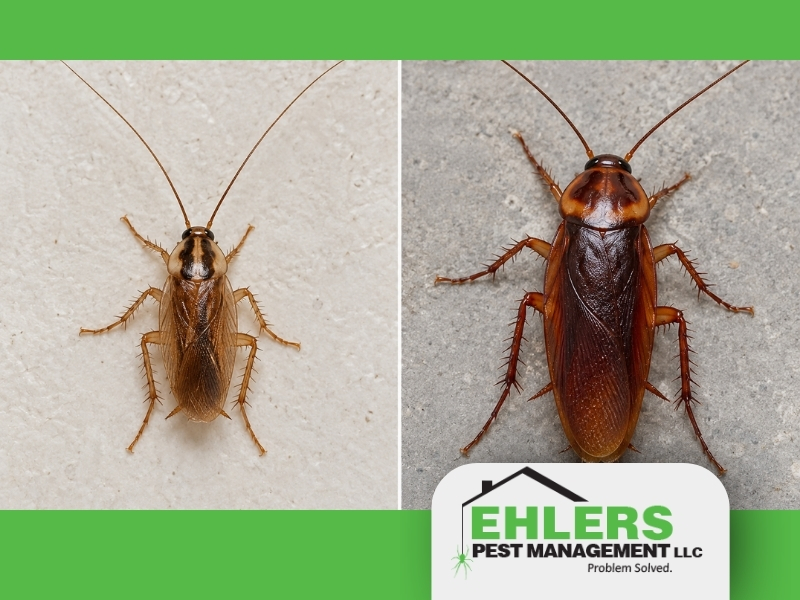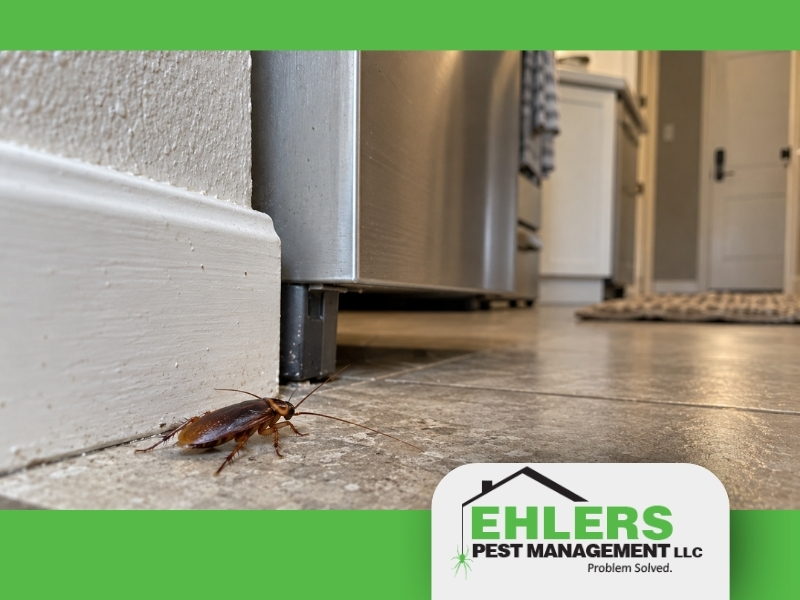
Roaches in an apartment or a duplex turn into a dispute faster than almost any other pest, because both sides have a reasonable-sounding theory. The tenant thinks the building has a problem. The landlord thinks the unit has a housekeeping problem. In a multi-unit building, the tenant is usually closer to right.
Here’s where responsibility actually lands in Wisconsin, and why the one-unit approach keeps failing.
Roaches in an apartment are almost always the landlord’s responsibility in Wisconsin, because state law requires keeping a rental in reasonable repair and roaches travel between units through shared walls and plumbing. Treating one unit while the neighbors go untreated produces a temporary drop and a full recovery.
A note first. This is general information about how this usually works, written by a pest control company, not attorneys. For a specific dispute, talk to a lawyer or your local tenant resource center.
Who is responsible for roaches in an apartment?
In most situations, the landlord.
Wisconsin doesn’t have a statute naming pest control directly. The duty comes from Wis. Stat. 704.07(2), which requires keeping a rental in reasonable repair and complying with local housing codes, and that duty can’t be signed away in a lease. ATCP 134.04 separately requires disclosing known conditions affecting habitability, and an active roach infestation is one.
Responsibility can shift to a tenant under Wis. Stat. 704.07(3) when their own negligence caused the condition. In a building with shared walls, that’s far harder to establish than owners expect, because roaches move through plumbing chases and electrical runs between units regardless of how any one household lives.
Why doesn’t treating one unit work?
Because the population isn’t confined to one unit, even when the sightings are.
German cockroaches travel the shared infrastructure of a building: the chases around stacked plumbing, the gaps where electrical runs pass through walls, and the voids between units. When one apartment gets treated and the neighbors don’t, the population moves, waits out the treatment, and comes back.
From the tenant’s side that reads as a failed treatment. From the landlord’s side it reads as the tenant causing it again. From the building’s side nothing changed, because most of the population was never in the treated unit to begin with.
Any company willing to treat a single unit in a building with a known roach problem, without raising the neighboring units, is selling a visit rather than a result.
What does the work actually involve in a rental?
A defined protocol rather than a single visit, and cooperation from everyone in the building.
Treatments run on a schedule tied to the roach life cycle, because egg cases are protected and applications have to catch nymphs as they emerge. Adjacent units get inspected and monitored. Preparation is required in each treated unit: cabinets and drawers emptied, counters cleared, clutter removed so a technician can reach the harborage, and the space vacated during the visit. The job isn’t considered finished until a monitoring window passes with no activity.
Incomplete preparation is the single most common reason this work has to start over, and in a multi-unit building one uncooperative apartment can hold up the whole schedule.
What should a tenant do?
Report it in writing and keep a copy, then prepare properly when treatment gets scheduled.
- Put the report in writing by text or email rather than a phone call, describing what you’re seeing, where, and how long it’s been happening.
- Photograph what you find, including the room and the location, since that helps a technician identify the species.
- Do the preparation exactly as it’s written when you’re given instructions. Incomplete prep is what causes a second round.
- Don’t set off a fogger. It pushes the population deeper into the walls and into your neighbors’ units, and it makes the real treatment harder.
On remedies, Wisconsin is narrower than most articles suggest. There’s no repair-and-deduct here and no withholding full rent. Under Wis. Stat. 704.07(4) a tenant facing an untenantable unit can move out and terminate, or stay and claim rent abatement proportional to the lost use. An unresponsive landlord can also be reported to the local building or health inspector, which in Milwaukee creates an official record.
What should a landlord do?
Treat the building rather than the complaint, and document everything.
One report in a four-family usually means inspecting all four. That costs more up front and considerably less than a year of single-unit visits that never resolve it. Keep the report, the scheduled dates, and the technician’s findings in writing, because that record is what protects you if a dispute develops.
The disclosure piece carries more exposure than the repair duty does. ATCP 134.04 requires disclosing a known infestation before a tenant signs, and ATCP 134 violations can bring double damages plus attorney fees under Wis. Stat. 100.20(5). A unit rented out with an active problem and no disclosure is a different and more expensive situation than one treated promptly.
What should you do next?
Whichever side of this you’re on, the useful next step is getting the whole building looked at rather than the one apartment where somebody saw something.
Ehlers Pest Management handles roach and bed bug work in rental settings of any size across Milwaukee, Waukesha, and Racine counties, and you can reach our experienced team at (414) 303-6926 to schedule service. A certified technician will confirm the species, assess how far it has spread, and tell you plainly which units need to be part of the work. Our aim on a job like this is to finish it, so the treatments stop.
Frequently asked questions
Can a landlord charge a tenant for roach treatment?
Sometimes, where the lease provides for it and the condition genuinely resulted from the tenant’s own negligence. In a multi-unit building that’s difficult to establish, since roaches move between units on their own. A charge applied without that showing is the kind of thing that becomes a dispute.
Do I have to let the exterminator in?
In practice, yes, and refusing entry is usually the fastest way to become the reason the job failed. Landlords generally have a right of entry for repairs with proper notice under Wisconsin law. Cooperating and preparing the unit properly is also what gets the problem resolved rather than repeated.
How long does it take to get rid of roaches in a rental?
Plan on a couple of months from the first visit to a confirmed finish. Treatments run on a multi-week cycle tied to the egg stage, followed by a monitoring period with no activity. Anything promising one visit isn’t describing roach work.
Will roaches go away on their own in winter?
No. The species that infests apartments lives indoors year-round, and building heat speeds up its development rather than slowing it. A small population in November is a larger one by February.
What if my neighbor won’t let anyone treat their unit?
That’s a real obstacle and it’s worth raising with the landlord or property manager directly, in writing. The treated units will improve and then decline again while an untreated unit continues producing. Resolving a building-wide problem requires building-wide access.