Categories Pest Treatment & Services

Locally Owned Pest Control in Milwaukee: Why It Makes a Real Difference

A pest control worker sprays a driveway with a hose, standing near a white Ehlers Pest Management LLC truck, both displaying the company’s logo. This scene highlights local pest management services in action.

Locally owned pest control in Milwaukee sounds like a simple thing to find, but it’s gotten harder to verify than it used to be. Plenty of companies advertise themselves as local while actually operating as a franchise location of a much larger regional or national company. Understanding the difference matters, because genuine local ownership affects everything from pricing decisions to who actually shows up at your door.

Here’s what locally owned pest control in Milwaukee actually means, how to tell the difference between genuine local ownership and a franchise dressed up as local, and why it matters for your home or business.

“Local” Doesn’t Always Mean What You Think

A lot of companies in the pest control industry use the word local in their marketing, but that word can mean very different things depending on the company. A franchise operation might genuinely have a local office and local technicians, while the business decisions, pricing structures, and corporate policies are all set by a parent company headquartered somewhere else entirely.

This isn’t always obvious from a website or a truck parked outside a customer’s home. The franchise model is specifically designed to look and feel local, even when the actual operating structure is closer to a big-box business model with a regional or national company behind it.

What Genuine Local Ownership Looks Like

A genuinely locally owned pest control company in Milwaukee, like Ehlers Pest Management, has a different structure entirely. There’s no parent company setting pricing or policy from another state. The people making decisions about how the business operates are the same people who live in this community and answer the phone when you call.

A few things distinguish genuine local ownership:

  • Decisions get made locally. Pricing, scheduling, and service standards are set by the people who actually run the business in Southeastern Wisconsin, not dictated by a corporate office elsewhere.
  • The company has deep roots in the specific community it serves. Genuine local businesses tend to have longer histories in a specific area, rather than a recently opened franchise location.
  • Staff are part of the community. Technicians and office staff live in the area they serve and have firsthand knowledge of local seasonal pest patterns, housing stock, and neighborhood-specific conditions.
  • There’s no franchise fee structure influencing pricing. Franchise locations often build franchise fees into their pricing models, which can affect what customers ultimately pay.

Why Local Ownership Affects Service Quality

Beyond the values question, local ownership has practical implications for the service you actually receive. A locally owned pest control company in Milwaukee has a direct, personal stake in its reputation within this specific community. Word of mouth, local reviews, and repeat business from neighbors matter in a way that’s harder to replicate at a franchise location reporting performance metrics to a distant corporate office.

This often translates into more attentive service, more flexibility to address a customer’s specific situation, and more accountability when something needs to be made right. A local pest control company in Milwaukee isn’t managing a script handed down from corporate. It’s managing its own reputation, one job at a time.

How to Tell If a Company Is Actually Locally Owned

A few direct questions help you figure out whether a company claiming to be local actually is:

  • Ask directly whether the company is independently owned or part of a larger franchise or regional network.
  • Look at how long the company has operated in the specific community, not just how long the brand name has existed.
  • Ask who sets pricing and service policy, the local office or a corporate parent company elsewhere.
  • Pay attention to how the company talks about itself. Genuine local businesses tend to be specific about their history and community involvement rather than relying on generic local-sounding marketing language.

Choosing Locally Owned Pest Control in Milwaukee

Ehlers Pest Management is a genuinely locally owned and independently operated pest control company that has served Milwaukee and Southeastern Wisconsin since 2010. There’s no franchise fee built into our pricing, no corporate office setting policy from somewhere else, and no distance between the people who run the business and the community we serve.

To schedule service or talk to our experienced team about what genuine local ownership means for how we treat your home or business, contact us today.

Frequently Asked Questions

How do I know if a pest control company is actually locally owned?

Ask directly whether the company is independently owned or operates as a franchise of a larger company. You can also research how long the specific business has operated in your community and whether local decision-makers or a distant corporate office sets pricing and policy.

Is locally owned pest control more expensive than a franchise or national chain?

Not necessarily. In some cases, locally owned companies can offer more competitive pricing because they aren’t building franchise fees into their cost structure. Pricing varies by company regardless of ownership structure, so it’s worth comparing actual quotes.

Are locally owned pest control companies as qualified as larger companies?

Yes. All pest control companies operating in Wisconsin, regardless of size or ownership structure, are subject to the same state licensing and certification requirements. Ownership structure doesn’t affect regulatory qualifications.

What’s the difference between a franchise and a locally owned business?

A franchise operates under a licensing agreement with a larger parent company, which often sets pricing structures, branding, and operational policies. A locally owned business is independently operated, with local decision-makers controlling pricing, service standards, and business direction.

Categories Pest Treatment & Services

Stinging Insect Control in Milwaukee: Wasps, Yellow Jackets, and Hornets

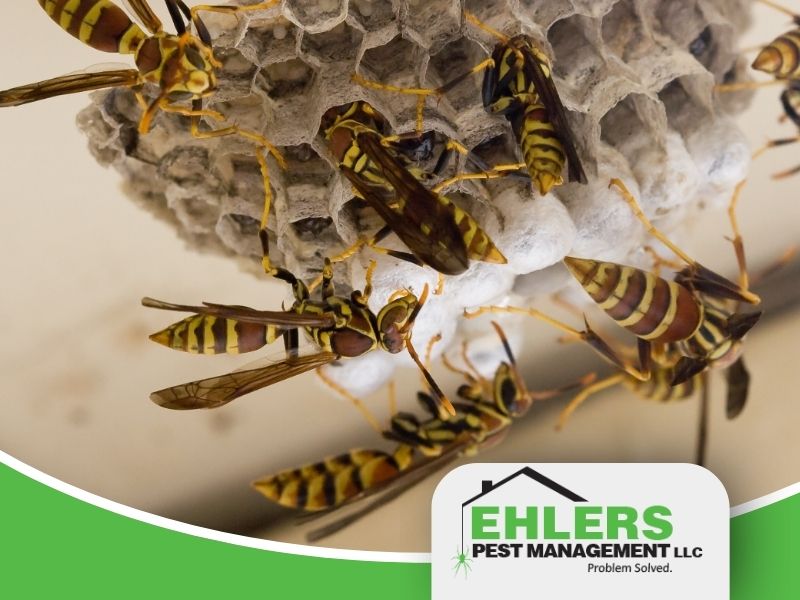
Several yellow and black wasps cluster on a nest with hexagonal cells. The image features the Ehlers Pest Management LLC logo in the lower right corner with a green border at the bottom, highlighting their expertise in local pest management.

If you’re finding stinging insects around your Milwaukee home this summer, stinging insect control in Milwaukee is one of those problems that gets more complicated the longer you wait. Wasp and yellow jacket colonies grow throughout the summer, reaching peak population by late August and early September. A nest that’s manageable in June becomes a much larger problem by fall.

Here’s what you’re most likely dealing with in Southeastern Wisconsin, why stinging insects are more dangerous than most homeowners realize, and when to stop troubleshooting and call a professional.

Common Stinging Insects in Milwaukee Homes and Yards

Not every stinging insect requires the same response. Knowing what you’re dealing with helps you make a smarter decision about how to handle it.

Paper wasps are slender, brownish insects that build open, umbrella-shaped nests under eaves, deck railings, window frames, and door frames. They’re relatively docile unless the nest is disturbed directly, but their preferred nesting locations put them in close proximity to daily human activity. Colonies are smaller than yellow jackets, typically 20 to 30 adults, but grow through summer.

Yellow jackets are the stinging insect most commonly responsible for painful encounters in Southeastern Wisconsin. They’re aggressive; they defend their territory vigorously, and unlike bees, they can sting repeatedly. Yellow jackets nest in the ground, inside wall voids, and in hollow trees or stumps. Ground nests are particularly dangerous because they’re easy to disturb accidentally while mowing or walking through the yard.

Bald-faced hornets build the large, gray, papery nests you’ve probably seen hanging from trees or attached to the exterior of a home. Colonies can reach several hundred workers by late summer and are highly aggressive when disturbed. These nests should never be approached or treated without professional equipment.

Mud daubers are solitary wasps that build small mud tubes on exterior walls, under overhangs, and inside garages. They’re generally non-aggressive and pose minimal risk, but their mud nests are unsightly and can attract other insects.

Why Stinging Insect Problems Get Worse Through Summer

This is the most important thing Milwaukee homeowners need to understand about stinging insects: colonies grow all summer long. A nest founded by a single queen in May will have dozens of workers by June, hundreds by July, and can reach peak population of several thousand in August and September.

As colonies grow, so does their defensive behavior. A small paper wasp nest in June that you’ve been coexisting with peacefully can become a genuinely hazardous situation by August when colony population and aggression levels are at their peak.

Summer is also when yellow jacket foraging behavior increases significantly. Colonies send out more workers searching for food, which brings them into more frequent contact with people eating outdoors, handling trash, or working in the yard.

The practical implication is straightforward: earlier treatment means smaller colonies, less aggressive behavior, and a simpler, safer removal process.

When Stinging Insects Become a Serious Problem

Most stinging insect encounters are unpleasant but not dangerous for people without allergies. However, there are situations that warrant immediate professional attention:

  • Nests near frequently used entry points. A nest above a front door, near a garage entry, or close to a children’s play area creates daily exposure risk that shouldn’t be ignored.
  • Ground nests discovered through accidental disturbance. Yellow jacket ground nests that have been disturbed by a lawnmower, foot traffic, or landscaping activity can trigger a mass defensive response. If this has happened, keep people and pets away from the area and call a professional.
  • Anyone in the household with a known venom allergy. For individuals with a diagnosed allergy to stinging insect venom, any nest on the property is a medical risk that should be professionally removed promptly.
  • Nests inside wall voids or structural cavities. Stinging insects nesting inside your home’s walls, attic, or crawl space require professional treatment. Attempting DIY removal of an interior nest can drive insects further into the structure or into living spaces.

What a Wasp Exterminator in Milwaukee Actually Does

Professional stinging insect control in Milwaukee involves more than spraying a can of wasp killer at a nest from a distance. Here’s what a proper treatment looks like:

Species identification. Treatment approach varies significantly by species. Yellow jacket ground nests, aerial hornet nests, and wall void infestations each require different methods and products.

Protective equipment. Professional technicians treat stinging insect nests with appropriate protective gear, which matters significantly when dealing with large yellow jacket or bald-faced hornet colonies.

Targeted product application. Professional-grade products applied directly into or onto the nest eliminate the colony at the source rather than just killing foragers that make contact with a surface spray.

Nest removal where appropriate. After treatment, removal of accessible nests prevents future use by other colonies and eliminates harborage for secondary pests.

Don’t Wait Until the Colony Is at Full Strength

Stinging insect colonies in Milwaukee reach peak size and peak aggression in late summer. Addressing a nest in June or July is faster, safer, and less disruptive than dealing with the same nest in August or September when it’s had all summer to grow.

Ehlers Pest Management provides stinging insect control across Milwaukee and Southeastern Wisconsin. To schedule service or talk to our experienced team about what you’re seeing on your property, contact us today.


Frequently Asked Questions

What is the most dangerous stinging insect in Milwaukee? Yellow jackets are responsible for the most painful and dangerous encounters in Southeastern Wisconsin because of their aggressive defensive behavior, their tendency to sting repeatedly, and their ground-nesting habit that makes accidental disturbance common. Bald-faced hornets are also highly aggressive when their nest is disturbed.

How do I know if I have yellow jackets or wasps? Yellow jackets are stockier, more brightly banded in yellow and black, and highly aggressive. They nest in the ground or in wall voids. Paper wasps are slender, brownish, and build open umbrella-shaped nests in sheltered above-ground locations. Bald-faced hornets are larger, black and white, and build large gray papery aerial nests.

Can I treat a wasp nest myself? For small, accessible paper wasp nests in a low-risk location, DIY treatment with an appropriately labeled aerosol product is feasible. For yellow jacket ground nests, bald-faced hornet nests, large aerial nests, or any nest inside a wall void or structural cavity, professional treatment is strongly recommended. The risk of a mass defensive response during DIY treatment of a large colony is significant.

When do stinging insects become less active in Wisconsin? Colony activity decreases as temperatures drop in fall. Most worker wasps and yellow jackets die off by the first hard frost, leaving only newly mated queens to overwinter. However, colonies reach their largest size and highest aggression levels in August and September before this decline begins.Will a wasp nest go away on its own in winter? The colony itself dies off, but the nest structure remains. Empty nests don’t typically attract new colonies the following year, but they can provide harborage for other insects. Removing accessible nests after the colony has died in late fall is worthwhile preventative maintenance.

Categories Pest Treatment & Services

Bed Bug Treatment in Milwaukee: What to Expect and How It Works

A person wearing gloves uses a flashlight to inspect a mattress, highlighting local pest solutions. Ehlers Pest Management LLC Problem Solved. logo appears in the bottom right corner.

If you’ve confirmed bed bugs in your Milwaukee home, the first thing you need is accurate information — not panic. Bed bug treatment in Milwaukee is something pest professionals handle regularly, and with the right approach, it’s a problem that can be fully resolved.

Bed bugs have become an increasingly common call for pest control companies across Milwaukee and the surrounding suburbs — and with the area’s mix of older housing stock, apartment density, and active travel in and out of the city, it’s not hard to see why.

Here’s what the process actually looks like, what you’ll need to do to prepare, and how to make sure you’re working with the right exterminator.

First: How to Know If You Actually Have Bed Bugs

Before treatment begins, you need to confirm what you’re dealing with. Bed bugs are small — about the size of an apple seed — flat, and reddish-brown. They hide in seams, crevices, and folds rather than out in the open, which makes them easy to miss.

Signs you may have bed bugs include:

  • Small, itchy bites in clusters or lines on exposed skin, typically noticed after sleeping
  • Rust-colored stains on mattress seams, sheets, or box springs from crushed bugs or excrement
  • Tiny dark spots (fecal matter) on mattress seams, headboards, or nearby furniture
  • Shed skins along mattress edges, behind headboards, or in nightstand drawers
  • A sweet, musty odor in heavily infested rooms

If you’re seeing multiple signs, don’t wait. Bed bugs reproduce quickly and spread to adjacent rooms and furniture over time.

How Bed Bug Treatment Works

There are two primary treatment methods used by professional bed bug exterminators in Milwaukee: chemical treatment and heat treatment. Each has its place depending on the severity and scope of the infestation.

In Milwaukee especially, multi-unit buildings and older homes with shared walls present an added challenge: bed bugs can migrate between units, meaning treatment in one apartment doesn’t guarantee protection from a neighboring infestation. 

Chemical Treatment

Chemical treatment involves applying professional-grade insecticides to affected areas — mattress seams, box springs, bed frames, baseboards, furniture, and other harborage points. It typically requires two visits spaced 2–3 weeks apart to catch any eggs that weren’t eliminated in the first round.

Chemical treatment is effective for moderate infestations and is generally the more affordable option. It does require more preparation from the homeowner and more follow-up visits to confirm full elimination.

Heat Treatment

Heat treatment raises the temperature of the affected space to levels lethal to bed bugs at all life stages, including eggs. It’s completed in a single visit and doesn’t require the same level of chemical application.

Heat treatment is faster, requires less preparation, and eliminates the need for follow-up visits in most cases. It’s typically the preferred option for severe infestations or situations where chemical exposure is a concern. The tradeoff is cost. Heat treatment is more expensive than chemical treatment.

Which Is Right for You?

A reputable bed bug exterminator in Milwaukee will inspect your home before recommending a method. Be cautious of any company that recommends a treatment approach before they’ve assessed the situation. The right method depends on the extent of the infestation, the layout of your home, and your specific circumstances.

What You Need to Do Before Treatment

Preparation is one of the most important parts of successful bed bug treatment. Skipping steps or cutting corners here directly impacts results. Your technician will give you a specific prep checklist, but generally, you can expect to:

  • Wash and dry all bedding, clothing, and soft items on the highest heat setting and seal them in bags until treatment is complete
  • Remove clutter from floors, under beds, and inside closets to allow full access to treatment areas
  • Vacuum mattresses, box springs, and upholstered furniture — dispose of the vacuum bag immediately afterward in a sealed bag outside
  • Move furniture slightly away from walls to allow access to baseboards
  • Arrange for pets and people to be out of the home for the duration of treatment and a short window afterward

Thorough preparation significantly improves treatment outcomes. Your technician will walk you through exactly what’s needed for your specific situation.

What Happens After Treatment

After bed bug treatment in Milwaukee, here’s what to expect:

  • Some activity may continue for a few days to a couple of weeks following chemical treatment as residual product continues to work
  • Heat treatment results are more immediate.  Most activity ceases within 24–48 hours
  • Follow-up inspection is standard with chemical treatment to confirm the infestation has been fully eliminated
  • Encasements are recommended. Mattress and box spring encasements trap any remaining bugs and make future monitoring easier

If you’re seeing significant activity beyond two weeks after treatment, contact your exterminator. A reputable company will follow up.

Choosing the Right Bed Bug Exterminator in Milwaukee

Not all pest control companies in the Milwaukee area have equal experience with bed bugs. Given how quickly an infestation can spread in a Wisconsin home, choosing the right exterminator matters. 

When evaluating your options:

  • Ask specifically about their bed bug treatment process and how many treatments are typically required
  • Confirm whether a follow-up visit is included in the price
  • Ask about their guarantee, what happens if the problem isn’t fully resolved
  • Be cautious of unusually low quotes, which often reflect incomplete treatment protocols

You Don’t Have to Figure This Out Alone

Bed bugs are stressful. But they’re also a known, treatable problem — and the sooner treatment begins, the simpler and less costly the process.

If you’ve found signs of bed bugs in your Milwaukee home or anywhere across Southeastern Wisconsin, from Wauwatosa to Oak Creek, Shorewood to Racine, Ehlers Pest Management can help. We’ll assess your situation honestly, recommend the right treatment approach, and make sure the problem is fully resolved. 

Schedule your inspection today.


Frequently Asked Questions

Are bed bugs common in Milwaukee?

Yes — bed bugs are reported regularly across Milwaukee and the surrounding suburbs. The city’s density, older housing stock, and high volume of travel in and out of the area all contribute to bed bug activity. Milwaukee pest control companies treat bed bug cases year-round, with no distinct seasonal pattern the way outdoor pests follow.

How long does bed bug treatment take?

Chemical treatment visits typically take 2–4 hours, depending on the size of the home. Heat treatment takes longer — usually 6–8 hours — but is often completed in a single visit. Your technician will give you a specific time estimate based on your situation.

Do I need to throw away my mattress?

In most cases, no. Professional treatment combined with a quality mattress encasement is sufficient. Disposing of a mattress is rarely necessary and doesn’t eliminate the infestation. Bed bugs spread well beyond the mattress itself.

Can I treat bed bugs myself?

DIY bed bug treatment is rarely effective. Bed bugs are highly resistant to many over-the-counter products and hide in areas that are difficult to treat thoroughly without professional equipment. Ineffective treatment often allows the infestation to spread further before professional help is sought.

How did I get bed bugs?

Bed bugs are travelers. They move on luggage, clothing, used furniture, and even through walls in multi-unit buildings. Getting bed bugs doesn’t reflect on the cleanliness of your home. They’re an equal-opportunity pest.

Will bed bugs come back after treatment?

A properly executed treatment from a reputable exterminator should fully eliminate the infestation. Reinfestation can occur if bed bugs are reintroduced from another source, such as from travel, used furniture, or a neighboring unit. Mattress encasements and periodic monitoring help catch any future issues early.

Categories Pest Treatment & Services, Uncategorized

How Often Should You Schedule Pest Control

A rat walks near stacked tires in a dimly lit garage with leaves and cobwebs, highlighting the need for local pest control solutions. The Ehlers Pest Management LLC logo is displayed at the bottom of the image.

Keeping your home free from pests isn’t just about reacting when you see a bug—it’s about preventing problems before they start. But determining how often to schedule pest control can feel overwhelming. The truth is, pest activity changes throughout the year, and the right frequency depends on your home’s unique needs. Here’s a clear guide to choosing the schedule that offers the best protection.

For most homeowners, quarterly pest control is the ideal baseline. Treatments every three months maintain a strong barrier around your home, keeping out common invaders like ants, spiders, centipedes, beetles, and occasional rodents. Since most professional products last about 90 days, quarterly visits ensure your home stays protected without unnecessary service.

If you live in an area with heavy warm-season pest activity—or simply want extra seasonal protection—consider seasonal service, which typically means monthly visits from April through October. These months bring the highest pest pressure: ants surge in spring, wasps and spiders peak in summer, and rodents begin seeking indoor shelter in early fall. Seasonal monthly treatments keep you ahead of every wave of activity.

For more active pest environments or homes that have experienced recurring issues, monthly pest control is a smart choice. This frequency is especially helpful for properties near wooded areas, lakes, restaurants, or older structures with multiple entry points. Monthly treatments disrupt pest life cycles, reduce pressure around your home, and provide ongoing monitoring to catch problems early.

In rare but urgent cases, weekly pest control may be necessary. This level of service is typically recommended for severe infestations—such as cockroaches, fleas, or significant rodent activity—where quick, repeated treatments are needed to gain control. Weekly visits allow technicians to respond rapidly, adjust treatments as the situation evolves, and ensure pests are eliminated as efficiently as possible.

No matter which frequency you choose, consistent pest control is always more effective than a one-time treatment. A customized schedule keeps your home protected year-round, prevents costly infestations, and gives you peace of mind knowing professionals are watching out for your property.

Categories Pest Treatment & Services, Uncategorized

Pest Control in Milwaukee: When You Need an Exterminator Now

A brown mouse sniffs near an air vent on the floor. In the background, a blue backpack, apple, and snacks are scattered. The Ehlers Pest Management LLC logo appears at the bottom, highlighting expert pest control services.

When you spot a few ants or hear scratching in your walls, it’s tempting to wait and see if the problem goes away. But in Milwaukee, pest issues can escalate quickly — and sometimes waiting even a few days makes the difference between a minor nuisance and a full-blown infestation. Knowing when to call an exterminator right away can save you stress, time, and money.

Signs You Need a Pest Control Professional Immediately

Some pests don’t just invade — they multiply fast. Call an exterminator if you notice:

  • Rodent activity: Scratching in walls, droppings, or gnawed food packaging signal mice or rats, which spread disease and damage insulation.
  • Bed bugs: Even a single sighting means it’s time for expert treatment. These pests spread quickly and are nearly impossible to eliminate with DIY methods.
  • Termites or carpenter ants: Wood damage, sawdust piles, or hollow-sounding walls require urgent attention before structural damage occurs.
  • Wasps or hornets: Large nests near windows, decks, or roofs can be dangerous, especially for those with allergies.
  • Cockroach sightings: Seeing one usually means dozens more are hiding — they thrive in dark, moist areas and reproduce rapidly.

Why Acting Fast Matters

Pests aren’t just a nuisance; they pose serious health and property risks. Rodents chew wires, increasing fire hazards, and insects like cockroaches can contaminate food surfaces. Milwaukee’s climate also makes infestations seasonal — as temperatures drop, pests seek shelter indoors.

What to Expect from a Professional Exterminator

A reputable Milwaukee pest control company will:

  1. Inspect your home thoroughly to identify the pest and entry points.
  2. Provide a customized treatment plan using safe, effective methods.
  3. Offer preventive advice and follow-up services to ensure pests don’t return.

Local, Fast, and Reliable Help

If pests have already made themselves at home, don’t wait for the problem to grow. Ehlers Pest Management can restore your peace of mind quickly and safely — protecting your family and your property year-round.