Author: John

John Ehlers is the owner of Ehlers Pest Management. Ehlers Pest Management is a veteran-owned family pest control company with the mission to provide responsible pest management solutions that protect people and the environment throughout every community with exceptional quality service. We service Milwaukee, Oak Creek, Shorewood, River Hills, Fox Point, Whitefish Bay, Racine and beyond.

Categories Pest Treatment & Services

WDI Inspection in Milwaukee: What Agents and Lenders Need to Know About VA Loans

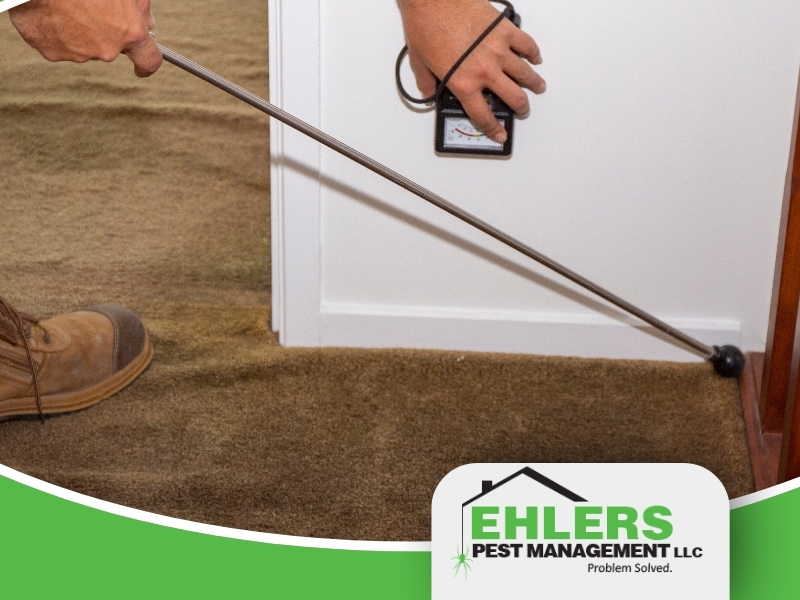
A person uses a pest inspection tool on brown carpet near a wall, performing a thorough WDI Inspection in Milwaukee. The Ehlers Pest Management LLC logo is in the bottom right corner.

If you’re closing a VA loan here, a WDI inspection in Milwaukee County is required, and so is one in nineteen other Wisconsin counties. Most agents find that out somewhere in the middle of a transaction rather than at the start, which is when a routine item turns into a timeline problem. This is written for the people who actually order these: agents, loan officers, and closing coordinators.

Here’s which counties require it, what the report covers, what happens if it comes back with a finding, and how fast you can reasonably expect paperwork.

When does a VA loan require a WDI inspection in Wisconsin?

The VA sets wood destroying insect inspection requirements county by county rather than statewide, and Wisconsin has twenty counties on the list: Columbia, Crawford, Dane, Dodge, Grant, Green, Iowa, Jefferson, Kenosha, Lafayette, Milwaukee, Ozaukee, Racine, Richland, Rock, Sauk, Vernon, Walworth, Washington, and Waukesha.

Nine of those sit inside our service area, and they cover most of where VA purchases happen in southeastern Wisconsin. If your transaction is in Milwaukee, Waukesha, Racine, Kenosha, Ozaukee, Washington, Walworth, Jefferson, or Dodge County, plan on it.

One caution. The VA updates local requirements periodically, so confirm the current requirement with your lender on any given file rather than relying on a list you read somewhere, including this one. Treat this as a planning tool and the lender’s word as the requirement.

What is a WDI inspection, and what’s on the form?

It’s a visual inspection of the accessible areas of a structure for evidence of wood destroying insects, documented on the NPMA-33 form or a state-approved equivalent. That form is what underwriting wants to see.

The report records three things: whether there’s visible evidence of active infestation, whether there’s evidence of previous infestation or damage, and what treatment, if any, is being recommended. It’s a point-in-time visual report on what’s accessible, which means finished basements, insulated crawl spaces, and stored belongings limit what anyone can see, and the report says so.

It isn’t a structural engineering report and it isn’t a home inspection. Agents occasionally expect it to cover more than it does, and setting that expectation with a buyer early prevents an awkward conversation later.

Who can perform it, and who can pay for it?

It has to be a state-licensed pest control professional acting as an independent third party. The appraiser can’t do it, and neither can the buyer’s uncle who used to work in the trade.

On payment, the rule changed and a lot of people in the industry are still working from the old version. Historically, VA borrowers were barred from paying the termite inspection fee in most states, which pushed the cost onto the seller or the agent. VA Circular 26-22-11, issued in June 2022, allows the veteran borrower to pay that fee in any state.

In practice, who pays is now a negotiation like any other line item. In markets where the requirement is routine, sellers often still cover it out of habit. The useful thing to know is that the old prohibition is gone, so a deal doesn’t need to stall over who’s allowed to write the check.

Does southeastern Wisconsin actually have termites?

Very few, and this surprises people who moved here from the South.

Subterranean termites exist in parts of Wisconsin but are uncommon in this corner of the state, and an inspection here rarely finds them. What it does find, when it finds anything, is usually carpenter ants, and occasionally powderpost beetles in older structures.

That’s worth understanding rather than glossing over, because it changes what a finding means for your transaction. Carpenter ants are a real problem that damages wood over time and needs treatment, and they’re also a more contained and more predictable situation than a termite finding would be. A report with carpenter ant evidence isn’t the deal-ending event people brace for when they hear the word termite.

What happens if the report finds activity or damage?

Active infestation has to be treated before the loan funds, and any structural damage has to be corrected to meet VA minimum property requirements. Underwriting will want documentation of the treatment.

In practice, this adds roughly a week to a closing, between scheduling the treatment and getting the paperwork back into the file. It’s manageable when it’s caught early and it’s painful when the inspection was ordered late, which is the entire argument for scheduling it alongside the appraisal instead of after.

Evidence of previous infestation with no current activity is a different situation and usually doesn’t require treatment. It does need to be documented accurately, and that’s where an inspector who writes clear reports saves everyone a round of questions from underwriting.

How fast can you get a WDI inspection in Milwaukee?

Same business day for the paperwork in most cases, and next business day at the outside.

We have the VA documentation, and the difference we hear about from agents is turnaround. You get the completed form, the service report, and the invoice together, usually the same day the inspection happens. An afternoon inspection means the paperwork is in your hands by that afternoon or by the same time the following day.

That matters because this is almost never the constraint on a closing until it is. A report that takes four days to arrive turns a routine requirement into the thing everyone is waiting on, and it’s the one part of this that’s entirely within the inspector’s control.

What actually slows these down?

Almost never the inspection itself. It’s access, and it’s the same short list every time.

  • A crawl space that’s locked, blocked, or has no hatch anyone can find. If it can’t be entered, it gets noted as inaccessible, and an underwriter may come back asking about it.
  • Storage stacked against basement foundation walls. Those walls are exactly what needs to be examined, and a technician isn’t going to move a homeowner’s belongings.
  • Detached garages, sheds, and outbuildings nobody thought to unlock. Whether they’re in scope depends on the lender, so ask before the appointment rather than after.
  • Vacant properties with no confirmed access, which is how a scheduled inspection turns into a second trip.
  • Snow and frozen ground against the foundation on a winter close, which limits what’s visible outside.

Sorting access out when the appointment is booked prevents nearly all of it. If you’re the listing agent, a note to the seller about clearing the basement perimeter and unlocking the outbuildings takes two minutes and saves a re-inspection.

How long is the report good for?

Roughly ninety days as a general rule, though your lender sets the standard on the file.

On a normal thirty to forty-five day close it never comes up. On a long escrow, new construction, or a transaction that fell apart and got resurrected, it does. If a file has been sitting, check the date on the report before you assume it still works.

What agents and lenders should do next

Order it early, at the same time as the appraisal, and stop treating it as a late-stage item. Confirm the county requirement with your lender at the start of the file. And if a finding does come back, deal with it immediately rather than negotiating around it, because the treatment and the documentation are what the loan is actually waiting on.

If you write VA business in southeastern Wisconsin and you want an inspector who turns paperwork around the same day, call Ehlers Pest Management at (414) 303-6926. We’re a locally owned, veteran-owned company, we have the VA forms ready for you. If you order these regularly, ask for us by name when you call and we’ll get you on the schedule.


Categories DIY vs. Professional Pest Control

How to Choose a Pest Control Company in Milwaukee: What to Ask Before You Sign

A young man in a Pest Control uniform knocks on a door, embodying professionalism and reliability—key qualities to look for when learning how to choose a pest control company. The Ehlers Pest Management LLC logo is displayed at the bottom of the image, with trees and houses visible in the background.

Figuring out how to choose a pest control company in Milwaukee is harder than it used to be, and there’s a reason for that. Most of the familiar local names in southeastern Wisconsin were bought up by one international company, and a wave of door-to-door operations moved into the gap. Both look local in their advertising. Neither works the way the local companies people remember used to work. Here are the questions that tell you which kind you’re talking to, before you put a signature on anything.

What happened to the local pest control names in Milwaukee?

They got acquired. Bater, Will Kill, and Terminix all ended up under Rentokil, an international company, and the consolidation changed how the service works even where the name on the truck stayed the same.

Two things tend to follow an acquisition like that. Quality control gets harder across a large organization, and practices designed elsewhere get applied here whether or not they fit. A good example is the year-round exterior program. It’s a sensible product in a warm climate. In Wisconsin it means someone treating the outside of your house in February with snow on the ground, and it doesn’t accomplish much.

The other change is where your call goes. Calls route to national call centers instead of the local branch, so the person taking down your problem is often several states away and isn’t a pest control professional. That matters most when your situation is unusual, because a script can’t ask the follow-up question.

Who’s actually knocking on your door?

If someone came up your walk this summer offering a deal on the spot, they were almost certainly a salesperson, and they won’t be the person who treats your house.

Door-to-door is a real business model in this market. Aptive, Hawx, Greenix, and EcoShield all operate in southeastern Wisconsin and all use seasonal sales teams to sign customers at the door, typically on a recurring contract. The pitch happens at your doorstep and a different technician shows up later to do the work.

Most homeowners don’t know that’s how it’s structured, and it’s worth knowing, because the person making promises about your property has no responsibility for keeping them. If you want to know which kind of company you’re dealing with, ask the person in front of you a direct question: are you the one who’ll be doing the treatment?

What should you ask before you sign a contract?

Six questions do most of the work.

  • How long is the contract, and what does it cost to get out of it?
  • Which pests are actually covered, and which ones cost extra?
  • How many visits a year does this include, and what’s the schedule?
  • Is the person who inspected my property the same person who’ll treat it?
  • When I call, do I reach a local office or a call center?
  • What happens if the problem isn’t resolved, and what specifically is guaranteed?

You’re not being difficult by asking these. A company that answers them cleanly is telling you something, and a company that gets vague on the second or third one is telling you something too.

What does a low advertised monthly rate usually mean?

Usually a two-year commitment, three visits a year, a limited list of covered pests, and additional charges for anything outside that list.

The advertised number is usually real. What’s missing from the advertisement is the term, the visit count, and the exclusions. Someone signs up for ant control, discovers eighteen months later that they’re still paying for a service they no longer need, and finds out that mice were never included.

There’s a version of this that’s worse. A company sells a large volume of accounts on a low entry price, and accepts that a share of customers will call to complain. If enough of the rest don’t, the model still works. That’s a numbers business rather than a service business, and you can usually spot it by how fast the price came and how little anyone looked at your house first.

Is the company actually local, or a franchise?

Worth checking, because local is the easiest claim in this industry to make and one of the harder ones to verify.

Plenty of operations present themselves as your local professionals while running a regional or national franchise structure underneath. The branding is local. The business model, the pricing, the call handling, and the staffing are not.

Two quick tests. Ask where the phone rings when you call the main number. And ask how long the company has operated in southeastern Wisconsin under its current ownership. Neither question is confrontational and both are hard to dodge.

Who shows up, and will it be the same person next time?

This is the question that predicts service quality better than any other, because pest control is skilled work and turnover is the industry’s chronic problem.

Large operations hire in volume at low wages, and technicians frequently move on within a year or two. What that produces on the ground is inexperienced people working too many stops a day, which is how you end up with someone puffing a little dust behind a shutter and calling it a treatment. It looks like service was performed. It wasn’t.

Ask whether you’ll have a consistent technician. Someone who’s been to your property before knows where the problem was last time, which matters enormously on recurring issues.

What should a real inspection actually include?

This is the part that separates a company solving your problem from a company selling you a plan, and it happens before any money changes hands.

A technician should walk the interior and the exterior. They should look at the foundation line, the utility penetrations, the basement joist bays, and the attic if it’s accessible, and they should go into the rooms where you’ve actually seen activity. They should be able to tell you what species you have, not just what category, because the treatment for German cockroaches and Oriental cockroaches is different and so is the treatment for paper wasps and yellow jackets.

You should come away knowing three things: what you have, where it’s living or getting in, and what the plan is. If someone gives you a price without having gone into your basement, they priced a package rather than your problem.

A phone quote is the clearest signal of all. Nobody can tell you what a pest problem takes to solve without seeing the building.

How to choose a pest control company: the short version

If you only remember four things from this, make it these.

  • Get the contract term, the covered pest list, the visit schedule, and the resolution terms in writing before you sign anything.
  • Find out whether the person who inspected your property is the one who’ll treat it.
  • Find out where your call goes when you dial the main number.
  • Be skeptical of any price quoted before someone has looked at your house.

None of that requires knowing anything about pest control. It’s just knowing what the structure of the deal is before you agree to it, and it filters out most of what people end up unhappy with.

What we do differently, and who we’re not right for

We should be straightforward that this is our own blog, so weigh it accordingly. Here’s how we’re set up.

We don’t send salespeople. When someone comes to bid your job, it’s a certified, licensed, and insured technician who performs the work, and they’re equipped to start that day. They look at your property in person rather than quoting a flat rate over the phone.

When you call, you reach our local office. Our office manager is certified, works in the field, does the scheduling, and answers the phone, which is unusual in this industry and it’s the reason the person who picks up can actually answer your question.

We’re also not the right company for everyone, and we’d rather say so up front. We don’t chase high-volume, low-price work. We don’t service 24-hour operations or national chains that need centralized billing across multiple states. We don’t take general maintenance contracts at large apartment complexes. If you want the cheapest number available, we won’t be it.

What to do next

Whoever you end up hiring, get the contract term, the covered pest list, the visit schedule, and the resolution terms in writing before you sign. That single habit prevents most of the complaints in this industry.

If you’d like a look at your property from someone who’ll actually treats pests, call Ehlers Pest Management at (414) 303-6926. We’ll tell you what’s actually going on, what it’ll take to fix it, and whether it’s something you need to hire anyone for at all.

Categories Cockroaches, Pest Treatment & Services

Cockroach Exterminator Milwaukee: Why They Show Up Indoors in Fall

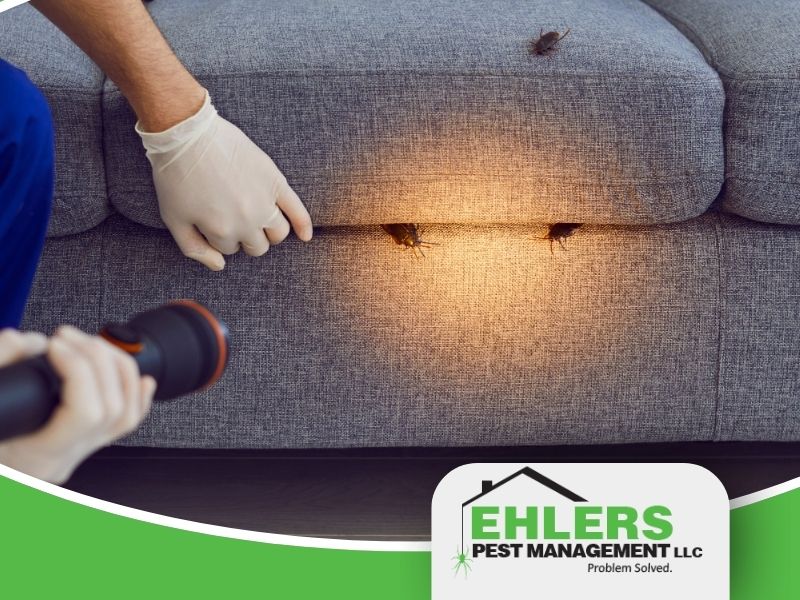
A gloved hand shines a flashlight on a gray sofa, revealing cockroaches inside. The Ehlers Pest Management LLC logo appears in the bottom right corner, highlighting their expert pest control services.

People start looking for a cockroach exterminator in Milwaukee in the fall for two different reasons, depending on which species they have. Some roaches are moving in from drains, sewers, and outdoor harborage as the ground cools. Others were already inside and simply became easier to notice once the furnace kicked on and the house got quiet at night. Either way, seeing one is worth acting on, because roaches are the pest where waiting costs you the most.

Here’s what you’re probably dealing with, why the store-bought approach usually backfires, and what real treatment looks like.

Cockroaches turn up indoors in fall for two reasons. Oriental and American roaches move in from drains and sewers as the ground cools. German cockroaches were already inside and get more active once heating raises indoor temperatures. German cockroaches are the species that produces a true infestation.

Why am I suddenly seeing cockroaches?

Because fall pushes two separate situations to the surface at the same time.

Oriental and American cockroaches live in sewers, storm drains, basements, and damp outdoor spaces. As soil temperatures drop, they follow warmth and moisture into buildings through floor drains, sump pits, utility penetrations, and gaps around basement pipes. In older Milwaukee housing stock with original drain work, this is common every fall and it’s often a small number of individuals rather than a colony.

German cockroaches are a different problem entirely. They live indoors year-round and never came from outside at all. What changes in fall is that heating raises interior temperatures, which speeds up their development, and people spend more evenings at home, which is when roaches are active. The population didn’t arrive. It got bigger and you got more chances to see it.

Which cockroach do you have, and does it matter?

It matters a great deal, because the treatment is different and so is the seriousness.

German cockroaches are small, about half an inch, light brown, with two dark parallel stripes running back from the head. They stay near food and moisture, so kitchens and bathrooms, and they hide in cabinet hinges, under appliances, behind wall plates, and inside the motor housing of a dishwasher or a microwave. This is the species that produces a genuine infestation, and it’s the one that requires specialty work.

American cockroaches are the big ones, an inch and a half or more, reddish brown, with a yellowish figure-eight pattern behind the head. People call them water bugs. They’re usually associated with drains and sewer lines rather than kitchens.

Oriental cockroaches are dark brown to nearly black, slower moving, and strongly tied to damp spaces. Basements, crawl spaces, floor drains, and window wells.

There are also wood roaches, which wander in from outside, don’t establish indoors, and mostly turn up in early summer. If you found one large roach in a basement in September, the honest answer is that it might be nothing. If you’re finding small striped ones in a kitchen, that’s not nothing.

Does one cockroach mean an infestation?

With German cockroaches, effectively yes.

They’re nocturnal and they avoid open space, so at any given moment the large majority of the population is hidden inside a void, a hinge, or an appliance. Seeing one in daylight generally means the harborage is crowded enough to push individuals out into places they’d normally avoid.

The reproduction math is the reason speed matters. A female German cockroach carries an egg case holding roughly thirty to forty eggs, produces several over her life, and the young reach breeding age in a couple of months. A small problem in September is a substantially larger one by the holidays. There isn’t a version of this that stays the same size.

With a single large American or Oriental roach in a basement, it’s reasonable to check your floor drains and watch for a week before doing anything drastic.

Is it because of how clean the house is?

No, and this is worth saying plainly because it stops people from calling.

German cockroaches get into buildings by being carried in. Grocery bags and cardboard boxes, a used appliance, secondhand furniture, a delivery, a suitcase, or a moving truck. In a duplex, a four-family, or any building with shared walls, they travel between units through plumbing chases, electrical runs, and shared voids without any regard for whose apartment is spotless.

We’ve treated immaculate homes and we’ve treated cluttered ones. Cleanliness affects how fast a population grows once it’s established, and it has very little to do with how it started. The technician who comes to your house has seen this many times and isn’t there to form an opinion about your housekeeping.

Do store-bought roach treatments work?

Gel baits, used carefully and placed well, can help. Most of the rest of it makes things worse.

Total-release foggers, the ones people call bug bombs, are the clearest example. The material settles on open surfaces and doesn’t penetrate the voids where roaches actually live, and the repellent effect drives the population deeper into walls and out into adjoining rooms or neighboring units. We’re regularly called to homes that had a contained kitchen problem before someone set off foggers and a building-wide problem afterward.

Aerosol sprays along baseboards have the same scattering effect on a smaller scale. And spraying insecticide over gel bait placements ruins the bait, so the two common approaches actively cancel each other out.

The underlying issue is reach. You can’t treat what you can’t get to, and most of the population is somewhere you can’t get to.

What does a cockroach exterminator in Milwaukee actually do?

For German cockroaches, this is specialty work with a defined protocol, and it looks different from general pest control.

It starts with an inspection to confirm the species and find the harborage, because treating for the wrong roach wastes everyone’s time. From there, treatments run on a schedule of roughly every two weeks, which is set by the life cycle rather than by convenience. Egg cases are protected, so you need applications timed to catch the nymphs as they emerge.

Preparation matters as much as the treatment does. Kitchen cabinets get emptied, clutter gets cleared so the technician can reach the harborage, and the space is vacated during the visit. Incomplete preparation is the single most common reason a roach job has to start over, and it’s worth doing exactly as it’s written.

In a duplex or a multi-unit building, adjacent units get monitored and often treated. Treating one unit while the neighbors go untreated produces a temporary drop and a full recovery.

How long does it take?

Longer than people want, and it should have an ending.

The standard we work to is eight weeks with zero activity before a job is considered resolved. That’s after the treatment sequence, not instead of it, so a German cockroach job is a commitment of a couple of months from start to confirmed finish.

The reason we work that way is that it’s supposed to end. Solve the problem and the work dries up, which is the opposite of the ongoing-maintenance-forever model. If a company is treating your kitchen every month indefinitely and calling that roach control, they’re managing a complaint rather than finishing a job.

What to do next

If you’re finding small striped roaches in a kitchen or bathroom, don’t wait and don’t set off a fogger. Both make the eventual job bigger.

Call Ehlers Pest Management at (414) 303-6926. A certified technician will come out, confirm what species you have, find where they’re living, and tell you what the treatment sequence looks like for your situation. In a multi-unit building we’ll tell you honestly if the neighbors need to be part of it.

Categories Rodents

Rodent Exclusion in Milwaukee: What Sealing Your Home Before Winter Involves

Two curious rats with noses close to the camera lens, appearing playful—a subtle reminder of the importance of rodent exclusion. The Ehlers Pest Management LLC logo is in the lower right corner of the image.

Rodent exclusion in Milwaukee means physically closing the openings mice use to get into a building, using materials they can’t chew through. It’s the difference between removing the mice that are in your house right now and making sure the next ones can’t take their place. Trapping handles the first. Only exclusion handles the second, and September is when the work is worth the most.

Here’s what the job actually involves, why sealing alone isn’t the whole answer either, and what separates work that holds from work that doesn’t.

Rodent exclusion in Milwaukee means physically sealing the openings mice use, with materials they can’t chew through: hardware cloth, copper mesh, sheet metal, and mortar. Trapping removes the mice that are present. Only exclusion stops new ones from taking their place, which is why sealing before the first freeze matters.

What does rodent exclusion actually mean?

It means going around a structure and closing every gap a mouse can fit through, which is anything a quarter inch or wider, using hardware cloth, metal, mortar, and sealant rather than something a rodent can gnaw.

That’s it. There’s nothing exotic about the concept. What makes it work or fail is thoroughness, because mice only need the openings you missed. Closing thirteen of fifteen gaps produces a house that still has mice in it, and the homeowner reasonably concludes the work didn’t do anything.

It’s also permanent in a way that nothing else in pest control is. A sealed sill plate stays sealed. Bait stations and traps are ongoing by design.

Why doesn’t trapping alone solve it?

Because trapping removes the mice, and the reason the mice were there is the opening, not the mice.

Mice don’t leave on their own and they don’t move out when the weather warms up. What actually happens on a property with untreated entry points is a cycle. You trap out the population, things go quiet, and within weeks or months new mice find the same gap and fill the same space. From the homeowner’s side it looks like the problem came back. From the building’s side, nothing ever changed.

This is why an ongoing trapping program with no exclusion behind it turns into a permanent line item. It manages a symptom on a schedule. That’s fine as a strategy if the building genuinely can’t be sealed, and there are commercial situations where that’s true. On a single-family house it usually isn’t.

Why seal before winter instead of after?

Three reasons, and they compound.

The first is that mice are moving right now. Overnight lows in southeastern Wisconsin drop into the forties in September, and rodents respond by pushing toward warm structures. Sealing ahead of that push means fewer of them get in at all.

The second is reproduction. A female house mouse can produce several litters a year, and the young reach breeding age in about six weeks. A small number of mice that get in during September is a considerably larger number by February. The size of the problem you’re solving is set by how early you deal with it.

The third is access. Exclusion work happens at foundation lines, in crawl spaces, on roof lines, and around garage doors. Doing that in September is straightforward. Doing it in January means frozen ground, snow against the foundation, and ladders on ice, and some of it simply can’t be done properly until spring.

What materials actually hold up?

This is where most well-intentioned work falls apart, so it’s worth being specific.

What holds:

  • Quarter-inch hardware cloth, cut and fastened over larger openings, vents, and weep holes.
  • Copper or stainless mesh packed into gaps, then sealed over so it can’t be pulled loose.
  • Sheet metal or flashing over chewed wood, especially along a garage door jamb or a soffit edge.
  • Mortar or hydraulic cement for masonry gaps and deteriorated foundation joints.
  • Metal-reinforced door sweeps, and dryer vent covers with a working damper.

What doesn’t hold:

  • Expanding foam by itself. Mice chew through it in a season, and it’s one of the most common things we find on houses that have been worked on before.
  • Caulk or sealant with nothing behind it.
  • Steel wool with no sealant over it. It rusts, it compresses, and it works loose.
  • Duct tape, plastic vent covers, and anything soft enough to bite.

The pattern is simple. If a mouse can get its teeth into it, the repair is temporary.

What does rodent exclusion in Milwaukee look like on an actual house?

It starts with an inspection, and the inspection is most of the value.

A certified technician walks the exterior and the interior, including the basement joist bays and the attic if there’s access, and identifies every opening plus the evidence of what’s using them. Droppings, rub marks along a joist, gnawing at a specific corner, and nesting material all tell you where the activity is concentrated and roughly how long it’s been going on.

From there the work is sequenced. Openings get closed with the appropriate material for each location, which is rarely the same material twice on an older home. The garage gets attention, because it’s usually the largest opening and people don’t count it as part of the house. Attractants get addressed too, which means birdseed and pet food in sealed containers, firewood moved off the foundation, and vegetation cut back from the siding.

One thing worth knowing about sequence. If a house already has an established interior population, sealing everything on day one shuts those mice inside. Good exclusion work accounts for that, by trapping down the interior population alongside the sealing rather than closing the building up and walking away. Anyone who seals a house without asking what’s already inside it is going to leave you with mice in the walls and no way out.

Can you do this work yourself?

Parts of it, and the parts you can do are worth doing.

A homeowner with a caulk gun, a roll of hardware cloth, some copper mesh, and a Saturday can close the garage door corners, put a proper sweep on the service door, replace a broken dryer vent damper, and pack and seal the utility penetrations they can reach. That’s real progress and it costs very little.

What’s harder is the finding. The sill plate gap runs above your head in the joist bays and doesn’t look like an opening. The soffit-to-wall gap is thirty feet up. The spot where an addition meets the original house is behind a downspout. A technician who inspects these buildings year-round checks the places that are always a problem on a 1920s bungalow, and knows which ones matter on a duplex with a stone foundation.

The honest split is this. Do the accessible work yourself if you want to. Get an inspection so you know what you’re still leaving open.

Does exclusion replace trapping, or go with it?

They go together, in that order of importance.

Exclusion is what makes the result last. Trapping is what clears out what’s already inside while the sealing happens. On most homes, a period of monitoring follows so you can confirm the activity has actually stopped rather than assuming it did.

Where ongoing service continues to make sense is on properties with heavy surrounding pressure, older buildings that can’t be fully sealed, and commercial sites where doors open all day. Rodent control is the majority of what we do, and a good share of it is buildings where the goal is to keep pressure down permanently rather than to finish and walk away. The point is that ongoing service should be a decision you made about your building, rather than the default because nobody sealed anything.

What should you expect after the work is done?

Not instant silence, and knowing that up front prevents a lot of frustration.

If there was an established population, you may hear activity for a stretch while the interior trapping does its job. That’s the process working rather than failing. What you’re watching for over the following weeks is the trend: fewer captures, less noise, no new droppings in the places you were finding them.

A follow-up visit confirms it rather than assuming it. If activity is still showing up in one specific area after the sealing, that usually means an opening got missed in that part of the building, and it gets found and closed. Buildings settle and change, so a house sealed this fall is worth a look again in a few years, particularly after any roof, siding, or utility work.

What to do next

If you’ve heard scratching in the walls, found droppings in the pantry or the garage, or seen one mouse and assumed it was one mouse, this is the month to deal with it. The work is easier now, the population is smaller now, and the weather is on your side for another few weeks.

Talk to our experienced team at (414) 303-6926 to schedule service. A certified technician will walk the property, show you what they found and where, and give you a plan based on your building rather than a package. If there’s something we can’t seal, we’ll tell you that too.

Categories Pest Identification & Prevention

Spider Exterminator in Milwaukee: Why You See More Spiders in Fall

Close-up of a brown spider on its web, with the Ehlers Pest Management LLC logo and tagline Problem Solved. at the bottom right corner, highlighting their expertise as a trusted spider exterminator Milwaukee residents rely on.

People start looking for a spider exterminator in Milwaukee every September, and the reason isn’t the one most of them assume. Spiders aren’t flooding in from the yard to escape the cold. The house spiders you’re seeing mostly lived in your house all along. What changed is that they finished growing, the males started wandering to find mates, and both of those things happen at the end of summer. You’re seeing the same population you always had, at the point in the year when it’s biggest and most active.

Here’s what’s actually in a Wisconsin home, which ones are worth any concern, and when treatment is the right call.

You see more spiders in fall because house spiders reach full size in late summer and males begin wandering to find mates. Most of them lived in your home all along. Spiders are a secondary pest, so reducing the insects they feed on does more than removing spiders one at a time.

Why are there suddenly more spiders in my house?

Four things stack up at the same time, and only one of them has anything to do with temperature.

The biggest factor is maturity. Common house spiders hatch in spring, grow all summer, and reach full size in late August and September. A spider that was too small to notice in June is now large enough to catch your eye from across the room. Nothing arrived. It just got bigger.

The second is mate-searching. Male spiders that have matured leave their webs and wander looking for females, which is why the spider you find crossing the living room floor at nine at night is almost always a male. Wandering is temporary behavior and it peaks right now.

Third, their food supply moves. Box elder bugs, lady beetles, flies, and other insects push toward the house in fall, and spiders follow the insects. Where you have a lot of one, you get a lot of the other.

Fourth, people are inside more, with the windows shut and the lights on, and simply notice more of what was already there.

Which spiders actually live in Wisconsin homes?

The list is shorter than people expect, and almost all of it is harmless.

Common house spiders build the messy, tangled cobwebs in ceiling corners, basements, and behind furniture. They’re small, tan or gray, and they’re the reason you’re dusting webs down every few weeks.

Cellar spiders are the long-legged ones hanging in loose webs in basements and crawl spaces. People call them daddy longlegs. They eat other spiders, including bigger ones, so a basement full of cellar spiders is doing you a small favor.

Wolf spiders generate more phone calls than anything else on this list. They’re large, hairy, fast, brown or gray, and they don’t build webs. They hunt on the ground, which means you find them running across a basement floor rather than sitting in a corner. They look alarming and they’re not dangerous.

Funnel weavers, sometimes called grass spiders, build the flat sheet webs with a funnel at one end that you see all over lawns, window wells, and shrubs on dewy September mornings.

Orb weavers build the classic wheel-shaped webs outdoors. In September the females are at full size and their webs turn up across doorways and between porch railings overnight. They’re outdoor spiders, they’re harmless, and they’ll be gone with the first hard frost.

Yellow sac spiders are small, pale, and nocturnal, and they wander rather than sit in a web. They’re worth knowing about because they account for a fair share of the bites people actually get in this region.

Are any Wisconsin spiders dangerous?

Very few, and bites are far less common than most people believe.

Most spiders in a Wisconsin home either can’t break human skin or won’t try. Bites generally happen when a spider gets trapped against skin, usually in clothing, a glove, a shoe, or bedding. A yellow sac spider bite can be locally painful and slow to heal. A wolf spider bite is comparable to a bee sting and uncommon.

Northern black widows exist in Wisconsin but are genuinely rare here, concentrated in the southwestern part of the state, and they’re reclusive and non-aggressive. Most people go their whole lives in this state without encountering one.

If you have a bite that’s spreading, worsening, or accompanied by fever, see a doctor. That’s a medical question, not a pest control question, and the answer is frequently something other than a spider.

Is that a brown recluse?

Almost certainly not. Brown recluses aren’t established in Wisconsin.

Their range covers the south-central United States, and the occasional one that turns up here arrived in a shipment or a moving box rather than a local population. Confirmed Wisconsin sightings are rare enough to be notable.

This matters because brown recluse gets blamed for a lot of things it didn’t do. Skin infections, including bacterial ones that need actual treatment, get self-diagnosed as recluse bites, and that delays people getting care they need. The brown spider in your basement in Milwaukee is far more likely to be a wolf spider, a funnel weaver, or a common house spider.

Does killing spiders one at a time help?

Not much, and this is the part worth understanding before you spend money on anything.

Spiders are a secondary pest. They’re in your house because there’s something in your house for them to eat. A property with a heavy spider population almost always has a heavy insect population feeding it, and removing individual spiders doesn’t change that. New ones fill the space.

So the work that actually reduces spiders isn’t spider-specific. It’s cutting down the insects they’re hunting, clearing the webs that mark established territory, and closing up the gaps that let both in.

When is it worth calling a spider exterminator in Milwaukee?

When you’re seeing them consistently rather than occasionally, when webs come back within days of being cleared, or when there’s a bigger insect problem underneath the spider problem.

What treatment actually involves is a perimeter application around the foundation, doors, windows, eaves, and soffits, along with physically removing webs and egg sacs, since a web left in place is an invitation to rebuild. Spiders are covered under general interior and exterior pest control rather than being a standalone service, because handling the insects they feed on is most of the job.

One honest note. Spiders are harder to knock down than most insects, because they walk on the tips of their legs and pick up less material from a treated surface than a crawling insect does. Good results come from the combination of treatment, de-webbing, and reducing what they’re eating, rather than from a single application.

What can you do yourself?

Several things, and they help more here than they do with most pests.

  • Clear webs regularly, inside and out, with a vacuum or a web brush. This is the single most effective thing a homeowner can do.
  • Change exterior lighting to warm-toned or yellow bulbs, or move fixtures away from doors. White light draws the insects that draw the spiders.
  • Move firewood, leaf piles, and mulch back from the foundation, and cut back shrubs touching the siding.
  • Seal the same gaps that let mice in: around window and door frames, at the sill plate, and where utilities enter the wall.
  • Shake out gloves, boots, and anything stored in the garage or basement before you put it on. That’s how most bites get prevented.

What to do next

If it’s one wolf spider in the basement in September, you’ve got a normal Wisconsin fall and a vacuum will handle it. If webs are back a few days after you clear them, or you’re finding spiders daily, there’s an insect population feeding them and that’s the actual problem to solve.

Talk to our experienced team at (414) 303-6926. A certified technician will inspect the property, tell you what’s driving it, and treat the interior and exterior. They’ve seen how these homes behave in a Wisconsin September.hat’s actually in a Wisconsin home, which ones are worth any concern, and when treatment is the right call.

Why are there suddenly more spiders in my house?

Four things stack up at the same time, and only one of them has anything to do with temperature.

The biggest factor is maturity. Common house spiders hatch in spring, grow all summer, and reach full size in late August and September. A spider that was too small to notice in June is now large enough to catch your eye from across the room. Nothing arrived. It just got bigger.

The second is mate-searching. Male spiders that have matured leave their webs and wander looking for females, which is why the spider you find crossing the living room floor at nine at night is almost always a male. Wandering is temporary behavior and it peaks right now.

Third, their food supply moves. Box elder bugs, lady beetles, flies, and other insects push toward the house in fall, and spiders follow the insects. Where you have a lot of one, you get a lot of the other.

Fourth, people are inside more, with the windows shut and the lights on, and simply notice more of what was already there.

Which spiders actually live in Wisconsin homes?

The list is shorter than people expect, and almost all of it is harmless.

Common house spiders build the messy, tangled cobwebs in ceiling corners, basements, and behind furniture. They’re small, tan or gray, and they’re the reason you’re dusting webs down every few weeks.

Cellar spiders are the long-legged ones hanging in loose webs in basements and crawl spaces. People call them daddy longlegs. They eat other spiders, including bigger ones, so a basement full of cellar spiders is doing you a small favor.

Wolf spiders generate more phone calls than anything else on this list. They’re large, hairy, fast, brown or gray, and they don’t build webs. They hunt on the ground, which means you find them running across a basement floor rather than sitting in a corner. They look alarming and they’re not dangerous.

Funnel weavers, sometimes called grass spiders, build the flat sheet webs with a funnel at one end that you see all over lawns, window wells, and shrubs on dewy September mornings.

Orb weavers build the classic wheel-shaped webs outdoors. In September the females are at full size and their webs turn up across doorways and between porch railings overnight. They’re outdoor spiders, they’re harmless, and they’ll be gone with the first hard frost.

Yellow sac spiders are small, pale, and nocturnal, and they wander rather than sit in a web. They’re worth knowing about because they account for a fair share of the bites people actually get in this region.

Are any Wisconsin spiders dangerous?

Very few, and bites are far less common than most people believe.

Most spiders in a Wisconsin home either can’t break human skin or won’t try. Bites generally happen when a spider gets trapped against skin, usually in clothing, a glove, a shoe, or bedding. A yellow sac spider bite can be locally painful and slow to heal. A wolf spider bite is comparable to a bee sting and uncommon.

Northern black widows exist in Wisconsin but are genuinely rare here, concentrated in the southwestern part of the state, and they’re reclusive and non-aggressive. Most people go their whole lives in this state without encountering one.

If you have a bite that’s spreading, worsening, or accompanied by fever, see a doctor. That’s a medical question, not a pest control question, and the answer is frequently something other than a spider.

Is that a brown recluse?

Almost certainly not. Brown recluses aren’t established in Wisconsin.

Their range covers the south-central United States, and the occasional one that turns up here arrived in a shipment or a moving box rather than a local population. Confirmed Wisconsin sightings are rare enough to be notable.

This matters because brown recluse gets blamed for a lot of things it didn’t do. Skin infections, including bacterial ones that need actual treatment, get self-diagnosed as recluse bites, and that delays people getting care they need. The brown spider in your basement in Milwaukee is far more likely to be a wolf spider, a funnel weaver, or a common house spider.

Does killing spiders one at a time help?

Not much, and this is the part worth understanding before you spend money on anything.

Spiders are a secondary pest. They’re in your house because there’s something in your house for them to eat. A property with a heavy spider population almost always has a heavy insect population feeding it, and removing individual spiders doesn’t change that. New ones fill the space.

So the work that actually reduces spiders isn’t spider-specific. It’s cutting down the insects they’re hunting, clearing the webs that mark established territory, and closing up the gaps that let both in.

When is it worth calling a spider exterminator in Milwaukee?

When you’re seeing them consistently rather than occasionally, when webs come back within days of being cleared, or when there’s a bigger insect problem underneath the spider problem.

What treatment actually involves is a perimeter application around the foundation, doors, windows, eaves, and soffits, along with physically removing webs and egg sacs, since a web left in place is an invitation to rebuild. Spiders are covered under general interior and exterior pest control rather than being a standalone service, because handling the insects they feed on is most of the job.

One honest note. Spiders are harder to knock down than most insects, because they walk on the tips of their legs and pick up less material from a treated surface than a crawling insect does. Good results come from the combination of treatment, de-webbing, and reducing what they’re eating, rather than from a single application.

What can you do yourself?

Several things, and they help more here than they do with most pests.

  • Clear webs regularly, inside and out, with a vacuum or a web brush. This is the single most effective thing a homeowner can do.
  • Change exterior lighting to warm-toned or yellow bulbs, or move fixtures away from doors. White light draws the insects that draw the spiders.
  • Move firewood, leaf piles, and mulch back from the foundation, and cut back shrubs touching the siding.
  • Seal the same gaps that let mice in: around window and door frames, at the sill plate, and where utilities enter the wall.
  • Shake out gloves, boots, and anything stored in the garage or basement before you put it on. That’s how most bites get prevented.

What to do next

If it’s one wolf spider in the basement in September, you’ve got a normal Wisconsin fall and a vacuum will handle it. If webs are back a few days after you clear them, or you’re finding spiders daily, there’s an insect population feeding them and that’s the actual problem to solve.

Call Ehlers Pest Management at (414) 303-6926. A certified technician will inspect the property, tell you what’s driving it, and treat the interior and exterior. The person who looks at your house is the one who does the work, and they’ve seen how these homes behave in a Wisconsin September.